
- $4.31 billion: Serbia's ICT sector exports in 2024, projected to nearly double by 2030.
- 115,000+ IT specialists: Serbia's growing tech talent pool, with 7,000-8,000 new professionals entering annually.
- $210 million: Recent AI-led automation framework deal secured by Zensar.
Experts view Zensar's Belgrade hub as a strategic move to leverage Serbia's strong engineering talent, competitive costs, and innovation-friendly environment, reinforcing the trend of near-shoring in Europe for agile, high-value digital transformation services.
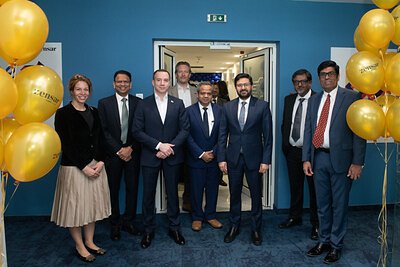
Zensar Bets on Belgrade for European AI and Engineering Hub
BELGRADE, Serbia – April 13, 2026 – Zensar Technologies, a global digital solutions company and part of the USD 5.4 billion RPG Group, has officially inaugurated its new technology delivery and engineering center in Belgrade. The 1,000-square-meter facility in the capital's Airport City district marks a significant move in the company's European expansion, positioning Serbia as a strategic near-shore hub to meet escalating demand for advanced AI and digital transformation services.
This expansion is more than just a new office; it represents a calculated step in a broader industry shift towards strategic near-shoring and a testament to Belgrade's emergence as a formidable technology hub in Central and Eastern Europe. For Zensar, the move is designed to enhance agility, foster closer client collaboration, and tap into a rich vein of engineering talent.
A Strategic Pivot in Europe
The Belgrade center is a key piece in Zensar's evolving European strategy. While the company already has a presence with offices in the UK, Netherlands, Germany, and Switzerland, this new delivery hub signals a deeper commitment to building robust engineering capabilities within the continent. It reinforces a long-term vision, as company leadership had previously signaled intentions to expand into Eastern Europe to complement its global delivery network, which includes major offshore operations in India.
This move strengthens Zensar's near-shore delivery model, which aims to provide a blend of operational efficiency and geographical proximity. By being in a similar time zone and a few hours' flight from major European business centers, the company can offer more agile and collaborative services for its complex digital transformation projects.
"The Belgrade delivery center is a strategic addition to Zensar's global operations, strengthening our near–shore delivery model for Europe," said Vijayasimha Alilughatta, Chief Operating Officer of Zensar Technologies, in the official announcement. "This location enables us to scale engineering capacity with greater speed, resilience, and operational efficiency. By integrating Serbia's strong engineering talent into our delivery network, we are enhancing our ability to execute complex digital and AI–led transformation programs with consistency, quality, and agility."
Belgrade: Europe's Rising Tech Star
Zensar's choice of Belgrade is no coincidence. Serbia has been quietly and effectively building its reputation as a technology powerhouse. The nation's ICT sector now accounts for approximately 10% of its GDP, with exports reaching an impressive $4.31 billion in 2024 and projected to nearly double by 2030. This growth is fueled by a deep and expanding talent pool.
The country boasts over 115,000 IT specialists, a number that has tripled in the last decade. Serbia's education system is a key driver, with over 45,000 students currently enrolled in IT programs and between 7,000 and 8,000 new professionals entering the sector annually. Belgrade, as the nation's economic and academic heart, is the epicenter of this talent boom, offering a high concentration of senior engineers and specialists in high-demand fields like full-stack development and DevOps.
Furthermore, the Serbian government has actively cultivated an innovation-friendly environment. Investments in technical infrastructure and startup support, such as the €70 million allocated to the Innovation Fund, have been crucial. The Science Technology Park Belgrade, backed by the European Investment Bank, has become a vital catalyst, nurturing over 240 tech companies and fostering collaboration between academia and industry. This ecosystem, combined with competitive operational costs and high English proficiency, makes Serbia an increasingly irresistible destination for foreign investment.
"Serbia offers a strong talent ecosystem that aligns well with Zensar's capability–led growth strategy," noted Vivek Ranjan, Chief Human Resources Officer at Zensar. The company has announced plans to partner with local universities, aiming not just to hire existing talent but to co-create a sustainable pipeline of skilled professionals for the future.
Fueling the AI and Digital Transformation Engine
The new Belgrade hub is set to become a critical engine for Zensar's most advanced service lines, particularly in artificial intelligence and complex engineering. The company has pivoted its strategy towards "experience-led, AI-first engineering," moving beyond legacy IT services to deliver cutting-edge solutions that drive tangible business outcomes.
Zensar's innovation arm, Zenlabs, is heavily invested in R&D across Generative AI, cloud technologies, and IoT. The company's offerings include the AI Foundry for scalable development and specialized services for building secure, customized generative AI solutions. This focus is already paying dividends, with the company recently securing a major $210 million framework deal with a financial services client centered on AI-led automation.
The Belgrade center will directly support this mission. Its mandate is to handle large-scale digital transformation projects, leveraging local expertise to enhance Zensar's ability to deliver sophisticated AI and data-driven solutions to its global client base. This on-the-ground capability is essential as enterprises increasingly demand AI integration that is not only powerful but also secure, transparent, and ethically responsible.
A Rising Tide in the Near-Shoring Sea
Zensar's expansion into Serbia reflects a wider industry trend. For years, the IT services world was dominated by an offshore model centered on cost arbitrage in locations like India and China. Today, the calculus has changed. While cost remains a factor, businesses now prioritize value, speed, reduced cultural barriers, and access to specialized skills. This has fueled a massive wave of near-shoring into Central and Eastern Europe.
Countries like Poland, Romania, and Bulgaria have become major hubs, offering a compelling combination of highly skilled tech professionals, convenient time zones, and strong STEM educational foundations. The shift is from seeking the lowest cost to achieving the highest return on investment, with near-shore teams often providing faster ramp-up times and more seamless project collaboration.
By planting its flag firmly in Belgrade, Zensar is not just following a trend but making a strategic play to secure a competitive advantage. The move allows the company to diversify its delivery footprint, mitigate geopolitical risks associated with a concentrated delivery model, and position itself at the heart of one of Europe's most dynamic and rapidly growing tech ecosystems. This symbiotic relationship is expected to create high-skill jobs in Serbia while providing Zensar with the talent and agility needed to win in the next era of digital innovation.