
- 100 million users: Alipay AI Pay reached 100 million users by February 2026, processing over 120 million transactions in a single week.
- $580 billion market: The global in-car payments sector is projected to be worth $580 billion by 2030.
- 10 million vehicles: Banma Intelligence's intelligent cockpit solutions are already deployed in over 10 million vehicles.
Experts view this collaboration as a strategic leap in agentic commerce, positioning Alipay as a leader in AI-driven transactions while raising important discussions about security, privacy, and driver safety.
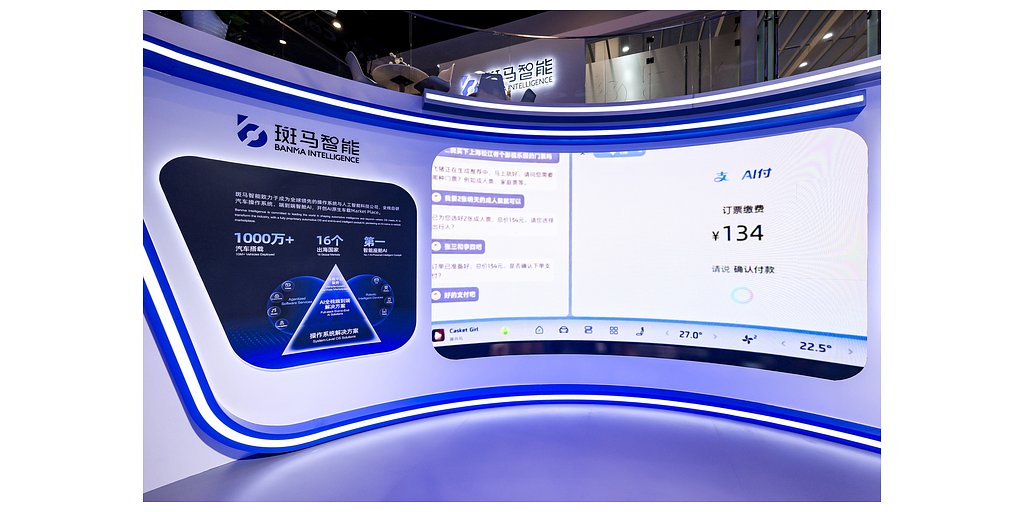
Your Car is Now a Wallet: Alipay and Banma Unveil Voice-Pay AI Cockpit
BEIJING, China – April 24, 2026 – The dashboard of the future has arrived, and it’s ready to pay for your movie tickets. At the 2026 Beijing International Automotive Exhibition, OS and AI technology firm Banma Intelligence, in partnership with digital payment giant Alipay, unveiled a new AI cockpit solution that transforms the vehicle into a voice-activated commerce hub. The system, powered by Alipay AI Pay, allows drivers to complete purchases for services like entertainment and travel using only voice commands, eliminating the need to reach for a phone or credit card.
The announcement marks a significant leap in the evolution of the "smart cockpit," moving beyond navigation and infotainment to seamless, integrated transactions.
The Frictionless Future of In-Car Commerce
The core promise of the new solution is the removal of friction from the in-car experience. Banma Intelligence and Alipay aim to create an environment where a driver's spoken intent is immediately understood and acted upon.
“In the past two years, smart cockpits have achieved rapid advances in perception and decision-making,” said Ming Cai, Banma Intelligence Chief Product Officer, in a statement at the launch. “With large models onboard, vehicles can understand user intent and make recommendations. By integrating Alipay AI Pay into our AI cockpit solution, we are removing the last friction point in the in-car smart cockpit experience - drivers simply speak to pay, no phone required.”
Initially, the AI cockpit will focus on high-frequency use cases in entertainment and travel. A driver could, for example, say, "Help me buy two tickets for the 8 PM movie." Leveraging Banma's proprietary "Yan AI" and Alipay's payment infrastructure, the system can autonomously select showtimes and seats based on user preferences. The driver then simply confirms the purchase with their voice to complete the secure transaction. This capability extends to booking hotels or ordering food, creating a truly hands-free commercial experience while on the move.
Alipay's Strategic Drive into Agentic Commerce
This collaboration is a key strategic move for Alipay as it pushes deeper into the burgeoning field of "agentic commerce." This trend, where AI agents act autonomously on behalf of users to search, book, and pay for goods and services, is rapidly gaining traction, particularly in China.
Alipay AI Pay, the engine for these transactions, has seen explosive growth since its introduction in 2025. It surpassed 100 million users in February 2026, making it the world's first AI-native payment product to hit this milestone. During a single week in February, the service processed over 120 million transactions, signaling strong consumer adoption.
By integrating this technology into the automotive cockpit, Alipay is expanding its AI-driven ecosystem beyond smartphones and into the daily commute. China is at the forefront of this global shift, with one 2026 report showing that 64% of Chinese consumers already trust and use AI agents for commerce. With its robust payment infrastructure and deep market penetration, Alipay is positioning itself to be the transactional backbone for this new era of the internet, where intelligent agents become primary actors. The move into vehicles is a logical and powerful extension of this strategy.
A Crowded Highway for In-Car Payments
While groundbreaking, the Banma-Alipay solution enters an increasingly competitive global market for in-car payments, a sector projected to be worth an astonishing $580 billion by 2030. Major technology players have already staked claims in this territory.
Apple's CarPlay and Google's Android Auto, available in hundreds of millions of vehicles worldwide, have been steadily integrating payment features. Drivers in the U.S. and other markets can use these systems to pay for fuel directly from the car's infotainment screen at thousands of participating gas stations. Voice assistants like Siri and Google Assistant can also facilitate peer-to-peer payments through third-party apps.
However, the Alipay and Banma Intelligence offering differentiates itself through its depth of integration. Rather than an application layer running on top of a phone-based projection system like CarPlay or Android Auto, this solution is built into the vehicle's core operating system. This allows for more seamless control over vehicle functions and a more unified user experience, powered by an AI-native payment system designed specifically for voice and agentic interactions.
Navigating Convenience, Security, and Privacy
The undeniable convenience of telling your car to book a hotel room brings with it critical questions about security, data privacy, and driver distraction. Anticipating these concerns, Alipay has emphasized that its AI Pay solution is built on a foundation of multi-layered risk management and real-time anti-fraud measures designed to safeguard every transaction.
Building user trust, however, goes beyond technical safeguards. As AI agents become more autonomous, handling complex transactions across multiple services, the issue of data governance becomes paramount. This has led to discussions within the industry about the need for a "Know-Your-Agent" (KYA) framework, analogous to the "Know-Your-Customer" (KYC) regulations in finance, to ensure security and verification.
While voice-activated systems are intended to reduce manual and visual distraction, the cognitive load of conducting a financial transaction while driving remains a consideration for developers and regulators. The success of these systems will hinge on their ability to be not just seamless, but also demonstrably safe, providing clear benefits that outweigh any perceived risks for the person behind the wheel.
The Ecosystem Powering the Smart Cockpit
The potential for rapid and widespread adoption of this new technology rests on the formidable ecosystem Banma Intelligence has built. The company is a dominant force in China's automotive tech sector, with its intelligent cockpit solutions already deployed in over 10 million vehicles across 69 different automotive OEM partners.
This extensive network provides a ready-made platform for the new AI cockpit's rollout. While the companies have not disclosed all the specific brands that will feature the new system, technical integration testing with major OEMs is complete. The feature is planned for new models set to launch in the second half of 2026. This integration is part of a broader trend, with Alibaba, Alipay's parent company, embedding its Qwen large language model into vehicles from nearly every major Chinese automaker, including industry giants like BYD, Geely, and SAIC.
Banma's strength is further amplified by its partnerships with over 100 service providers, ensuring a rich catalog of services for drivers to purchase, and collaborations with more than 10 leading chip companies, which optimize hardware and software performance. This deep, multi-layered ecosystem ensures that when a driver speaks, the entire network is ready to listen, act, and transact, truly turning the vehicle into an intelligent companion for the road ahead.