
- 8.75 million: Projected electric two- and three-wheelers on Thai roads by 2035 (ENTEC forecast).
- 600,000 units: Yadea's target production capacity in Thailand within three years.
- THB 4.5 billion: Yadea's R&D budget in 2025.
Experts would likely conclude that Yadea's localized manufacturing, technological innovation, and strategic government partnerships position it as a frontrunner in Thailand's accelerating EV market transformation.
Yadea's Thai Gambit: Inside the Push for EV Market Dominance
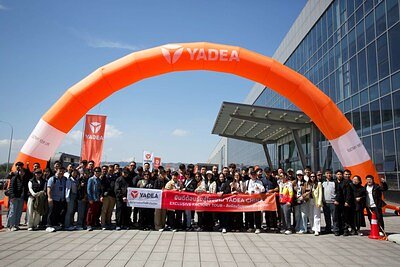
BANGKOK, THAILAND – March 24, 2026 – Yadea, the world's top-selling electric two-wheeler brand for nine consecutive years, is intensifying its strategic push into Southeast Asia by solidifying its relationship with key Thai business partners. In a significant move to bolster dealer confidence, the company recently hosted a delegation of Thai investors at its state-of-the-art Chongqing Smart Manufacturing Base, offering a transparent look into the technological prowess and production scale fueling its global expansion.
The visit served as more than a factory tour; it was a clear signal of Yadea's deep commitment to the Thai market, a region poised for an electric vehicle revolution. As delegates witnessed the end-to-end manufacturing process—from precision robotics to rigorous quality control—the message was clear: Yadea is not just exporting products, but building a localized ecosystem designed for long-term dominance.
The Thai Electric Revolution
Yadea's focused efforts in Thailand are strategically timed. The nation is on the cusp of a dramatic shift towards electric mobility, heavily supported by government action. While electric motorcycles currently represent a small fraction of the more than 22 million registered two-wheelers, ambitious national policies are set to turbocharge adoption. Projections from the National Energy Technology Center (ENTEC) forecast a staggering 8.75 million electric two- and three-wheelers on Thai roads by 2035.
This growth is being actively cultivated by government incentives. The EV 3.5 program, running from 2024 to 2027, provides a THB 10,000 subsidy for locally manufactured electric motorcycles and slashes the excise tax to just 1%. This policy directly benefits companies like Yadea that have invested in domestic production. These measures are part of Thailand's broader vision to become a regional EV production hub, with a goal of having 30% of its vehicle production be electric by 2030 and selling only zero-emission vehicles by 2035.
Against this backdrop of rising fuel costs and a government-backed push for sustainability, Yadea is positioning itself as a primary enabler of Thailand's green transition, leveraging its global scale to meet burgeoning local demand.
A Strategy Forged in Thailand
Central to Yadea's regional strategy is a deep commitment to localization. The company has moved beyond a simple import model by establishing a major manufacturing facility in Thailand's Samut Prakan Free Trade Zone. This factory is not a token presence; it has a target to produce 600,000 units within three years, with a workforce comprised of over 80% Thai labor and a supply chain sourcing more than 70% of parts from local suppliers. This approach embeds Yadea within the Thai economy, creating jobs and fostering a domestic EV industry ecosystem.
Product development is also highly localized. The company currently offers five distinct electric motorcycle models fully eligible for registration in Thailand, including the Yadea OVA, VoltGuard, and OCEAN. These vehicles are not simply rebadged international models; they have been specifically engineered for the local environment. Features like enhanced waterproofing and durable components are designed to withstand Thailand's hot and rainy climate, ensuring reliability and addressing practical consumer concerns.
Delegates at the Chongqing facility experienced this firsthand, participating in test rides and witnessing stringent testing protocols, such as a 16-degree slope climbing test designed to simulate Thailand's diverse terrain. This hands-on experience demonstrated the performance and resilience of Yadea's products, reinforcing their suitability for the market.
The Technological Edge
Underpinning Yadea's market strategy is a relentless focus on innovation, backed by a substantial R&D budget that reached approximately THB 4.5 billion in 2025. A key result of this investment is the proprietary TTFAR (To The Future of Advanced Riding) technology, an integrated system that sets its vehicles apart.
TTFAR combines three core components: a high-efficiency motor, an intelligent energy recovery controller, and an advanced TTFAR Graphene battery. The motor achieves an efficiency of up to 86%, maximizing the conversion of battery power into motion. The system's regenerative braking capability captures kinetic energy during coasting and braking, effectively recharging the battery while riding and extending the vehicle's range.
The TTFAR Graphene battery is a significant breakthrough. It boasts a lifespan up to three times longer than conventional lead-acid batteries, capable of enduring over 800 charge cycles. It also offers 25% more capacity for the same volume and can be fast-charged to 80% in just one hour. Crucially for the Thai market, these batteries are designed to perform reliably in extreme temperatures ranging from -20°C to 55°C.
This technological advantage translates directly into a superior user experience, delivering the enhanced power, speed, and extended range that are critical for winning over consumers transitioning from traditional gasoline-powered motorcycles.
Building an Ecosystem Beyond the Showroom
The recent visit to the Chongqing base, with its annual production capacity of 3 million units, was designed to showcase more than just hardware. Yadea also guided the Thai delegation through its Lean Training Center and the Chongqing Modern Manufacturing Vocational College, highlighting its investment in cultivating a skilled technical workforce.
This focus on talent development is a cornerstone of the company's holistic approach. As stated by Mr. Yang Xiaofei, General Manager of Yadea Thailand, the vision extends far beyond simple transactions. "By experiencing our full industrial ecosystem, partners can see that Yadea's vision extends beyond product sales—we are building a sustainable mobility ecosystem through innovation and talent development," he remarked.
This philosophy is evident in global initiatives like the "Global Sales Guide Competition," which professionalizes retail and service staff in multiple countries, including Thailand. By elevating after-sales service and ensuring deep product knowledge at the dealer level, the company aims to build lasting customer trust.
With a proven track record of selling over 100 million units globally, Yadea is now applying its '1+4+N' strategy—integrating global R&D with excellence in product, channel, brand, and service—to the Thai landscape. The company plans to continue expanding its dealer network across the nation, providing comprehensive support in technology, marketing, and products to drive mutual and sustainable growth.
Topics & Related
Automotive Manufacturing
Decarbonization
Net Zero
Revenue
Related Company Pulse