
- 95% NDAA-compliant materials by cost by 2028
- 100 high-tech jobs created by 2028
- 600,000 cells per year (80 MWh capacity) by 2027
Experts view EGI Battery's Michigan plant as a strategic step toward securing U.S. defense and tech autonomy by reducing reliance on foreign battery supply chains, aligning with federal policy and market demands for domestic production.
EGI Battery's Michigan Plant Powers U.S. Tech & Defense Autonomy
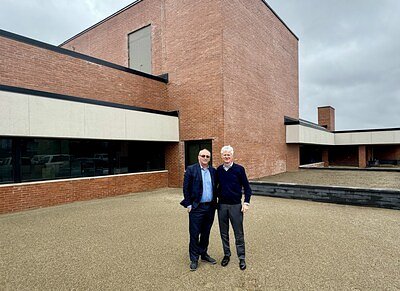
ANN ARBOR, MI – March 09, 2026 – In a significant move to bolster the U.S. domestic technology and defense industrial base, EGI Battery Inc. today announced the establishment of its first American manufacturing campus in Ann Arbor, Michigan. The new facility, located on Zeeb Road, is poised to produce high-performance, advanced lithium-ion batteries for mission-critical sectors including aerospace, drones, and robotics, directly addressing national security concerns over foreign supply chain dependency.
The announcement marks a major milestone for the U.S.-based manufacturer, signaling its transition to commercial scale-up and its commitment to building a secure, domestic battery supply chain. The facility will specialize in pouch cell batteries designed to meet the stringent requirements of the National Defense Authorization Act (NDAA), positioning EGI as a key supplier for industries vital to U.S. strategic interests.
"The Zeeb Campus represents the operational foundation of EGI's long-term manufacturing strategy," said Thomas McGuckin, CEO and Founder of EGI Battery. "We are building scalable, high-yield production capabilities in Michigan to serve mission-critical industries that require a secure supply chain for domestically manufactured batteries."
A Strategic Move for National Security
EGI's new plant is more than just an industrial expansion; it is a strategic response to growing geopolitical tensions and a concerted federal effort to secure critical technology supply chains. The company's explicit focus on NDAA compliance places it at the forefront of a national push to reduce reliance on "foreign entities of concern" (FEOCs), particularly China, which currently dominates the global battery market.
Recent legislation, including the FY 2026 National Defense Authorization Act, has implemented phased-in prohibitions on the Department of Defense (DoD) procuring advanced batteries with components sourced from FEOCs. These restrictions are set to take full effect for new acquisitions by January 2028, creating an urgent need for vetted, domestic suppliers. By building its workflows to comply with these standards from the outset, EGI is positioning itself as a go-to partner for defense contractors and government agencies. The company has set an ambitious goal to use at least 95% NDAA-compliant materials by cost in 2028.
This proactive alignment with federal policy is a critical differentiator. As the DoD and its contractors race to secure their supply lines ahead of the deadlines, companies like EGI that can provide a transparent, non-China-based material supply chain will hold a significant competitive advantage. This focus on compliance ensures program continuity for defense projects and strengthens the overall resilience of the U.S. industrial base against potential disruptions.
Powering Michigan's Battery Belt
The choice of Ann Arbor is no coincidence. EGI's new campus is the latest jewel in the crown of what is rapidly becoming America's "Battery Belt." Michigan has aggressively courted battery and advanced manufacturing investments, leveraging state-level incentive programs like the Strategic Outreach and Attraction Reserve (SOAR) fund to attract billions of dollars in projects from companies such as Gotion, Our Next Energy, and LG Energy Solution.
EGI is working closely with the Michigan Economic Development Corporation (MEDC), tapping into a robust ecosystem that includes world-class research institutions like the University of Michigan and industry consortiums. This supportive environment provides access to talent, research partnerships, and a network of suppliers dedicated to advancing battery technology.
Mark Smith, CEO of MI-HQ, a technology park that supports local innovation, commented on the development, stating, "We are proud to support EGI's growth in Ann Arbor. Their advanced manufacturing strategy strengthens Michigan's role in next-generation industrial battery innovation."
The Zeeb Campus is expected to become a significant local employer. At full, three-shift operation, the facility is projected to create approximately 100 high-tech jobs by 2028, contributing to the region's economic vitality and reinforcing its identity as a hub for advanced manufacturing.
Beyond the EV: Fueling Drones, Aviation, and Robotics
While much of the battery industry's focus has been on electric vehicles, EGI is targeting a different, highly specialized set of markets where performance and reliability are paramount. The company's advanced cells, which utilize technologies like silicon-enhanced anodes and semi-solid-state chemistries, are engineered for the demanding requirements of electric aviation, uncrewed aerial systems (UAS), and humanoid robotics.
The market for electric aircraft is projected to experience explosive growth, with some analysts forecasting it to reach $2 billion by 2033. This burgeoning industry requires batteries that are not only energy-dense but also exceptionally lightweight and safe—qualities EGI aims to deliver. Similarly, the expanding use of drones in commercial and military applications, coupled with NDAA restrictions on foreign components, creates a protected and growing market for EGI's domestically produced cells.
EGI's initial production will focus on a 35 amp-hour (Ah) pouch cell designed for Class-1 and Class-2 drones, a direct answer to this market need. The technology also paves the way for advancements in other futuristic applications, such as humanoid robotics, where compact, powerful, and long-lasting energy sources are essential for enabling complex tasks and mobility.
A Phased Path to Production
Recognizing the inherent challenges of scaling advanced manufacturing, EGI is implementing a deliberate, two-phase expansion plan for the Zeeb Campus. This strategy is designed to manage risks associated with supply chain logistics, quality control, and the technical hurdles of scaling new battery chemistries.
Phase 1, set to begin production in the third quarter of 2026, will occupy 15,000 square feet. This initial stage will focus on latter-stage manufacturing processes, including electrolyte filling, cell formation, and grading. The initial production line is designed to produce up to 300,000 cells annually, equating to approximately 40 megawatt-hours (MWh) of capacity. This methodical approach allows the company to establish and refine its high-yield production capabilities while maintaining stringent quality standards, with plans to secure ISO 9001 and AS9100 certifications.
Beginning in 2027, Phase 2 will see the facility expand and vertically integrate core upstream processes, from electrode making to final cell assembly. This expansion is expected to double throughput to 600,000 cells per year, or roughly 80 MWh of annual capacity. By phasing its scale-up, EGI can responsibly grow its operations, ensuring that performance and product quality remain paramount as it expands its footprint within the 130,000-square-foot building. This measured expansion is crucial for navigating the complexities of raw material sourcing and manufacturing yields that often plague startups in the advanced battery space.