
- Cost Range for VR Labs: From a basic DIY setup at $1,300 to high-end systems exceeding $100,000. - Ancillary Costs: Ongoing maintenance and support can add 10% to 15% of the total system price annually. - High-End Systems: Direct-view LED systems can cost over $1 million.
Experts agree that WorldViz's 2026 Budgeting Guidelines provide a crucial, transparent resource for researchers to navigate the complex costs of VR lab setups, enabling more informed and strategic investments in scientific VR technology.
WorldViz Guide Demystifies VR Lab Costs for Scientific Research
SANTA BARBARA, CA – April 16, 2026 – As virtual reality transforms from a niche technology into a cornerstone of modern scientific inquiry, researchers face a daunting challenge: navigating the complex and often opaque costs of building a state-of-the-art VR lab. Today, immersive technology firm WorldViz VR addressed this critical need with the release of its 2026 Budgeting Guidelines for Scientific VR Labs, a comprehensive resource aimed at empowering academic and research institutions to make strategic, cost-effective investments in VR.
The detailed guide provides a transparent financial roadmap, breaking down the costs associated with everything from individual VR headsets to fully immersive projection rooms. It offers a spectrum of options that cater to virtually any institutional budget, from a barebones do-it-yourself setup starting around $1,300 to sophisticated, fully integrated labs that can exceed $100,000.
A Roadmap for Research Innovation
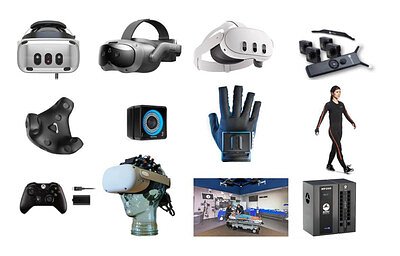
For scientists and university administrators, the new guidelines serve as an essential tool for planning, grant writing, and resource allocation. The document moves beyond simple price lists, offering detailed comparisons and evaluations of the technologies that form the backbone of a modern research facility. It meticulously reviews top-tier VR headsets like the Varjo XR-4 and Vive Focus Vision, alongside cost-effective consumer models such as the Quest 3/3S, and even includes newly featured devices like the Pimax Dream Air and Bigscreen Beyond 2E, allowing researchers to weigh features against their specific experimental needs.
"Our goal with this guide is to equip researchers with the knowledge they need to make informed decisions about their VR investments," said Peter Schlueer, President of WorldViz VR, in the official announcement. "By providing a transparent cost breakdown, we empower institutions to maximize the impact of their VR research initiatives."
This empowerment comes from the guide's granular detail. It delves into the pros and cons of different VR software development platforms, comparing the company's own Python-based Vizard VR Development Suite and its no-code counterpart, SightLab VR Pro, against industry-standard game engines like Unity and Unreal. This allows research teams to choose a path that aligns with their technical expertise and project complexity. Furthermore, the inclusion of a new 'At-a-Glance Budget Table' provides a clear, immediate understanding of the financial commitment required for different tiers of VR labs, simplifying what has historically been a convoluted procurement process.
The Anatomy of a 2026 VR Lab
The guide reveals that the cost of a VR lab extends far beyond the headset. It paints a holistic picture of the total investment, breaking down the market into several distinct tiers. At the entry level, a DIY setup costing under $2,000 can be assembled using consumer-grade hardware, making VR accessible for preliminary studies or institutions with minimal funding.
A significant step up, commercial integrated systems ranging from $8,000 to $20,000 offer a more robust, pre-configured solution for dedicated research. These often include powerful PCs and research-grade features like the integrated eye-tracking found in the Vive Focus Vision, a critical tool for cognitive and behavioral studies.
For large-scale, multi-user, or highly immersive experiments, the guide details the costs of projection-based systems, such as CAVE (Cave Automatic Virtual Environment) setups, which can range from $50,000 to over $85,000. These systems, like the one WorldViz installed at Yale University, create room-sized simulation spaces ideal for architectural walkthroughs, group training, or studies where headsets are impractical. At the absolute cutting edge are the emerging direct-view LED systems, which offer unparalleled brightness and clarity but can push project costs well beyond $1 million, representing the pinnacle of current immersion technology.
Crucially, the guidelines emphasize the often-overlooked ancillary costs. Budgets must account for facility modifications, personnel training, and ongoing technical support and maintenance, which the guide estimates can cost 10% to 15% of the total system price annually. This comprehensive view of the total cost of ownership is vital for ensuring the long-term sustainability and success of a lab.
Shaping the Scientific VR Ecosystem
The annual release of these guidelines is more than an act of corporate altruism; it is a strategic move that cements WorldViz's position as a thought leader and central hub in the scientific VR community. By providing an indispensable, vendor-agnostic resource, the company builds trust and establishes its brand as the go-to authority for academic VR implementation. The guide naturally draws researchers into the company's ecosystem.
While evaluating a range of products, it logically highlights the benefits of its proprietary software, Vizard and SightLab VR Pro, which are specifically designed for the rapid prototyping and data collection required in research environments. This positions their tools as specialized, powerful alternatives to general-purpose game engines. The document also seamlessly funnels potential customers toward their consulting services, offering personalized guidance for institutions whose needs go beyond the scope of the guide. This strategy effectively transforms a public resource into a powerful engine for lead generation and market influence.
By demystifying the financial and technical hurdles of VR adoption, WorldViz is not just selling products; it is actively cultivating the market's growth. The guide helps standardize investment practices and provides a common language for researchers, procurement officers, and grant-funding bodies. This effort to lower the barrier to entry ensures that more institutions can participate in cutting-edge research, ultimately accelerating the pace of discovery in fields ranging from neuroscience and psychology to engineering and medicine. As the virtual reality landscape continues its rapid evolution, such clear, actionable guidance remains an invaluable asset for the entire scientific community.