
- 256-qubit trapped-ion system: Horizon Quantum acquires IonQ’s advanced 256-qubit system to enhance its hardware-agnostic software environment.
- $110 million PIPE financing: IonQ was a key investor in Horizon Quantum’s recent funding round, underscoring confidence in its software-centric approach.
- 99.99% two-qubit gate fidelity: IonQ’s system features industry-leading fidelity and all-to-all qubit connectivity, critical for reliable quantum computations.
Experts view this collaboration as a pivotal step toward achieving 'broad quantum advantage,' where quantum computers deliver significant economic value across diverse applications by overcoming hardware fragmentation through advanced software solutions.
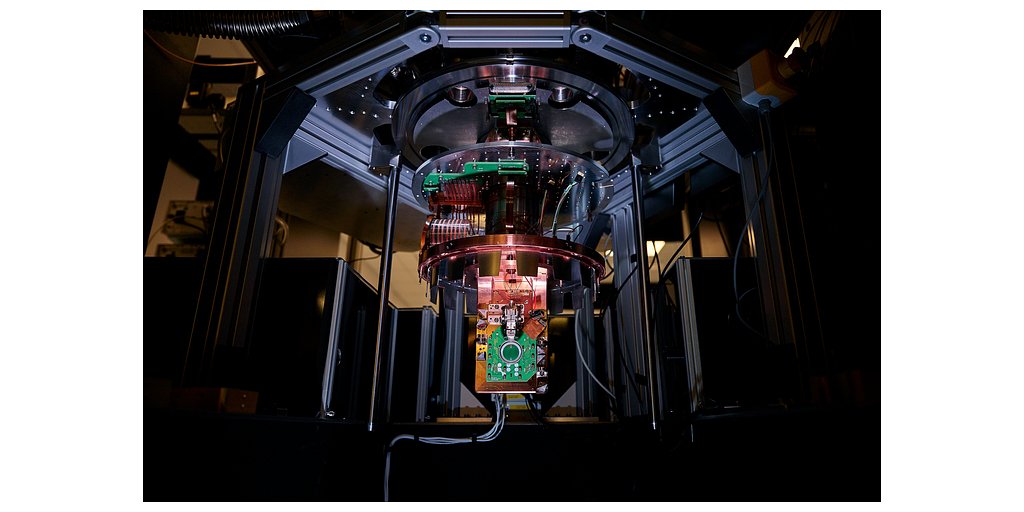
Horizon Quantum Buys IonQ System, Building Bridge to Quantum Advantage
SINGAPORE & COLLEGE PARK, Md. – April 09, 2026 – In a significant move to unify the fragmented quantum computing landscape, software infrastructure firm Horizon Quantum Holdings has announced a strategic agreement to purchase one of the first advanced 256-qubit trapped-ion systems from industry leader IonQ. The acquisition marks a pivotal step in Horizon Quantum’s mission to create a hardware-agnostic software environment, aiming to shield developers from underlying hardware complexities and accelerate the journey toward solving real-world problems with quantum computers.
The deal pairs one of the most promising quantum software platforms with one of the most powerful quantum computers on the market. By integrating IonQ’s machine into its in-house testbed, Horizon Quantum is positioning itself as a crucial bridge between the complex, diverse world of quantum hardware and the vast community of software developers needed to unlock its potential.
A Strategic Leap Towards Hardware Agnosticism
At the heart of this agreement is the challenge of hardware diversity. The quantum industry is not building a single type of quantum computer; instead, a variety of competing technologies—including superconducting qubits, trapped ions, photonics, and neutral atoms—are being developed in parallel, each with unique strengths and weaknesses. For software developers, this creates a daunting landscape where an application written for one machine may not run on another.
Horizon Quantum’s strategy is to tackle this problem head-on by building a multi-modality testbed. The company already operates an in-house quantum computer based on a superconducting processor from Rigetti. The addition of IonQ’s trapped-ion system introduces a second, technologically distinct hardware architecture. This makes Horizon one of only a handful of entities worldwide operating commercial-grade systems of different modalities, providing an unparalleled environment for developing and testing truly portable quantum software.
The goal is to enhance its integrated development environment, Triple Alpha, to function as a universal translator for quantum computing. Developers can write their programs using Horizon’s high-level tools, and the Triple Alpha compiler will automatically optimize and translate that code to run efficiently on the best available hardware, whether it's a superconducting or trapped-ion system. This abstraction layer is seen by many industry experts as essential for achieving “broad quantum advantage,” the point at which quantum computers begin to deliver significant economic value across many applications.
Forging a New Blueprint for Industry Collaboration
This agreement is more than a simple customer transaction; it represents a deepening symbiotic relationship between quantum hardware and software pioneers. IonQ was also a key strategic investor in Horizon Quantum's recent, oversubscribed $110 million PIPE (Private Investment in Public Equity) financing, signaling a strong belief in Horizon’s software-centric approach. This collaboration provides a potential blueprint for how the nascent quantum ecosystem can mature.
For IonQ, the partnership ensures its cutting-edge hardware is being used to build the next generation of development tools, creating a powerful feedback loop. By having its system integrated into the Triple Alpha platform, IonQ gains a new channel to reach developers who may not be quantum physics experts, thereby broadening its user base. For Horizon, access to a state-of-the-art machine validates its software and ensures its compiler is optimized for top-tier performance.
This strategy mirrors a broader trend in the industry. Competitors like Classiq and Q-CTRL are also developing hardware-agnostic middleware to simplify quantum programming. Classiq, which also counts IonQ as a partner and investor, focuses on synthesizing high-level functional models into optimized circuits. Q-CTRL provides infrastructure software to improve hardware performance. Horizon’s approach, combining a sophisticated compiler with its own multi-platform testbed, represents an aggressive, vertically-integrated effort to solve the software challenge.
Unleashing Adaptive Power Beyond Static Circuits
This partnership is not just about running existing algorithms on more hardware; it’s about enabling entirely new kinds of quantum programs. A key promise of Horizon’s Triple Alpha platform is to move developers beyond the limitations of writing static quantum circuits—rigid, pre-defined sequences of operations.
The integration with IonQ's system will help enable more advanced, adaptive programming. This includes features like general control flow (if/then statements), dynamic memory allocation, and the ability to run classical and quantum functions concurrently. In essence, it allows a quantum program to make decisions and change its behavior mid-execution based on intermediate results. This is a profound shift, elevating quantum programming from a low-level, hardware-centric task to something more akin to modern, expressive classical software development.
The IonQ system is an ideal platform for this ambition. Its 256-qubit processor features an industry-leading two-qubit gate fidelity of 99.99% and “all-to-all connectivity,” where every qubit can interact directly with every other qubit. This high fidelity ensures calculations are reliable, while full connectivity dramatically simplifies the compilation of complex algorithms, which is crucial for the dynamic programs Horizon aims to support.
“I could not be more delighted to be working with IonQ to bring trapped ion and world-leading gate fidelities to our testbed,” said Dr. Joe Fitzsimons, Founder and CEO of Horizon Quantum. “Bringing a state-of-the-art system with the capabilities of hundreds of qubits will provide an important and cutting-edge resource to bear in our quest to unlock broad quantum advantage for developers.”
This collaboration between a software visionary and a hardware leader represents a calculated and powerful step toward making quantum computing a practical and accessible tool for solving the world's most difficult computational problems.