
- 15-year warranty: FranklinWH's residential battery systems come with a market-leading 15-year warranty, enhancing their appeal to homeowners. - Hundreds of megawatts: U.S. residential battery installations have surged, adding hundreds of megawatts of new capacity each quarter. - Thousands of EVs managed: WeaveGrid has successfully shifted thousands of vehicles to off-peak charging through partnerships with major utilities.
Experts would likely conclude that this partnership represents a significant step toward creating a more resilient and efficient electric grid by leveraging residential batteries as dynamic grid assets, supported by favorable regulatory policies and advanced orchestration technology.
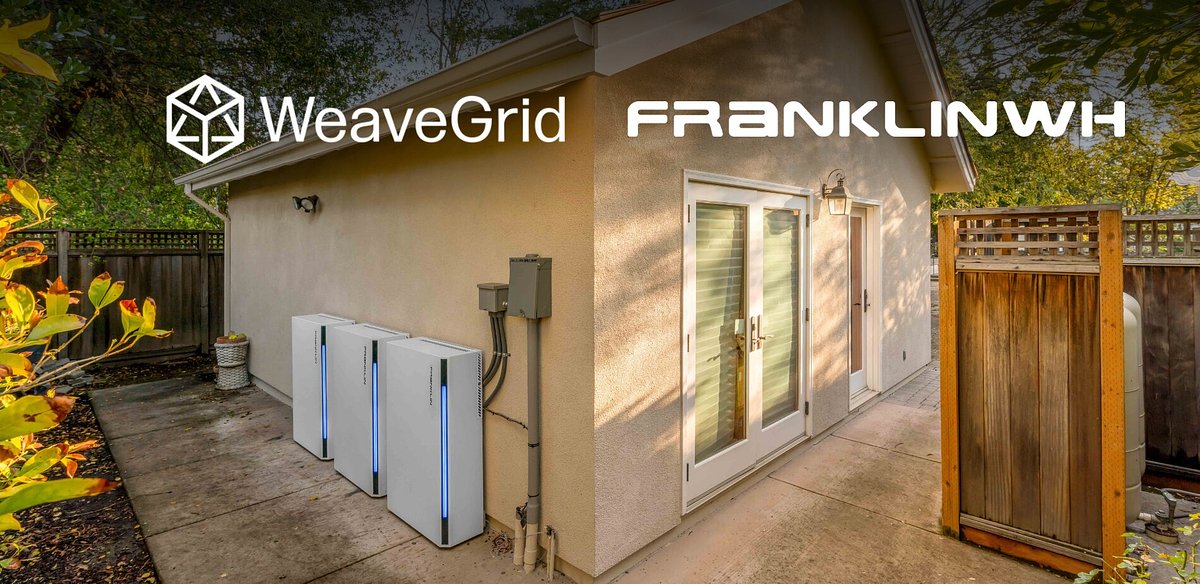
WeaveGrid and FranklinWH Partner to Turn Home Batteries into Grid Assets
SAN FRANCISCO, CA – February 23, 2026 – In a significant move to create a more responsive and resilient electric grid, grid-edge software provider WeaveGrid and home energy storage manufacturer FranklinWH today announced a strategic partnership. The collaboration will integrate FranklinWH’s residential battery systems into WeaveGrid’s orchestration platform, enabling utilities to manage home batteries as dynamic, flexible resources to support the grid at a hyperlocal level.
This integration allows utilities to precisely dispatch power from networks of residential batteries to address specific constraints on the distribution system, such as overloaded transformers and feeders. For homeowners, it unlocks new opportunities to participate in utility programs, earn financial incentives, and enhance their own energy resilience, transforming their home battery from a simple backup device into an active grid asset.
A New Era of Grid Orchestration
At the heart of the partnership is WeaveGrid’s Distribution-Integrated System Capacity Orchestration (DISCO) platform, a sophisticated software layer designed to manage the rapidly growing number of Distributed Energy Resources (DERs) connecting to the grid. The company has already established a strong track record in the electric vehicle sector, partnering with major utilities like PG&E, Baltimore Gas & Electric (BGE), and Xcel Energy to manage EV charging. These programs have successfully shifted thousands of vehicles to off-peak charging, reducing strain during peak hours and aligning energy use with periods of high renewable generation.
By adding FranklinWH batteries, the DISCO platform evolves into a more comprehensive solution capable of co-optimizing multiple asset types. This allows a utility to coordinate residential batteries alongside managed EV charging through a single, unified system. This orchestration is not just about broad-stroke demand response; it provides asset-level visibility and device-level control, enabling utilities to target grid support to the exact locations where it is needed most.
"As utilities navigate rapid electrification and growing adoption of distributed energy resources, coordinating multiple asset types together is becoming essential," said Apoorv Bhargava, CEO and Co-Founder of WeaveGrid. "Partnering with FranklinWH represents another step in the evolution of DISCO. We're extending the same asset-level visibility and control utilities rely on for EVs to residential batteries, and helping utilities manage local grid constraints while enabling customer participation in programs."
From Backup Power to Active Grid Asset
For homeowners, the partnership promises to unlock new value from their investment in energy storage. FranklinWH has emerged as a formidable player in the residential market with its Franklin Home Power (FHP) system. Known for its whole-home backup capabilities, the system features a high-capacity Lithium Iron Phosphate (LFP) battery, prized for its safety and longevity, and an intelligent energy management hub called the aGate.
With a market-leading 15-year warranty and high power output capable of running demanding appliances like air conditioners, FranklinWH systems have become a popular choice for homeowners seeking energy independence. Through the integration with WeaveGrid, these systems can now do more than just provide backup during an outage. By opting into utility programs, customers can allow their batteries to be dispatched to support the grid, earning passive income while contributing to community-wide grid stability. This creates a powerful financial incentive that can shorten the payback period for a home battery system.
"FranklinWH's mission is to help homeowners take control of their energy while supporting a more resilient electric grid," stated Gary Lam, CEO and Co-Founder of FranklinWH. "Working with WeaveGrid allows us to connect our residential storage systems with utility programs in a way that benefits customers, utilities, and the grid as a whole."
Meeting the Demands of an Electrified Future
The collaboration arrives at a critical juncture for the energy industry. The rapid adoption of EVs and the electrification of home heating and appliances are placing unprecedented, often unpredictable, stress on local distribution grids. U.S. residential battery installations have surged, adding hundreds of megawatts of new capacity each quarter, but this capacity remains largely uncoordinated. This bottom-up growth can overload local infrastructure that was not designed for two-way power flows or concentrated demand spikes.
Solutions like the one forged by WeaveGrid and FranklinWH offer a software-defined alternative to costly and time-consuming hardware upgrades. By intelligently managing customer-sited resources, utilities can defer or avoid billions in infrastructure investment, a saving that is ultimately passed on to all customers. This approach is a cornerstone of the Virtual Power Plant (VPP) model, where aggregated DERs are orchestrated to provide the same services as a traditional power plant. While established players like Tesla and Sunrun operate their own VPPs, this partnership represents a growing trend of OEM-agnostic software platforms creating interoperable ecosystems.
Navigating a Supportive Policy Landscape
This push toward a decentralized grid is bolstered by a favorable regulatory environment. At the federal level, FERC Order 2222 requires wholesale energy market operators to open their markets to aggregated DERs, creating new revenue streams for VPPs. This federal mandate has catalyzed action at the state level, where public utility commissions are actively designing programs to leverage customer-owned assets.
States like California, Massachusetts, and Connecticut are leading the way with initiatives that provide significant incentives for homeowners to enroll their batteries in grid service programs. For example, California's Emergency Load Reduction Program (ELRP) pays battery owners for discharging energy during grid emergencies, while programs like Mass Save’s ConnectedSolutions offer performance-based payments for reducing demand. These policies create the market conditions necessary for partnerships like the one between WeaveGrid and FranklinWH to scale effectively, ensuring that the transition to a clean, electrified future is both reliable and affordable for everyone.