
- 135,000-square-foot store: Wayfair's planned large-format store in Princeton, NJ, set to open by 2027.
- 30% performance boost: Markets with Wayfair's physical presence saw a nearly 30% improvement in key categories.
- Double retail spending: Princeton households spend nearly double the New Jersey average on retail goods.
Experts would likely conclude that Wayfair's physical expansion represents a strategic pivot to dominate omnichannel retail, leveraging stores as customer acquisition hubs while mitigating online conversion barriers.
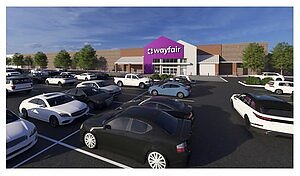
Wayfair's Concrete Gamble: Why Digital Giants are Invading Main Street
PRINCETON, NJ – June 18, 2026
Wayfair, the digital behemoth that taught a generation to buy sofas from a screen, has announced it is breaking ground—literally. The company’s plan to open a 135,000-square-foot large-format store in Princeton, New Jersey, by 2027 is the latest and most telling move in a grand re-colonization of the physical world by its digital masters. The press release speaks of serving customers and creating inspiring spaces, but the reality is far more structural. This isn't just about selling more end tables; it's about cementing a new phase of retail dominance, one where the line between the online cart and the brick-and-mortar storefront is purposefully and permanently erased.
For years, the narrative was simple: e-commerce would kill the mall. What we are now witnessing is a more complex evolution. The digital-native brands that rose from the ashes of traditional retail have discovered a fundamental truth: a business that exists only as pixels on a screen is a fragile one. The move to establish a significant physical footprint, from Princeton to Denver to Fort Lauderdale, is an admission that the physical world still holds immense power—for building trust, for acquiring customers, and for embedding a brand into the fabric of a community.
The Omnichannel Mandate
Wayfair’s expansion is not a nostalgic return to the past but a calculated execution of the omnichannel mandate. The strategy is to create a seamless, self-reinforcing loop between its online and offline worlds. As Liza Lefkowski, Wayfair’s vice president of merchandising and stores, stated, the goal is a place where customers can "seamlessly shop across online and in-store channels." This seamlessness, however, is a one-way street designed to capture and keep the consumer within a single, all-encompassing ecosystem.
Data from the company's first large-format store in Wilmette, Illinois, provides the blueprint. After its opening, Wayfair executives noted a significant "halo effect," with online sales and customer engagement measurably increasing in the surrounding Chicago area. CEO Niraj Shah has pointed to a nearly 30% performance spread in key categories in markets with a physical presence. The stores, therefore, are not just points of sale; they are massive, interactive billboards and powerful customer acquisition engines. In an era of soaring digital advertising costs, a physical store offers a more tangible, and perhaps more sustainable, return on investment.
This strategy is also defensive. For high-consideration purchases like furniture, the inability to see, touch, and feel a product remains a significant barrier to online conversion. The physical store solves this "last-mile" problem of consumer confidence. It allows customers to verify the quality of "Wayfair Verified" items, sit on a couch, and then, with a tap on their phone, have it delivered from a vast, unseen logistics network. The store becomes the trusted, human-friendly interface for a colossal, data-driven machine.
A New Anchor for Route 1
The choice of Princeton's Nassau Park Pavilion is surgically precise. Situated on the hyper-congested but commercially vital Route 1 corridor, the location places Wayfair at the heart of a high-demand, high-income demographic. Princeton households already spend nearly double the New Jersey average on retail goods, a figure set to grow with new housing developments. Wayfair isn't just opening a store; it's tapping directly into one of the region's wealthiest consumer arteries.
For the retail center's owner, Bridge33 Capital, securing Wayfair is a coup. Carmen Decker, an executive vice president at Bridge33, celebrated the partnership as a commitment to a "best-in-class retail destination." In an age where mall owners struggle to fill vacancies left by legacy department stores, a vibrant, digitally-powered tenant like Wayfair is the new ideal anchor. It promises to drive foot traffic that benefits a host of other co-tenants, from Wegmans to Target.
But this injection of commercial energy comes with structural trade-offs. The arrival of a 135,000-square-foot competitor is a seismic event for the local retail landscape. While Wayfair's scale may challenge big-box rivals like At Home and Raymour & Flanigan, it poses a more existential threat to smaller, independent furniture and home goods stores that define the character of local commerce. These businesses cannot compete with Wayfair's logistics, its massive inventory, or its ability to operate a physical store as a loss-leader for its broader digital empire. The increased traffic on Route 1, a long-standing point of contention for local planners, is another externality the community will have to absorb.
Redefining the Showroom
To understand the full scope of Wayfair's ambition, one must look inside. The Princeton store will be far more than a warehouse with price tags. It is being designed as a destination for "experiential retail." Drawing on its other large-format locations, it will likely feature immersive room vignettes, a vast selection of items available for same-day takeaway, and, crucially, free design services.
This last feature is key. By offering professional design consultation at no cost, Wayfair removes a significant barrier for consumers undertaking home projects. It transforms the store from a transactional space into a consultative one, building relationships and fostering loyalty. This service, combined with the ability to browse endless additional options on in-store screens, creates a powerful hybrid model that legacy retailers will find difficult to replicate.
The store is a solution to the paradox of choice that Wayfair itself created. Its website offers millions of items, an overwhelming prospect for many. The physical store curates this offering, provides expert guidance, and adds a layer of service and immediate gratification. It is a meticulously designed environment to convert inspiration into purchase, whether that purchase happens at the cash register or online later that evening. The digital giants aren't just selling us furniture; they are redesigning the very floor plan of our civic life.