
- 65th Anniversary: Hilton Hawaiian Village celebrates its 65th anniversary with the completion of the Rainbow Tower renovation.
- $4.5 Million Restoration: The Rainbow Tower's iconic mosaic murals underwent a meticulous restoration in 2014, replacing over 31,000 tiles.
- 3,300 Rooms: The resort is one of the largest in the Hilton portfolio, with over 3,300 rooms.
Experts would likely conclude that the renovation of the Rainbow Tower is a strategic move to blend historical significance with modern traveler demands, ensuring the resort remains a cultural and economic anchor in Waikīkī.
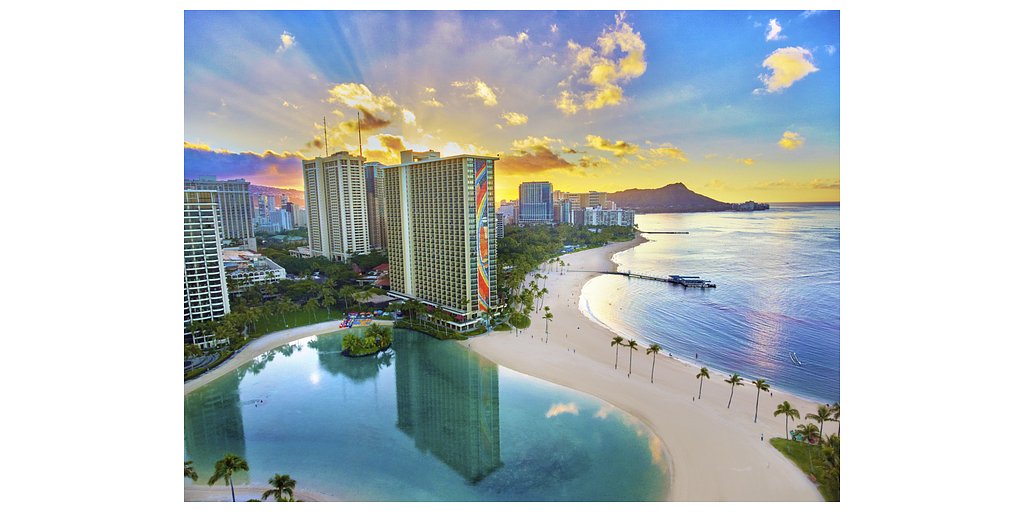
Waikiki's Rainbow: An Icon Reimagined for a New Era of Aloha
HONOLULU, HI – June 08, 2026 – A splash of color against the Waikīkī skyline has defined the postcard view of Hawaiʻi for decades. Now, that icon is redefining itself from the inside out. Hilton Hawaiian Village Waikiki Beach Resort has officially completed the much-anticipated renovation of its legendary Rainbow Tower, a project that serves as the capstone for the resort’s 65th anniversary. It’s a dual milestone that speaks not only to longevity but to a calculated strategy of adaptation in a rapidly evolving travel landscape.
“For 65 years, Hilton Hawaiian Village has been the backdrop for family vacations, milestone celebrations and unforgettable memories, bringing people together to connect, celebrate and experience the spirit of aloha,” said Kyle Anger, the resort's general manager. “Few landmarks capture the spirit of a destination the way the Rainbow Tower does for Waikiki, and as we celebrate its reimagined spaces, we’re proud to honor its legacy as a cultural and visual symbol of the islands while welcoming today’s travelers.”
Beyond the corporate polish of a press announcement lies a story of strategic investment. The renovation is more than a fresh coat of paint; it is an attempt to weave the resort's storied past into a competitive future, balancing nostalgia with the demands of the modern, experience-seeking traveler.
A Legacy Etched in Tile and Time
To understand the significance of the Rainbow Tower, one must look back at the genesis of Waikīkī as a global destination. The resort itself began in 1955 as industrialist Henry J. Kaiser's Hawaiian Village Hotel, a cluster of thatched-roof cottages on land that was once the childhood home of Duke Kahanamoku. When Conrad Hilton acquired the property for $21.5 million in 1961, the transformation into a mega-resort accelerated.
The Rainbow Tower, completed in 1968, was the jewel in this expanding crown. Its most defining feature was, and remains, the twin 286-foot-tall mosaic murals designed by artist Millard Sheets. Comprising over 16,000 individual ceramic tiles, these rainbows became an instant landmark. A meticulous $4.5 million restoration in 2014, which replaced the original tiles with more than 31,000 new ones, underscored the mural's enduring importance not just to the hotel, but to the visual identity of Waikīkī itself. The tower and the resort have been a silent backdrop for decades of cultural history, from serving as a filming location for Elvis Presley's “Blue Hawaii” to being the birthplace of the iconic Blue Hawaii cocktail, invented by bartender Harry Yee in 1957.
The Art of Reinvention
The current renovation digs deeper than the façade. The project, whose cost has been kept under wraps, focuses on transforming the guest experience within the tower's walls. The refreshed guest rooms, now branded “Rainbow Kai” (kai meaning sea or seawater), and corridors reflect a deliberate shift towards authentic, localized design. The goal, it seems, is to make the inside of the tower as compelling as the view from its windows.
Partnering with Hawaiʻi-based artists and designers, the resort has infused the interiors with cultural storytelling. The design palette nods to the tower's rainbow motif but grounds it in the natural world with botanical references and surf-inspired textures. This is a direct response to a market that increasingly values authenticity over generic luxury. The artwork is not mere decoration; it is a curated gallery of local talent. The roster includes Kristen Reyno of Lola Pilar, known for contemporary floral designs; landscape painter Heather Almeda; abstract artist Tamara Brink; block print artist Malie Moana; and Steven Kean, whose woodcut prints evoke surf culture. Their collective work pays homage to Millard Sheets’ original mural while creating a distinct, contemporary sense of place.
This artistic focus is a savvy strategic move, transforming rooms into narratives and connecting guests to the destination on a more intimate level. It’s an acknowledgment that for many travelers, the hotel is no longer just a place to sleep, but an integral part of the cultural immersion they seek.
An Economic and Cultural Anchor
The renovation's impact ripples far beyond the resort’s 22-acre footprint. In a state where tourism is the primary economic engine, a property of this scale is a crucial component of the local economy. Waikīkī alone generates an estimated 42% of the state's visitor industry revenue. As one of the largest hotels in the Hilton portfolio, with over 3,300 rooms, the Hilton Hawaiian Village is a major employer.
The resort’s economic role was brought into sharp focus in late 2024 when 1,800 of its employees, members of the UNITE HERE Local 5 union, went on strike before securing a new labor contract. The resolution of that dispute highlights the complex interplay between large-scale hospitality operations and the local workforce that sustains them. The success of the resort is intrinsically linked to the well-being of its community.
Culturally, the renovation aligns with a broader, state-wide push toward “mālama,” or mindful tourism—encouraging visitors to care for and respect the islands. By commissioning local artists and embedding Hawaiian design language into its premier tower, the resort is participating in this dialogue, moving from simply hosting tourists to acting as a steward of local culture. It’s a delicate balance, commercializing culture without cheapening it, and the success of this effort will be judged by visitors and locals alike.
Navigating a New Wave of Travel
The refreshed Rainbow Tower enters a fiercely competitive market. High-end travelers in Waikīkī have a wealth of options, from the boutique luxury of ESPACIO to the timeless elegance of the Halekulani. The 2026 tourism outlook for Hawaiʻi is one of modest, uneven growth, with the luxury segment outperforming mid-tier markets. The renovation is Hilton’s bid to solidify its position at the top end of this market.
Its key differentiator remains its sheer scale and self-contained nature—a “village” with five pools, Waikīkī’s widest stretch of beach, and over 80 shops and restaurants. This makes it an enduring favorite for families and multi-generational travelers. The renovation of the Rainbow Tower, historically one of its most sought-after locations for its stunning views, ensures that the resort’s core product remains fresh and appealing.
By investing in history, art, and a modernized guest experience, Hilton Hawaiian Village is making a calculated bet. The wager is that in an age of fleeting trends, a 65-year-old icon can still capture the imagination of a new generation, proving that the most enduring structures are those that learn to bend, like a rainbow, toward the changing light.