
- Speckle and fringes: The collaboration aims to eliminate distracting visual artifacts in laser-based AR displays, improving image clarity and reducing eye strain. - Technology synergy: Combines Vitrealab's Quantum Light Chip (QLC) and poLight's TWedge® wobulation technology to enhance laser illumination for LCoS displays. - Efficiency and compactness: The solution is designed to be more elegant and efficient than prior MEMS-based approaches, simplifying the optical path and increasing overall efficiency.
Experts would likely conclude that this partnership represents a significant step forward in overcoming a major technical barrier to AR adoption, potentially accelerating the development of high-quality, consumer-ready AR glasses.
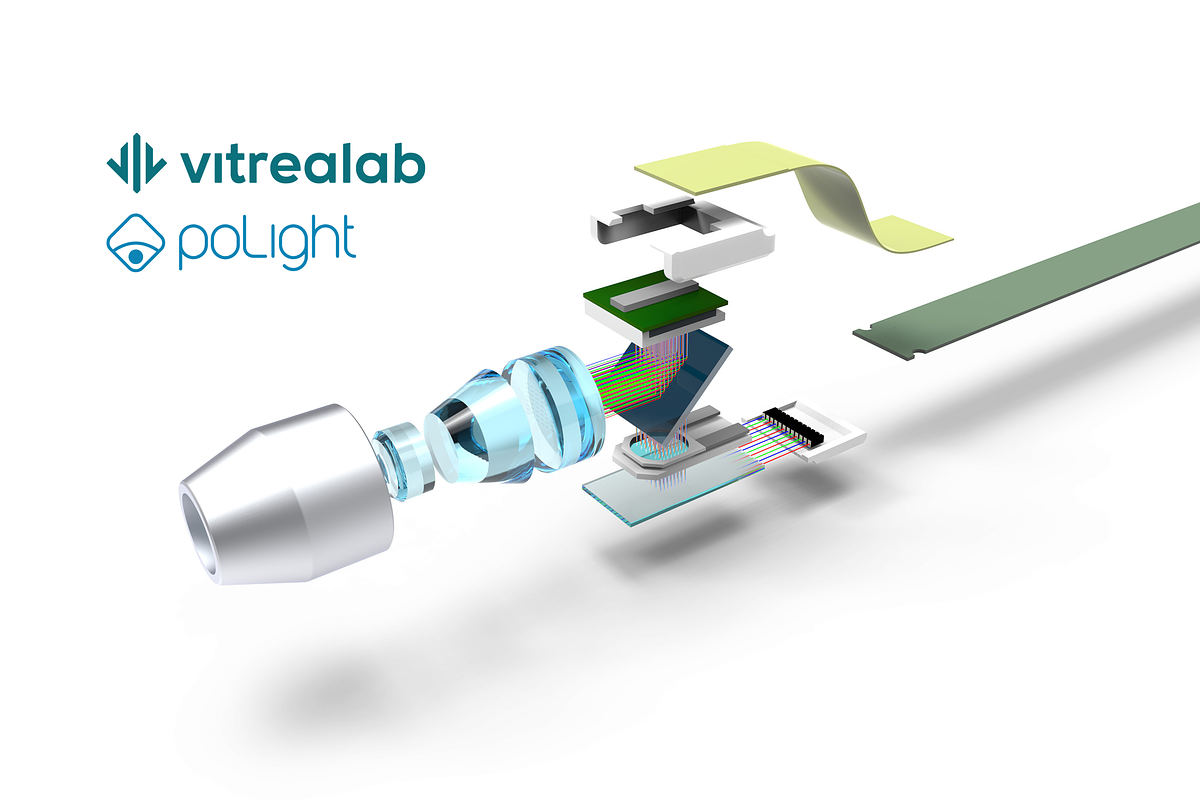
Vitrealab and poLight Tackle AR's Visual Glitches for a Clearer Future
VIENNA, Austria & TØNSBERG, Norway – April 23, 2026 – A new strategic partnership between Austrian deep-tech firm Vitrealab GmbH and Norwegian optical specialist poLight ASA is poised to solve one of the most persistent visual problems hindering the adoption of augmented reality: coherence artifacts. By combining their proprietary technologies, the two companies aim to eliminate the distracting speckles and fringes that plague laser-based AR displays, promising a future of clearer, more efficient, and more compact AR hardware.
The collaboration brings together Vitrealab's Quantum Light Chip (QLC) and poLight's TWedge® wobulation technology to refine laser illumination for Liquid Crystal on Silicon (LCoS) displays—a mature technology that remains a powerful contender in the race to build the perfect AR glasses.
The Speckle and Fringe Problem: AR's Lingering Hurdle
For augmented reality to become truly immersive, the digital information it projects onto the real world must be seamless, stable, and crystal clear. However, the very light source that offers the best potential for bright, power-efficient displays—the laser—carries an inherent flaw. This flaw manifests as coherence artifacts, a category of visual noise that includes speckle and fringes.
Speckle is the grainy, shimmering pattern that appears when a highly ordered light source like a laser scatters off a surface. The coherent waves of light interfere with each other, creating a random pattern of microscopic bright and dark spots. For an AR user, this translates to a distracting, noisy overlay that degrades image quality and can cause significant eye strain. Fringes, similarly, are interference patterns that can arise from internal reflections within the complex optics of an AR headset, further distorting the projected image.
These artifacts have been a primary barrier to the widespread use of lasers in LCoS-based near-eye displays, despite the laser's clear advantages in brightness, efficiency, and color purity. For years, engineers have wrestled with this trade-off, employing methods like vibrating diffusers to blur the speckle pattern. However, such mechanical solutions often add bulk, consume more power, and introduce potential points of failure—all critical compromises in the quest for sleek, all-day wearable AR glasses.
A Two-Pronged Attack on Visual Noise
The collaboration between Vitrealab and poLight represents a sophisticated, solid-state approach to this challenge, combining two distinct but complementary technologies to attack the problem at its source without the drawbacks of older methods.
First is Vitrealab's Quantum Light Chip (QLC). Born out of photonics research at the University of Vienna, the QLC is a proprietary Photonic Integrated Circuit (PIC) that uses a novel laser matrix illumination architecture. This chip is engineered to manage and condition the laser light at a microscopic level, significantly reducing coherence artifacts before they can degrade the image. The result is a brighter, more efficient light engine that delivers superior optical quality in a small form factor.
Complementing this is poLight's TWedge® wobulation technology. Known for its patented tunable optics used in smartphone cameras and other devices, poLight has developed TWedge® as a piezo-actuated, transmissive component. When placed in the optical path, it dynamically modulates the wavefront of the light passing through it. This controlled, high-speed 'wobulation' rapidly alters the light's phase properties, effectively averaging out the speckle patterns faster than the human eye can perceive them. The image appears clean and stable, with the artifacts effectively erased.
The synergy between the two is a key aspect of the partnership. The transparent, low-power design of the TWedge® simplifies the optical path, making the entire system more efficient. “The TWedge® wobulator from poLight helps us to improve light engine architectures with its transparent design,” said Chiara Greganti, CEO and Co-Founder of Vitrealab. “poLight’s solution simplifies the light path and increases the efficiency of our Quantum Light Chip compared to our previous MEMS approach.”
This highlights a crucial advantage: the combined solution is more elegant and efficient than prior attempts using Micro-Electro-Mechanical Systems (MEMS), which are often more complex and power-hungry.
Redefining the AR Display Landscape
This technological advancement arrives at a pivotal moment for the AR industry. While newer display technologies like micro-LED and OLEDoS garner significant attention for their potential, they face their own steep challenges in manufacturing scalability, brightness for outdoor use, and cost. In contrast, LCoS is a mature, high-resolution technology that remains a highly viable and cost-effective choice for AR developers.
By directly addressing the primary weakness of laser-illuminated LCoS systems, Vitrealab and poLight are not just improving a component; they are strengthening the entire LCoS ecosystem. This makes LCoS a more formidable competitor and gives AR device manufacturers a powerful, proven, and now visually pristine option for their next-generation products.
“Laser and LCoS represent a powerful combination for AR displays,” noted Oyvind Isaksen, CEO of poLight ASA. “By providing low power, ultra compact tunable optics to Vitrealab’s Quantum Light Chip, we are excited to help create a higher performing, more compact, and more manufacturable AR system.”
The emphasis on creating a “more manufacturable” system is critical. The path to mainstream AR adoption depends on producing high-quality devices at scale and at a consumer-friendly price point. By creating an integrated light engine solution that is compact, efficient, and easier to build, this partnership could significantly accelerate the timeline for when true consumer AR glasses move from the lab to the retail shelf.
European Deep Tech Forging a Path
The alliance also serves as a compelling example of European deep-tech innovation. In a global AR race often dominated by U.S. and Asian tech giants, this collaboration showcases the power of specialized expertise. Vitrealab, with its deep roots in Austrian photonics research and vertically integrated manufacturing, brings a mastery of light-shaping at the chip level. poLight, a publicly traded Norwegian company, contributes its established portfolio of patented, fast, and low-power tunable optics.
Together, they are not attempting to build an entire AR headset, but are instead solving a fundamental problem that will enable the entire industry to move forward. This focused approach allows them to innovate faster and more effectively within their specific domains, creating best-in-class components that larger companies can then integrate into their systems.
The cooperation is set to include joint development, the creation of prototype demonstrators for potential customers, and coordinated commercialization efforts. This structured plan indicates a clear and strategic intent to move this combined solution out of the R&D phase and into the AR hardware value chain, where it can begin making a tangible impact on the next wave of devices.
Topics & Related
Software & SaaS
Artificial Intelligence
Generative AI
Machine Learning
AI & Software Platforms
Related Company Pulse