
- 2026 Launch: Visure introduces 'Engineering Intelligence' framework with VISURE MCP Server to govern AI in complex systems.
- Regulatory Focus: Solution designed to comply with EU AI Act and NIST AI Risk Management Framework.
- Contextual AI: MCP Server provides AI with structured access to requirements, risks, and compliance data.
Experts would likely conclude that Visure's 'Engineering Intelligence' offers a differentiated approach to AI governance in engineering, emphasizing contextual awareness and compliance-by-design as critical for high-stakes industries.
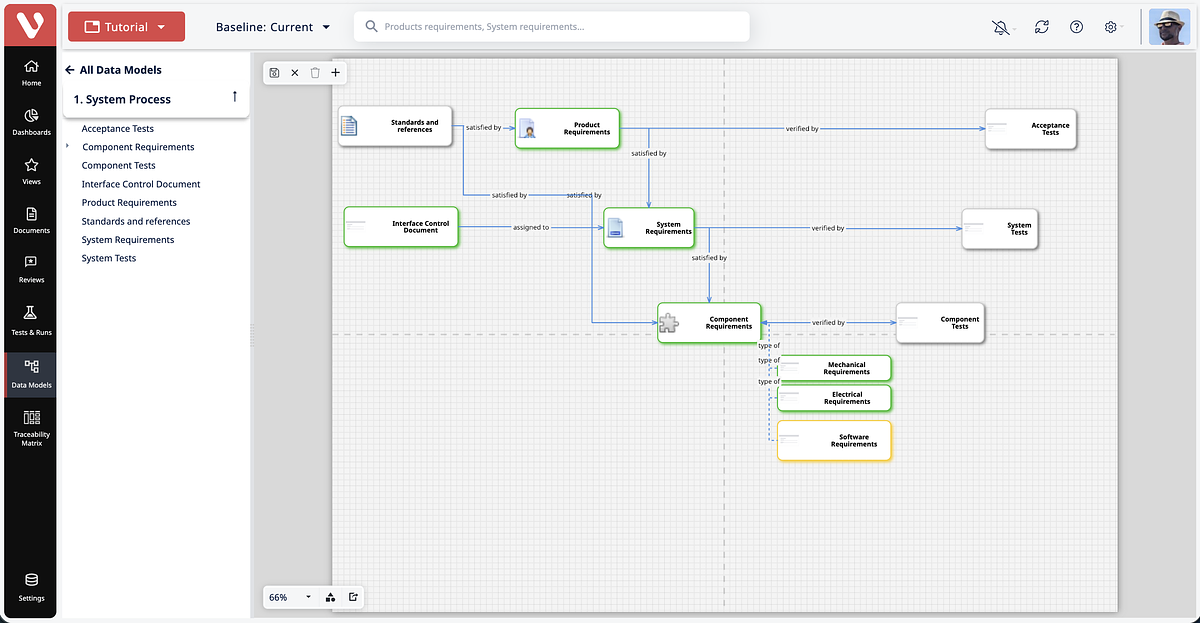
Visure's 'Engineering Intelligence': AI With Guardrails for Complex Systems
SAN FRANCISCO, CA – June 04, 2026 – As enterprises race to embed artificial intelligence into every facet of their operations, a critical question emerges: how do you grant AI the power to innovate without losing control? Visure Solutions, a veteran in requirements management for safety-critical systems, today offered its answer with the launch of 'Engineering Intelligence,' a new framework and its centerpiece, the VISURE MCP Server.
The announcement positions Visure not merely as a participant in the AI arms race, but as a potential arbiter of its responsible application in the high-stakes world of complex product engineering. The company argues that for AI to be truly effective—and safe—it cannot operate in a vacuum. It needs context, guardrails, and a deep understanding of the entire product lifecycle.
Beyond Another AI Tool
For years, engineering teams have been wrestling with a paradox: while technology has advanced, foundational challenges persist. Poorly defined requirements, siloed information across disparate tools, and broken traceability chains continue to plague development, leading to costly rework and compliance nightmares. The introduction of generic, large-language-model-based AI tools has, in some cases, exacerbated these issues by operating outside of established engineering workflows and governance structures.
Visure's 'Engineering Intelligence' purports to tackle this problem head-on. "Organizations are realizing that AI alone is not enough," said Fernando Valera, CTO at Visure Solutions, in the official announcement. "To generate meaningful engineering outcomes, AI needs context. It needs to understand requirements, risks, traceability, compliance obligations, and how decisions impact the rest of the product lifecycle."
This is where the VISURE MCP Server comes in. It is designed to act as a central, governed hub that provides AI agents with structured and secure access to the lifeblood of an engineering project: requirements data, risk analyses, V&V evidence, compliance artifacts, and the intricate web of relationships that connect them. This is a deliberate move away from the 'black box' AI paradigm. Instead of simply asking an isolated AI to generate code or a test case, the MCP Server ensures the AI operates with a complete, contextual picture, adhering to the same permissions, approval workflows, and governance controls as a human engineer.
The market is already crowded with major players like Siemens, IBM, and PTC, who are aggressively integrating AI into their own Application Lifecycle Management (ALM) and Product Lifecycle Management (PLM) platforms. Siemens' Polarion X, for instance, offers AI-powered requirement analysis, while IBM's Engineering AI Hub uses specific agents for tasks like quality checking. However, Visure's strategic emphasis on a centralized, context-providing server that governs all AI interactions across the lifecycle could be its key differentiator. It's a bet that in engineering, a holistic, controlled approach to AI will ultimately triumph over a collection of point solutions.
The Governance Imperative in Regulated Industries
The timing of this launch is no coincidence. As we move deeper into 2026, the regulatory landscape for artificial intelligence is solidifying. The EU AI Act, with enforcement looming, places stringent requirements on high-risk AI systems, demanding transparency, human oversight, and robust audit trails. A violation doesn't just mean a slap on the wrist; it carries the threat of fines substantial enough to cripple a business line. In the United States, the NIST AI Risk Management Framework is becoming the de facto standard for responsible AI deployment.
For companies in aerospace (governed by DO-178C), automotive (ISO 26262), and medical devices, these AI regulations compound an already complex web of industry-specific compliance mandates. Introducing AI-driven automation without an airtight governance framework is not just risky; it's a non-starter. This is the critical market need Visure aims to satisfy.
By ensuring AI agents operate through the MCP Server, 'Engineering Intelligence' promises to create an immutable, auditable record of every AI-assisted action. This 'compliance by design' approach means that traceability isn't an afterthought but an intrinsic property of the system. When an AI agent assists in generating a requirement, analyzing its impact, or suggesting a test case, the action is logged, linked, and subject to human-in-the-loop approval for critical decisions. This provides the very evidence that auditors and regulatory bodies demand, potentially turning a months-long audit preparation process into a far more streamlined affair.
The Rise of Contextual AI
Visure's announcement is a significant marker in a broader industry trend: the shift from generic AI to contextual AI. The initial wave of generative AI demonstrated the power of large language models to understand and produce human-like text, but their application in specialized domains revealed their limitations. Without a deep understanding of a specific field's data, relationships, and constraints, their outputs can be inconsistent, subtly incorrect, or dangerously misleading.
'Engineering Intelligence' represents the next evolution. The VISURE MCP Server effectively acts as a 'context engine' for AI. It doesn't just provide data; it provides a structured understanding of the relationships between data points. An AI agent can see not only a requirement but also the risks associated with it, the tests that validate it, the regulatory standard it fulfills, and the system components it impacts. This rich, interconnected knowledge graph allows the AI to perform higher-order tasks—like sophisticated impact analysis or compliance gap detection—with a degree of reliability that generic models cannot match.
This approach allows organizations to leverage the speed and scale of AI without sacrificing the rigor and accountability essential to engineering. It's about augmenting, not replacing, human expertise. By automating the tedious and error-prone aspects of data correlation and analysis, engineers are freed to focus on innovation and critical problem-solving.
"As organizations move beyond AI experimentation and toward operational AI deployment, Engineering Intelligence provides the foundation needed to scale AI responsibly," added Moustapha Tadloui, CEO at Visure Solutions. "The future of AI in engineering is not isolated tools. It is a structured strategy that combines AI, engineering context, governance, and lifecycle accountability to drive better engineering outcomes."