
- 96% compression: Neurovia AI's NeuroStream™ platform can compress a 4K video file by over 96%, drastically reducing storage and transmission costs.
- 20% rise in cyberattacks: The UAE saw a 20% increase in cyberattacks on critical sectors in 2023, highlighting the need for robust visual data security.
- $60M market cap: Robo.ai Inc., Neurovia AI's parent company, has a market capitalization under $60 million, reflecting investor skepticism despite strategic partnerships.
Experts would likely conclude that Neurovia AI's partnership with the UAE represents a critical step in securing visual data infrastructure, a growing priority for nations investing in AI-driven economies, though the long-term success of Robo.ai's strategy remains contingent on delivering tangible results in high-stakes environments.
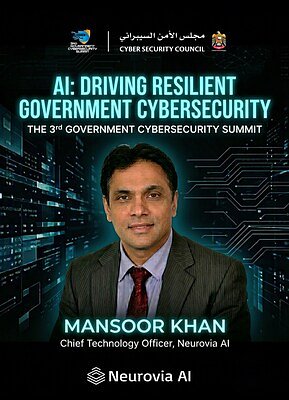
Visual Data is the New Oil, and Neurovia AI is Building the Pipeline
ABU DHABI, UAE – June 04, 2026
In the polished corridors of Abu Dhabi's 3rd Government Cybersecurity Summit, a subsidiary of a publicly traded American tech firm has just been named an "Official Government AI Cybersecurity Partner." On the surface, this is standard fare in the world of global technology procurement. But to view the announcement from Robo.ai's Neurovia AI as just another partnership is to miss the tectonic shift it represents. This isn't about selling software; it's about securing the most valuable, and vulnerable, new asset class of the 21st century: visual data.
The strategic rationale is clear. As artificial intelligence moves from abstract algorithms in the cloud to tangible actors in our physical world—powering autonomous vehicles, smart cities, and automated security—the torrent of video and sensor data it consumes has become a form of national infrastructure. Like power grids and communication networks, this "visual intelligence infrastructure" is now a cornerstone of economic development and a critical vector for national security. The UAE, a nation building its future on a foundation of digital transformation, understands this better than most. And in Neurovia AI, it has found a partner to help fortify it.
The Architecture of Trust in an AI-Saturated World
The speech slated to be delivered by Neurovia's CTO, Mansoor Ali Khan, is titled "Building Trusted Visual Intelligence Infrastructure in the AI Era." The title itself is a mission statement. For AI to be truly integrated into society, it must be trusted. And trust in a system is built upon the integrity of its foundations.
Khan's address is set to dissect the core structural challenges plaguing current data architectures when faced with the demands of physical AI. These are not trivial technical hurdles; they are fundamental obstacles to progress:
- Energy Consumption: The computational cost of processing petabytes of high-resolution visual data is staggering. The data centers powering today's AI are already a significant drain on energy grids. Scaling this to a national or global level with current technology is unsustainable.
- Real-Time Processing: For a self-driving car to avoid a pedestrian or a smart city grid to respond to a power surge, data processing cannot be subject to the whims of network latency. Decisions must be made in milliseconds. Transmitting massive video files to a central cloud for analysis is often too slow, too expensive, and too unreliable.
- Underlying Data Security: Every camera, sensor, and drone becomes a potential entry point for malicious actors. The data streams themselves can be intercepted, manipulated, or spoofed. An AI-powered attack could, for instance, insert ghost-like images into a security feed to create diversions, or subtly alter sensor readings to cause catastrophic failures in critical infrastructure.
This is where Neurovia AI's strategy becomes compelling. Its core platform, NeuroStream™, is not just another data management tool. It is engineered to solve these specific problems through a two-pronged approach: AI-native compression and edge computing. The platform has demonstrated the ability to compress a 4K video file by over 96%, a game-changer for storage and transmission costs. But the true innovation lies in its "AI-native" approach. Instead of dumbly shrinking file sizes, the technology is designed to understand what is important to the AI model, preserving essential data features while discarding noise. By coupling this with edge computing—processing data locally on the device or a nearby server—Neurovia aims to create a low-latency, high-efficiency, and inherently more secure data foundation for the physical world.
Abu Dhabi's Digital Fortress
The partnership's significance is amplified by its location. The United Arab Emirates is not merely adopting digital technology; it is undergoing a complete national metamorphosis. With its "National Cybersecurity Strategy 2026" and ambitious goals for AI-driven economic growth, the UAE is building one of the world's most advanced digital societies. This ambition, however, creates a vast and attractive attack surface. Cyberattacks on the nation's critical sectors rose by 20% in 2023 alone.
By designating Neurovia AI as an official partner, the UAE government is signaling a sophisticated understanding of the evolving threat landscape. This is a move beyond traditional firewalls and into the realm of securing the very sensory inputs of its future AI-governed state. The nation is investing billions in smart city ecosystems and cloud-powered public services. Protecting these investments requires a new security paradigm, one that Neurovia, with its focus on securing machine data at the source, is poised to provide. This collaboration is a key pillar in the construction of Abu Dhabi's digital fortress, a proactive measure to ensure its AI-driven future is resilient and trustworthy.
A High-Stakes Bet for Robo.ai
Zooming out from the specifics of the technology and the region reveals the corporate strategy at play. Neurovia AI is a wholly-owned subsidiary of Robo.ai Inc. (NASDAQ: AIIO), a company with a grand vision for an "AI machine economy platform." Yet, its market performance tells a more complicated story. With a market capitalization hovering under $60 million and a stock that has seen significant decline and high volatility over the past year, Robo.ai is a company under pressure. It recently regained compliance with Nasdaq's minimum bid price, a sign of the challenges it faces in convincing investors of its long-term vision.
In this context, the acquisition of Neurovia and its subsequent success in securing a high-profile government partnership is not just a win; it's a lifeline and a strategic masterstroke. This deal provides powerful validation for Robo.ai's overarching strategy. It demonstrates a tangible application for its hardware-software integrated solutions and plants a flag in the lucrative and strategically critical government sector. The planned Proof of Concept deployments with regional partners will be a crucial test. If NeuroStream™ can deliver on its promises within the demanding environment of the UAE's national infrastructure, it could be the catalyst that turns Robo.ai's fortunes around, proving to a skeptical market that its vision for an AI machine economy is not just a concept, but a reality under construction.
From Pixels to Policy: The New Geopolitical Asset
This partnership in Abu Dhabi is a microcosm of a larger global dynamic. The flows of power that will define the next decade are increasingly tied to the control of data infrastructure. Just as the 20th century was shaped by nations that controlled oil production and shipping lanes, the 21st century will be influenced by those who master the secure and efficient processing of machine-generated data. The quiet work of building these new digital pipelines, as exemplified by Neurovia's work, is where the future balance of economic and strategic power is being decided.
The world is moving beyond data as a commodity to data infrastructure as a form of strategic leverage. The ability to guarantee the integrity of the visual data that feeds a nation's AI is becoming as vital as guaranteeing the purity of its water supply. As governments and corporations around the world grapple with this new reality, the technologies and partnerships being forged today in places like Abu Dhabi will serve as the foundational blueprints for the coming age of physical AI.