
- $59.6 million awarded for production of existing MK3 and MK4 countermeasures
- 200 million CAD contract for advanced sonar systems with Netherlands and Belgian Navies
- £40 million contract for sonobuoys with UK's Royal Navy
Experts agree that the ADC MK6 represents a critical advancement in torpedo defense, addressing the urgent need for adaptive countermeasures against increasingly sophisticated underwater threats.
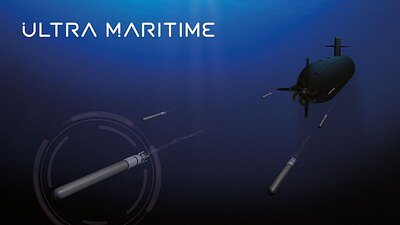
US Navy Taps Ultra Maritime for Next-Gen Anti-Torpedo Defense System
BRAINTREE, MA – February 18, 2026 – The U.S. Navy has awarded Ultra Maritime a critical development contract to create the next generation of torpedo defense, signaling a major step in the escalating technological arms race unfolding in the silent depths of the world’s oceans. The new system, designated the Acoustic Device Countermeasure (ADC) MK6, is designed to protect sailors and high-value naval assets from an increasingly sophisticated and lethal generation of underwater weapons.
The contract comes as naval strategists warn that adversary torpedoes are evolving at an alarming pace. Once a straightforward threat, modern torpedoes are now smarter, stealthier, and more adaptable, capable of overcoming traditional defensive measures with alarming precision. In this high-stakes environment, the need for advanced countermeasures has become a top priority for naval dominance.
The Deepening Undersea Arms Race
For decades, the primary defense against a torpedo attack involved a combination of evasive maneuvers and the deployment of simple acoustic decoys, or noisemakers, designed to lure the incoming weapon away. However, the effectiveness of these tactics is rapidly diminishing. Today's most advanced torpedoes are no longer blunt instruments but intelligent, autonomous hunters.
These weapons feature sophisticated guidance systems that have moved far beyond simple acoustic homing. Many are wire-guided, allowing operators on the launching submarine or ship to provide real-time target updates. Others employ wake-homing technology, which tracks the turbulence left by a ship's passage, making them incredibly difficult to deceive. Perhaps most concerning are the advanced acoustic sensors and onboard processing that allow these torpedoes to distinguish between a crude decoy and the complex acoustic signature of a multi-billion-dollar warship.
Furthermore, stealth has become a defining characteristic. Modern torpedoes utilize electric or pump-jet propulsion systems that minimize noise and cavitation, making them exceptionally difficult to detect before they are dangerously close. Coupled with enhanced re-attack capabilities that allow a torpedo to re-acquire a target after an initial miss, these advancements present a multi-layered threat that can overwhelm a ship's defenses. This evolution has rendered many legacy countermeasure systems obsolete, creating an urgent capability gap that the ADC MK6 aims to fill.
A New Generation of Defense
Ultra Maritime's ADC MK6 is engineered not just to make noise, but to think. According to the company, the system is designed for “rapid deployment and speed, generating powerful, tailored acoustic signatures to confuse and divert incoming undersea weapons.” This represents a fundamental shift from traditional decoys to intelligent countermeasures.
Instead of simply emitting a loud sound, the ADC MK6 is designed to project a highly realistic acoustic profile that can mimic the signature of a specific vessel, effectively creating a convincing phantom target. This adaptive capability is crucial for deceiving the advanced logic programmed into modern torpedoes. The system's emphasis on improved acoustic output and mission-ready performance is built upon Ultra Maritime's decades-long experience, having delivered over 30,000 expendable torpedo countermeasures to allied navies worldwide.
The ADC MK6 is a 'soft-kill' solution, part of a layered defense strategy. While 'hard-kill' systems—essentially anti-torpedo torpedoes—are in development, they represent a final line of defense. Effective soft-kill systems like the ADC MK6 are vital because they can neutralize a threat at a greater distance without kinetic force, preserving the ship's more limited and expensive hard-kill interceptors for threats that penetrate the initial defensive screen.
Solidifying a Strategic Partnership
The award of the ADC MK6 development contract solidifies Ultra Maritime's position as a premier partner for the U.S. Navy and allied forces in the anti-submarine warfare (ASW) domain. The company's deep portfolio, which includes everything from sonobuoys that detect submarines to the countermeasures that defend against their weapons, makes it a key player in the entire undersea warfare ecosystem.
This contract does not exist in a vacuum. It follows a recent $59.6 million award for the production of the company's existing MK3 and MK4 acoustic countermeasures, ensuring the fleet remains protected while the next generation is developed. This dual approach of sustaining current systems while investing in future technology highlights the long-term strategic relationship between the defense contractor and the Navy.
Ultra Maritime's influence extends globally, reinforcing its market leadership. In recent years, the company has secured a CAD $200 million contract to supply advanced sonar systems to the Royal Netherlands and Belgian Navies and a £40 million contract for sonobuoys for the UK's Royal Navy. These agreements underscore the trust that allied nations place in the company's technology to secure their maritime interests in an increasingly contested global commons.
Protecting the Fleet in a Contested World
Ultimately, the development of the ADC MK6 is about more than just technology; it is a direct response to a changing geopolitical landscape. The U.S. Navy's strategic documents, including the CNO Navigation Plan, consistently emphasize the need to maintain undersea dominance and counter the anti-access/area-denial (A2AD) capabilities of potential adversaries. In a potential conflict, the ability of surface fleets to operate safely within contested waters depends heavily on their ability to defeat threats like advanced torpedoes.
The investment in systems like the ADC MK6 is a crucial element in ensuring naval readiness and the survivability of sailors and platforms. By providing a trusted and adaptive layer of defense, this technology allows commanders to operate with greater confidence in high-threat environments. As Ultra Maritime continues to advance its research, collaborating with academic institutions and pioneering modular ASW solutions like its 'Sea Tracker' system, the development of the ADC MK6 stands as a clear example of the continuous cycle of innovation required to stay ahead in the silent, high-stakes war beneath the waves.