
- 450+ attendees: Business leaders, investors, and policymakers convening in Ho Chi Minh City for the summit.
- 6% annual growth needed: Required to achieve high-income status by 2045, according to World Bank thresholds.
- 10% U.S. import duty: Temporary tariff under the Trade Act of 1974, with potential to rise to 15%.
Experts emphasize that Vietnam must navigate global economic instability through strategic diversification and structural reforms to sustain growth and achieve its 2045 high-income goal.
Vietnam Charts Course Through Global Headwinds and High Ambitions
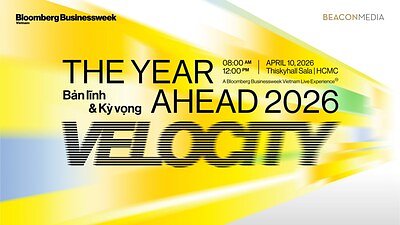
HO CHI MINH CITY, Vietnam – April 06, 2026 – As Vietnam stands at a critical economic crossroads, grappling with global instability while chasing one of Asia's most ambitious development goals, over 450 of the region's top business leaders, investors, and policymakers are set to convene in Ho Chi Minh City. On April 10, the "The Year Ahead 2026 – Velocity: Resilience and Expectations" summit, a premier event hosted by Bloomberg Businessweek Vietnam and Beacon Asia Media, will tackle the pivotal question: Can Vietnam transform its proven resilience into sustainable growth drivers for the future?
The summit, held at the Thiskyhall Convention Center, aims to decode Vietnam's trajectory amidst a landscape fraught with challenges. The central theme of "Resilience and Expectations" reflects a nation balancing on a tightrope, defending against immediate economic threats while accelerating toward its long-term vision of achieving high-income status by 2045.
Navigating a Turbulent Global Landscape
Vietnam's export-driven economy, a model of success in recent decades, is facing its most significant test yet. The summit's agenda is shaped by a confluence of international crises that directly impact the nation's bottom line. Escalating conflict in the Middle East has thrown critical shipping routes into disarray. Vessels are now forced into costly and lengthy detours around Africa's Cape of Good Hope, extending transit times by up to two weeks and inflating fuel and insurance costs. This disruption sends ripples through Vietnam's supply chains, driving up the price of both imported materials and exported goods.
Simultaneously, an unpredictable trade relationship with the United States, Vietnam's largest export market, is creating profound uncertainty. While a February Supreme Court ruling invalidated certain previous tariffs, it was quickly followed by a new, temporary 10% import duty under the Trade Act of 1974. With discussions of a potential increase to 15%, this move is seen by analysts as a "seismic shift" that could erode the competitive advantage Vietnam has carefully built.
Although a weakening U.S. dollar has provided a slight "currency cushion" for Vietnamese exporters, the persistent threat of new Section 301 investigations by the U.S. Trade Representative keeps businesses on edge. These global headwinds demand more than just resilience; they require sophisticated risk management and a strategic diversification of markets and supply chains to maintain momentum.
The 2045 Ambition: A High-Income Horizon
Underpinning the discussions is Vietnam's audacious national goal: to become a high-income country by 2045, the 100th anniversary of its independence. Achieving the World Bank's current threshold of nearly $14,000 per capita income requires sustaining an average annual growth rate of around 6% for the next two decades—a feat that demands a fundamental economic transformation.
This journey is fraught with internal challenges. Economists warn that Vietnam must avoid the notorious "middle-income trap," where rising wages diminish a country's manufacturing competitiveness before it can successfully transition to a high-value, innovation-driven economy. Furthermore, the country's demographic dividend—the economic benefit of a young, growing workforce—is projected to end around 2036, placing greater urgency on boosting productivity.
Adding to the pressure, climate change poses a tangible threat. As one of the world's most vulnerable nations to rising sea levels and extreme weather, inaction could shave significant points off its annual GDP growth, potentially derailing the 2045 goal entirely. Success hinges on deep structural reforms, including enhancing the efficiency of state-owned enterprises, modernizing the tax system, and ensuring the consistent application of laws and regulations to foster a predictable investment climate.
Forging New Engines of Growth
In response to these pressures, the Vietnamese government is aggressively pursuing new growth drivers, a core focus of the upcoming summit. The strategy involves a decisive pivot toward a greener, more technologically advanced economic model. Institutional reforms are being paired with major investments in green energy, AI-driven digital transformation, and modern infrastructure.
Vietnam is positioning itself for a significant e-mobility transition, with policies designed to encourage the adoption of both two- and four-wheeled electric vehicles. The government has also signaled its intent to boost spending on research and development to 2% of GDP, aiming to move the economy up the value chain from basic assembly to complex manufacturing and innovation. This involves strengthening domestic supporting industries to increase local content and reduce over-reliance on imported components, a vulnerability exposed by past trade disputes.
The summit will explore how Vietnamese firms can seize these opportunities, restructuring their growth models to accelerate productivity and innovate rather than merely defending against external risks. The discussions are expected to provide a roadmap for aligning corporate strategy with the national vision for a sustainable and technologically advanced economy.
A Confluence of Minds in Ho Chi Minh City
The diverse assembly of speakers, ranging from international geoeconomic experts and diplomats to local banking leaders and industry captains, ensures that the dialogue will be multi-dimensional. Attendees—including CEOs of multinational corporations, board members of major Vietnamese enterprises, and key policy advisors—will gain perspectives that span from the high-level geopolitical landscape to the granular operational decisions shaping their businesses today.
A unique feature of the event is the "The Context Hub," a series of deep-dive interviews conducted by Beacon Asia Media's BAM Studio. This initiative aims to bridge the gap between the boardroom's strategic insights and the market's practical actions, translating high-level discourse into executable plans.
As Vietnam stands at this inflection point, the insights and strategies emerging from "The Year Ahead 2026" will be more than just academic. They will help shape the critical decisions that determine whether the nation can successfully harness its internal resilience to meet external challenges and realize its extraordinary economic expectations.