
- 600 military pilots transitioned to commercial aviation since 2024, with 500 more expected by 2027. - 24,000 pilot deficit projected in North America for 2026. - 1,700 pilots to be hired by United in 2026 alone.
Experts would likely conclude that United's 'Stars and Stripes' livery and Military Pilot Program represent a strategic alignment of patriotism with a critical business need, effectively addressing the aviation industry's pilot shortage while enhancing brand authenticity.
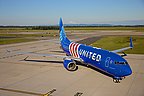
United's New Colors: Patriotism as a Strategic Pilot Pipeline
WASHINGTON, D.C. – June 15, 2026 – As a U.S.-built Boeing 787-10 and 737-800 streak across the summer skies adorned in a new “Stars and Stripes” livery, United Airlines is broadcasting more than just a patriotic message. The bold red, white, and blue paint job, unveiled today at Washington Dulles International Airport, is the highly visible face of a shrewd corporate strategy that weaves national pride directly into the fabric of its most critical business need: securing a steady flow of highly skilled pilots.
Joined by U.S. Secretary of Transportation Sean P. Duffy, United CEO Scott Kirby celebrated the dual announcement: the commemorative livery for America’s 250th anniversary and a significant milestone for the airline’s United Military Pilot Program. Since its inception in 2024, the program has successfully transitioned nearly 600 military pilots to the commercial flight deck, with another 500 expected by the end of 2027. This isn’t just a feel-good story; it’s a calculated move at the intersection of public relations and human resources, addressing one of the most pressing challenges facing the global aviation industry.
A Solution Painted in Red, White, and Blue
The timing is no coincidence. The airline industry is navigating a severe pilot shortage, a structural crisis decades in the making. Industry analysis from Oliver Wyman projects the deficit in North America to peak this year at nearly 24,000 pilots, a gap fueled by a wave of mandatory retirements, pandemic-era early buyouts, and a bottlenecked training pipeline. For an airline like United, which plans to hire approximately 1,700 pilots in 2026 alone, finding qualified candidates is a paramount operational concern.
This is where the pageantry of the “Stars and Stripes” livery, with its 50 stars and dynamic diagonal stripes, meets the pragmatism of the pilot program. While the livery serves as a flying billboard for the Semiquincentennial celebrations, it also acts as a powerful recruiting tool. It signals to a key demographic—the thousands of highly trained aviators in the U.S. military—that United is not just a potential employer, but a committed partner.
“America is the greatest country in the world, and we're proud to play a role in celebrating our nation's 250th anniversary,” said Kirby. “Today, we proudly employ more than 8,300 military veterans, of which 1,500 are active members of the National Guard and Reserve forces. Our 'Stars and Stripes' livery pays tribute to their service.”
From Combat Boots to Commercial Cockpits
Beneath the symbolic gesture lies a program meticulously designed to dismantle the barriers that have historically complicated the transition from military to civilian aviation. The United Military Pilot Program offers active-duty and reserve pilots a conditional job offer (CJO) as a First Officer up to a year before they are available to start full-time employment. Crucially, applicants are not required to hold an Airline Transport Pilot (ATP) Certificate at the time of application.
This flexibility provides an invaluable sense of security for service members planning their post-military careers. “It provides a stabilized approach,” noted one industry analyst. “Knowing you have a landing spot at a major carrier like United, long before you even begin the final separation process, is a game-changer.”
United sweetens the deal with a “Pilot Buddy” program, pairing military applicants with current United pilots—many of them veterans themselves—to mentor them through the complexities of FAA certifications and the cultural shift to a commercial airline. This addresses a critical pain point. While military pilots possess thousands of hours of experience in high-stakes environments, navigating the civilian certification process can be a daunting bureaucratic and financial challenge. By creating a clear, supportive pathway, United is making itself the carrier of choice for this elite talent pool.
With over 18,000 pilots on its roster, more than 4,500 of whom are veterans, the airline has a deep well of institutional knowledge to draw upon. The success of the program—on track to bring over 1,000 military pilots into the fold in just a few years—demonstrates its effectiveness in creating a reliable talent pipeline that competitors are surely watching.
The Business of Patriotism
In an era of heightened scrutiny over corporate social responsibility, gestures of patriotism can sometimes be met with cynicism, dismissed as “patriotism washing.” United’s initiative, however, appears to be a case study in aligning brand messaging with substantive action. While other carriers like Delta, American, and JetBlue are also marking the Semiquincentennial with their own decals and liveries, United’s campaign is deeply integrated with a core business function.
The airline's long-standing support for the military community lends credibility to its current campaign. Its “United for Veterans” business resource group boasts over 5,300 members, and the company has extensive partnerships with organizations like the USO and the Fisher House Foundation, providing flights and volunteer support. This history suggests the new livery is less a standalone marketing ploy and more the public expression of a deeply embedded corporate value.
“It's great to see United join this administration's call to celebrate America's historic birthday,” said Secretary Duffy, highlighting the alignment with the broader national commemorative effort. The commemorative plaques being installed on the two specialty aircraft, dedicated to service members and veterans, further underscore the message.
By tying the celebration of a national milestone directly to a program that offers tangible career opportunities, United effectively sidesteps accusations of tokenism. The investment in painting a widebody 787 and a 737 is a marketing expense, but the return is measured not just in brand affinity but in filled cockpit seats. In the fierce competition for talent, this dual-pronged strategy—celebrating the nation while actively recruiting its heroes—is a powerful and innovative approach to securing a future in the skies.