
- $200 million investment in the new YHU Terminal, designed for efficiency with 9 gates and 28 check-in counters.
- Projected to add 91% capacity boost to Montréal's peak-season air travel.
- Expected to generate $275 million annually in GDP and $6 million in property tax revenue for Longueuil.
Experts would likely conclude that the YHU Terminal represents a strategic and well-integrated bet on regional connectivity, leveraging public-private partnerships and community engagement to enhance urban air travel efficiency while stimulating local economic growth.
Montréal's New YHU Terminal: A Bet on Regional Connectivity and Urban Convenience
LONGUEUIL, QC – June 15, 2026
Amidst the crisp morning air on Montréal's South Shore, the sound of jet engines heralded more than just a new day; it marked the beginning of a new era for the region's transportation ecosystem. The YHU Terminal at MET – Montréal Metropolitan Airport officially commenced commercial operations today, a milestone celebrated with a ribbon-cutting ceremony attended by dignitaries including Longueuil Mayor Catherine Fournier and Quebec's Minister of Tourism, Amélie Dionne. But beyond the fanfare, this launch represents a carefully orchestrated, multi-million-dollar bet on convenience, regional integration, and a new model for urban air travel.
As the first Porter Airlines and Pascan Aviation flights welcomed passengers, the vision of a consortium of private and public partners took flight. This isn't merely an expansion; it's a strategic repositioning of an entire metropolitan area's relationship with air travel, one designed to complement the international hub of Montréal-Trudeau (YUL) by offering a nimble, domestic-focused alternative.
A Calculated Bet on Convenience
The driving force behind the YHU Terminal is a simple, yet powerful, value proposition: a faster, more humane travel experience. Developed by YHU Infrastructure Partners—a joint venture between Porter Aviation Holdings Inc. and infrastructure giant Macquarie Asset Management—the $200 million facility is engineered to eliminate the friction points of modern air travel. For Michael Deluce, CEO of Porter Airlines, the terminal is nothing short of a "game changer," drawing parallels to the success of Toronto's Billy Bishop Airport.
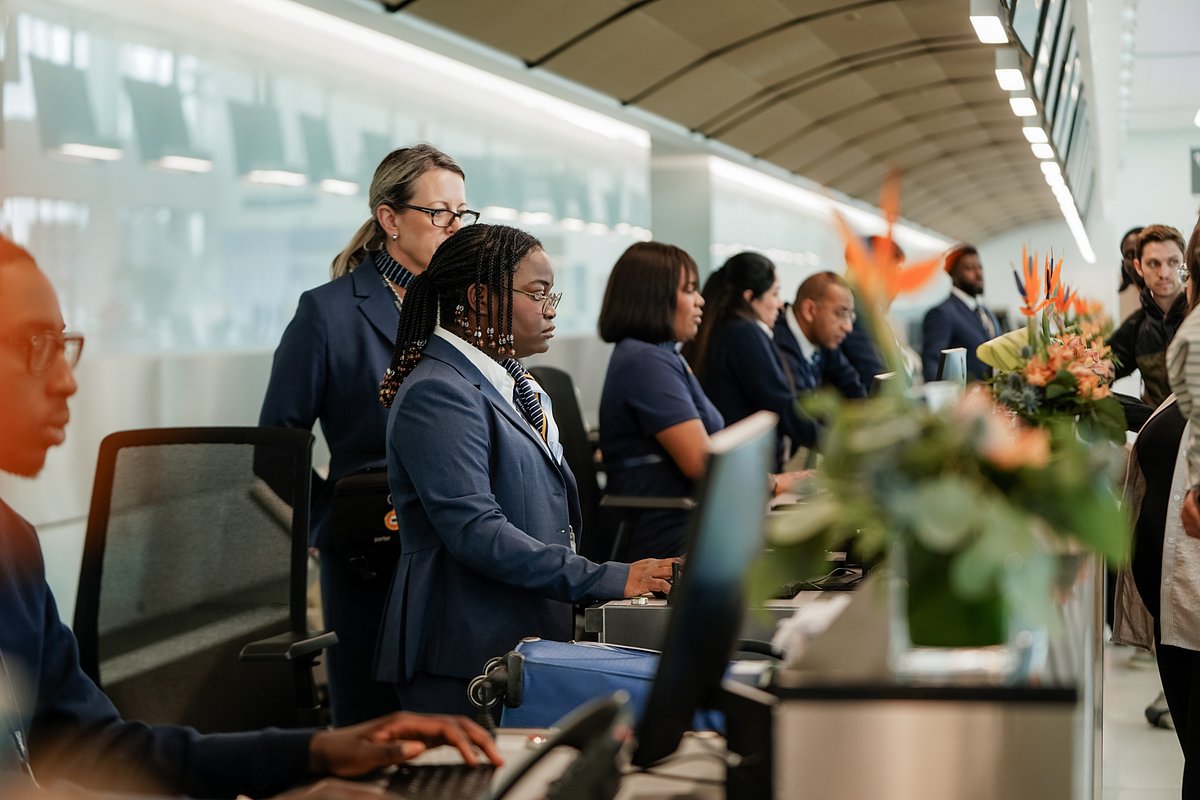
Spanning 21,000 square meters, the terminal is a study in efficiency. With nine boarding gates, 28 check-in counters, and a spacious 900-seat lounge bathed in natural light, the design prioritizes a swift journey from curb to gate. By focusing exclusively on domestic routes with no customs facilities, the terminal is purpose-built for speed. The integrated operating model, where a single entity manages everything from baggage handling to de-icing, is designed to ensure seamless coordination and minimize delays.
This project consciously learns from Québec's aviation history, particularly the struggles of the remote Montréal-Mirabel International Airport. By revitalizing Canada's oldest airport—established in 1927 and strategically located just 15 kilometers from downtown—the developers are leveraging an existing asset close to the population it serves. Porter's dual-airport strategy is a key part of this, maintaining its presence at YUL while using MET to capture the South Shore market and add a projected 91% capacity boost to its Montréal operations during peak season.
The Economic Engine for the South Shore
While passenger convenience is the public face of the project, its economic underpinnings are transformative for Longueuil and the Montérégie region. The terminal is projected to inject an average of $275 million into the annual GDP and generate over $6 million in property tax revenue for the city. The creation of approximately 300 direct terminal jobs and another 700 through its network of partners provides a significant local employment boost.
More strategically, the YHU Terminal anchors Longueuil's status as a premier aerospace innovation hub. The city, already home to the Canadian Space Agency and the Centre technologique en aérospatiale (CTA), now boasts enhanced connectivity that makes its burgeoning innovation zone more attractive to global talent and investment. The terminal acts as a critical piece of infrastructure, linking the region's high-tech sector to major cities across Canada.
This economic catalyst was made possible through a sophisticated public-private partnership model. The initial private investment was bolstered by a C$90 million loan from the Canada Infrastructure Bank and further financing from Desjardins, demonstrating a multi-layered confidence in the project's viability and its importance for national and regional infrastructure.
A Blueprint for Community Buy-In
Perhaps the most modern aspect of the YHU Terminal is not its architecture, but the strategy behind its community integration. Acknowledging the potential for local friction that often accompanies major airport projects, the developers engaged in extensive collaboration with citizens and elected officials. This dialogue resulted in a set of binding community acceptability principles.
Strictly regulated operating hours, a prohibition on noisy overnight flights, and the installation of air quality monitoring sensors were key concessions that helped secure public trust. Furthermore, YHU Infrastructure Partners invested $8.2 million in local road improvements to mitigate traffic concerns. This proactive approach paid off, with surveys indicating that 80% of the South Shore population supported the project. The integration extends to public transit, with the new METBus route 428 providing a direct, 25-minute link to the Longueuil Metro station, knitting the airport into the fabric of the city's transport network.
Navigating a New Aviation Landscape
With the terminal now operational, the new aviation landscape is taking shape. Porter Airlines is launching an ambitious slate of 12 new routes to destinations from Vancouver to St. John's. Meanwhile, Pascan Aviation, a regional carrier with a 20-year history at this airport, is leveraging the new facility to expand its services to key Québec destinations like Québec City and the Îles-de-la-Madeleine, supported by the provincial government's Regional Air Access Program.
However, the launch was not without a note of complexity. On the ground, outside the gleaming new terminal, flight attendants from Pascan Aviation were seen picketing, their union citing the airline's refusal to negotiate as the reason for the demonstration. This immediate labor challenge serves as a reminder that even the most meticulously planned infrastructure projects must navigate the turbulent crosscurrents of human and economic realities. As the first wave of travelers embarks, the YHU Terminal begins its journey not just as a structure of steel and glass, but as a dynamic new player in a constantly evolving world.