
- $1.13 million invested by United Way Greater Toronto to expand its Community Action Grants program
- 28 resident-led projects funded across Cooksville, South Markham, and Jane Finch
- $5,000–$75,000 grant range to support grassroots initiatives addressing food security, mental health, and anti-displacement
Experts would likely conclude that this investment represents a strategic shift in philanthropy, empowering communities to lead their own development and ensuring equitable urban growth through resident-driven solutions.
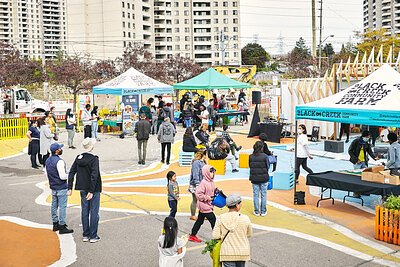
United Way Invests $1.13M to Put Residents in Charge of Neighborhood Futures
TORONTO, ON – January 19, 2026 – As cranes reshape skylines and new transit lines redraw community maps, United Way Greater Toronto is making a significant investment in the people on the ground. The organization today announced a $1.13 million expansion of its Community Action Grants (CAG) program, empowering residents to steer the future of their own neighborhoods.
The funding will support 28 resident-led projects across Cooksville in Peel Region, South Markham in York Region, and Toronto’s Jane Finch community - all areas facing immense pressure from rapid development and revitalization. These grassroots initiatives will tackle critical priorities identified by community members themselves, including food security, mental health, economic opportunity, and anti-displacement strategies.
This second round of funding builds on a successful pilot and represents a firm commitment to a philosophy of community-driven change. "The Community Action Grants help support local initiatives that are led by residents and local organizations, reflecting the community's priorities," said Heather McDonald, President and CEO of United Way Greater Toronto. "By ensuring the community's voice is directly shaping neighbourhoods, we are building a future with people who know their neighbourhoods best."
A Bulwark Against Urban Transformation
The investment arrives at a critical juncture for these three communities. In Jane Finch, the Finch West Light Rail Transit (LRT) project is spurring massive development, raising resident concerns about gentrification and the potential loss of local culture. Similarly, Cooksville is in the midst of a major transformation driven by the Hurontario LRT and the ambitious "Vision Cooksville" plan, which aims to create a denser, more walkable urban center. These large-scale projects promise growth but also bring the risk of displacing long-time residents and straining social infrastructure.
United Way's strategy directly confronts these challenges by funding projects designed to build resilience from within. The focus on "anti-displacement" is not just a buzzword but a core priority, enabling residents to actively participate in managing their community’s evolution and ensuring they can "grow in place." This approach is part of the organization's broader, long-term strategy to stabilize communities, which also includes initiatives like the Community Real Estate Initiative, a program designed to help non-profits secure permanent, non-market spaces to prevent vital services from being priced out of the very neighborhoods they serve.
By placing resources directly into the hands of residents, the Community Action Grants serve as a powerful counter-balance to top-down development. It ensures that as these neighborhoods change, the process is more equitable, and the benefits are shared by those who have called these communities home for years.
Power to the People: Projects in Action
The strength of the Community Action Grants program lies in its resident-led model, which was refined during a successful 2024 pilot in Jane Finch. In that initial round, residents formed the majority of the grant review committee, ensuring that funding decisions were grounded in authentic local knowledge and needs. The 28 new projects continue this legacy, offering tangible solutions to complex local problems.
In Cooksville, the Digital Employment Bridge project, run by the Newcomer Centre of Peel, will receive a grant to tackle the digital divide. The initiative aims to provide low-income newcomers with industry-recognized certifications and digital skills, improving their access to meaningful employment. "Community-led initiatives play a vital role in building stronger, more inclusive neighbourhoods," noted Hema Tingare, Executive Director at the Newcomer Centre of Peel. "The Community Action Grants support grassroots partners who are deeply connected to their communities and best positioned to create meaningful local impact."
In South Markham, Mental Wellness: From Stigma to Strength will address a critical need among seniors. Run by A Rose for Grandma Wellness Hub, the project will provide biweekly workshops and support groups for Black and South Asian seniors, using culturally relevant outreach like podcasts and expressive arts to combat stigma around mental health and caregiver burnout. Christiana Egi, the organization's Executive Director, explained the grant's importance: "The Community Action Grant will help bring this commitment to life by supporting culturally grounded programs that promote mental wellness among seniors, caregivers, and the wider South Markham community... and create safe spaces where individuals and families feel supported, connected, and empowered."
Meanwhile, in Jane Finch, the Nourish & Empower program will bring youth and seniors together to fight food insecurity and social isolation. The six-month intergenerational project will host weekly meal prep workshops in local high-rises, teaching participants how to cook budget-friendly, culturally diverse recipes. "As a resident-led initiative, this funding allows us to build something that speaks directly to the realities of our community," said Peace Katasi of Bloomzhub, the project's organizer. "Participants leave with real skills, prepared meals, and the confidence to eat well at home... we can create space for learning, connection, and dignity around food."
A New Blueprint for Philanthropy
This $1.13 million investment is more than a series of one-off donations; it represents a strategic shift in philanthropic thinking. By decentralizing decision-making and prioritizing grassroots leadership, United Way Greater Toronto is championing a model that builds long-term community capacity and resilience.
The success of the 2024 pilot program in Jane Finch, where all resident-led projects were successfully completed, provided a powerful proof of concept. It demonstrated that when communities are trusted with resources, they can generate effective, hyper-local solutions. This success informed the expansion into Cooksville and South Markham and solidified United Way's approach, which it describes as a "30-year investment" in a community like Jane Finch, signaling a commitment that extends far beyond a single funding cycle.
The program's flexible grant structure - offering smaller amounts between $5,000 and $20,000 for quick, resident-led actions and larger grants up to $75,000 for more established agency projects - allows for a diverse ecosystem of solutions. This approach moves away from traditional, rigid funding models and toward a more dynamic and responsive form of social investment.
By funding these 28 diverse projects, from digital literacy workshops to intergenerational cooking classes, United Way is not just addressing immediate needs. It is cultivating a network of empowered local leaders and fostering the social infrastructure necessary for these communities to navigate the challenges of urban growth on their own terms, ensuring a more equitable and resilient future for all residents.