
- 10,861 sq. ft.: Size of UNC's new D.C. office, 'Carolina in the Capital'.
- $1.6 billion: Annual research funding UNC attracts, with 60% from federal sources.
- $800,000/year: Cost of the 12-year lease for the new hub.
Experts view UNC's D.C. hub as a strategic move to enhance its influence in policy, research funding, and alumni engagement, aligning with broader trends among top research universities.
UNC's Capital Gambit: New D.C. Hub to Boost Influence and Research
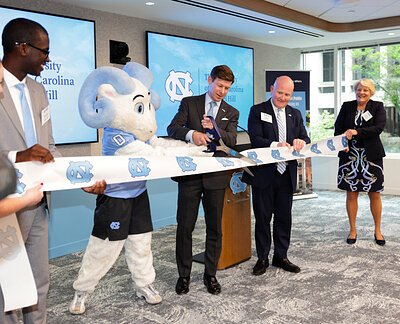
WASHINGTON, D.C. – April 30, 2026 – The University of North Carolina at Chapel Hill has planted a significant flag in the nation's capital, officially opening a new 10,861-square-foot office in a move designed to amplify its influence on policy, research, and career development. The state-of-the-art facility, dubbed "Carolina in the Capital," is strategically located at 101 Constitution Avenue NW and represents a major investment in the university's future as a national leader.
The new hub is more than just real estate; it is the physical manifestation of a multi-faceted strategy to create a permanent home for students in D.C., strengthen ties with the university's largest out-of-state alumni base, and deepen its engagement with the federal agencies that are the lifeblood of its research enterprise. As a top-tier R1 research institution, UNC-Chapel Hill attracts over $1.6 billion annually for research, with more than 60% of that funding originating from federal sponsors like the National Institutes of Health (NIH) and the National Science Foundation (NSF), both headquartered in the Washington area.
A Strategic Move in a Competitive Landscape
UNC-Chapel Hill's decision to establish a permanent D.C. office places it firmly alongside other elite research universities that have recognized the necessity of a physical presence in the capital. This move is not happening in a vacuum but is part of a broader trend among R1 institutions to secure a seat at the federal table. Peer institutions like Duke University, which founded its "Duke in D.C." office in 2012, have long used their capital hubs to influence policy, provide experiential learning, and engage alumni.
By establishing "Carolina in the Capital," UNC is ensuring it can compete for influence and resources on a national stage. The office provides a crucial "landing spot" for faculty, administrators, and researchers to engage directly with policymakers and federal agency officials. This proximity is vital for a university that ranks as the nation's 11th largest in research volume and is a prominent member of the D.C.-based Association of American Universities (AAU) and the Association of Public & Land Grant Universities (APLU). The move signals a clear intent to be an active participant in the national "thought ecology," shaping conversations on everything from public health to artificial intelligence.
A New Era for Experiential Learning
For years, UNC students and faculty participating in Washington-based academic programs have operated out of temporary or borrowed spaces, a logistical challenge that limited the scope and cohesiveness of their experience. The new office fundamentally changes that dynamic, providing a permanent and sophisticated home for immersive learning.
"Carolina in the Capital is a state-of-the-art facility that reflects our commitment to creating experiential learning opportunities for our students and faculty," said Chancellor Lee H. Roberts at the recent ribbon-cutting ceremony. "The space is designed as an immersive learning environment where students can translate classroom knowledge into hands-on experience, which has never been more important."
This dedicated hub will support a robust schedule of classes, seminars, and events for undergraduate and graduate students alike. For those studying public policy, journalism, political science, and other related fields, the office provides an invaluable base of operations for internships and research. It creates a structured environment where students can gather, collaborate, and build a sense of community while navigating the demanding landscape of the capital, transforming their D.C. semester from a series of disparate experiences into a cohesive academic and professional development program.
The Power of Presence: Advocacy and Alumni
The strategic importance of the D.C. office is underscored by the university's recent ramp-up in federal advocacy. In 2025, UNC-Chapel Hill spent $685,000 on in-house lobbying—a threefold increase from the previous year. This surge was directly tied to advocating for key university priorities, including robust science and research funding, federal financial aid programs like Pell Grants, and policies affecting international students and college athletics. The new office will serve as the command center for these efforts, providing a professional space to host policymakers and advance the university's agenda.
Beyond policy, the hub is designed to galvanize the university's most powerful asset in the region: its alumni. The Washington, D.C. area is home to the largest concentration of out-of-state Carolina alumni in the country. "Carolina in the Capital" provides a long-awaited dedicated space to strengthen these connections. It will serve as a center for networking, mentorship, and professional development, allowing the university to harness the collective expertise and influence of its D.C.-based Tar Heels. Chancellor Roberts himself acknowledged the office was "long overdue," given the size and significance of this alumni community.
Foundation Funding and Long-Term Vision
Signaling a strong, long-term commitment, the "Carolina in the Capital" office is funded entirely by the UNC-Chapel Hill Foundation, with no state appropriations used for the project. The foundation has secured a 12-year lease on the space at an annual cost of $800,000, a significant investment backed by its substantial financial resources. The foundation, a public charity with assets of nearly $744 million as of 2024, has a proven track record of supporting the university's most ambitious initiatives.
This funding model demonstrates the university's strategic prioritization of the D.C. hub and ensures its operational sustainability. It is a project backed by the university's vast endowment—valued at $5.7 billion in 2025, making it one of the nation's wealthiest public institutions—and its powerful philanthropic arm. This stable financial footing allows the office to focus on its core mission of connecting the university's academic prowess in Chapel Hill with the epicenters of power, policy, and funding in Washington. This new hub on Constitution Avenue is a clear declaration that for UNC-Chapel Hill, the path to greater national and global impact runs directly through the nation's capital.