
- $5 trillion: Estimated global investment needed by 2030 for AI-ready data center capacity
- $10 billion: Asprofin Bank's commitment to the multi-region data center program
- 2026: Target year for operational data centers in India
Experts view this initiative as a strategic response to the surging demand for AI infrastructure, though they caution about execution risks, particularly regarding RRP Electronics' capacity to deliver in India.
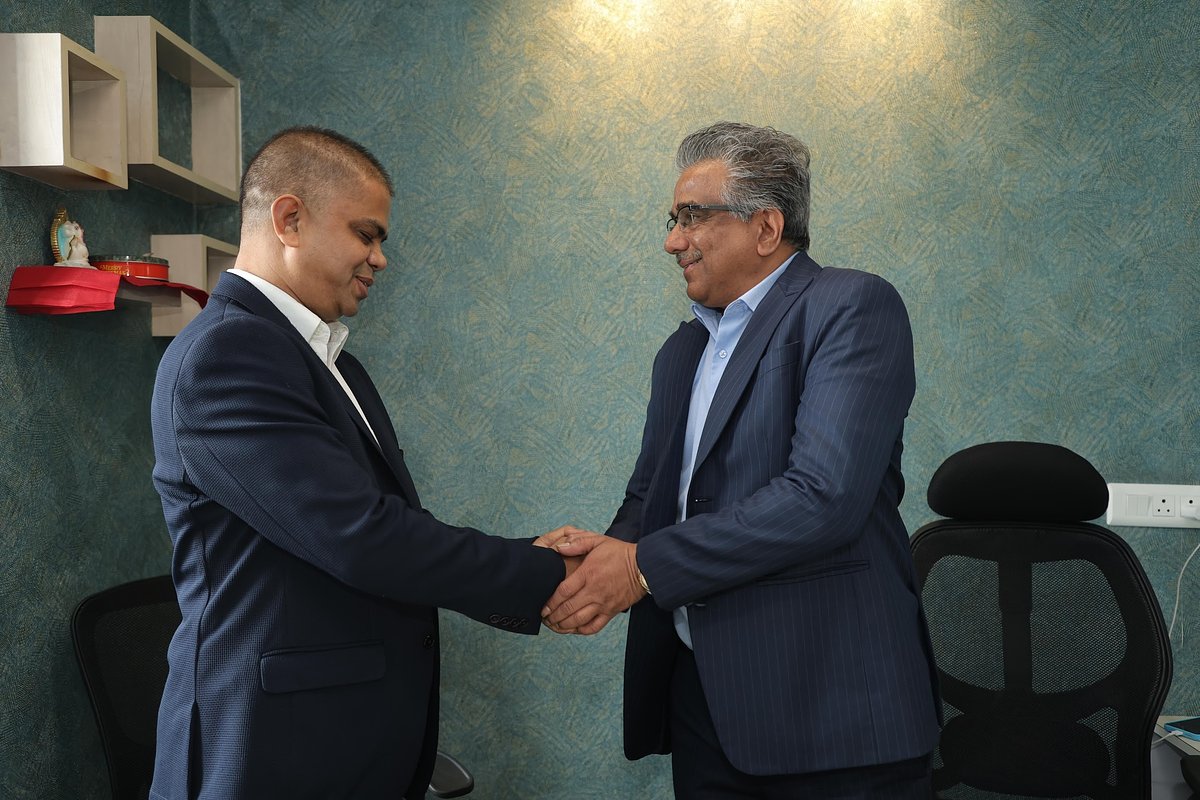
Asprofin's Multi-Billion Dollar Bet on Asia's AI Data Center Boom
ROSEAU, Dominica – April 02, 2026 – A far-reaching plan to construct a multi-billion dollar network of advanced data centers across Asia and the Middle East has been set in motion, spearheaded by the international private banking institution Asprofin Bank. A tripartite memorandum of understanding (MOU) formalizes a strategic alliance between Asprofin, Qatar-based Wow Global Technologies W.L.L., and India's RRP Electronics Limited, aiming to build the digital backbone for the continent's burgeoning AI economy.
The initiative targets the development of large-scale modular and hyperscale data centers in Qatar, India, and key Southeast Asian nations. This move positions the consortium to capitalize on what industry analysts call an unprecedented surge in demand for computing power, driven by the rapid global adoption of artificial intelligence.
The New Digital Silk Road
The project's scale reflects a monumental shift in global infrastructure investment. As the world hurtles towards an AI-powered future, the physical infrastructure that underpins it—the data center—has become a strategic asset on par with traditional ports, railways, and power grids. Industry forecasts underscore the magnitude of this transformation, with some analysts estimating that over $5 trillion will be needed by 2030 just for AI-ready data center capacity worldwide.
This partnership's ambition is to capture a significant piece of that market in some of the world's fastest-growing economies. The plan involves deploying facilities capable of supporting the high-density, power-intensive workloads that generative AI and machine learning demand. The initiative goes beyond simply building digital warehouses; it aims to create what the press release calls foundational digital infrastructure that will serve nations for decades. Shiva Narayan of Asprofin Bank emphasized this long-term vision, positioning the project as a cornerstone for future national development.
The collaboration's geographic focus is strategic, targeting regions with explosive digital growth. Following initial deployments in Qatar and India, the network is slated for expansion between 2028 and 2030 into markets including Bangladesh, Indonesia, Vietnam, and Thailand, creating a wide-reaching digital-industrial footprint.
A Disciplined Blueprint for a High-Stakes Buildout
To fund an endeavor of this magnitude, the partners are eschewing conventional IT procurement in favor of a model more common to large-scale energy or transport projects: structured project finance. Instead of relying on corporate balance sheets, the initiative will be funded against its own assets, with capital released in stages based on the achievement of verified construction and operational milestones.
This milestone-driven escrow model is designed to instill financial discipline and mitigate risk for investors and stakeholders. By tying funding directly to tangible progress, it creates a framework of accountability that is critical for complex, multi-year, cross-border projects. For Asprofin Bank, which has committed $10 billion to the multi-region program, this structure ensures that its capital is deployed effectively and transparently. It treats each data center not as a simple expenditure but as a self-sustaining financial entity, a strategy that is becoming the new global standard for funding the AI revolution's essential infrastructure.
This financial architecture is crucial as it transforms the abstract promise of AI into a bankable, asset-backed investment, attracting the long-term capital necessary to build the 'compute factories' of tomorrow.
A Closer Look at the Architects
The success of this grand vision rests on the capabilities of its three core partners, each bringing a distinct component to the alliance.
Asprofin Bank, the financial engine, is a private offshore banking institution established in 2012 and operating under the regulatory supervision of the Commonwealth of Dominica’s Financial Services Unit. It specializes in cross-border financial services and has prior experience with its partners, having previously announced financing for a network of compact "nanocenters" with Wow Global Technologies.
Wow Global Technologies W.L.L., the Qatar-based partner, is responsible for the project's financial structuring and, critically, the AI infrastructure architecture. Led by Sheikh Mohd Hamad A.M. Al Thani, the firm is tasked with designing the high-density systems capable of handling advanced machine learning tasks.
RRP Electronics Limited, the designated Tier-One contractor for India, presents a more complex picture. The company is charged with the on-ground construction and delivery of up to six modular data centers, each a 30- to 50-megawatt facility. Two of these are scheduled to be operational by the end of 2026. However, public records raise questions about its capacity to execute a project of this scale. Incorporated in India as recently as February 2024, RRP Electronics primarily identifies itself as a semiconductor company focused on Outsourced Semiconductor Assembly and Test (OSAT) services, with ambitious plans to build a semiconductor campus in Maharashtra.
More concerning are reports surrounding its financial health and operational history. Regulatory filings and market analysis indicate that a related entity, RRP Semiconductor Limited, experienced a speculative stock surge of over 55,000% that attracted an investigation by the Securities and Exchange Board of India (SEBI) for potential wrongdoing. This rally occurred despite reports of weak financials, negative revenue, and a very small number of full-time employees, creating a stark contrast between the company's public valuation and its tangible operational capacity. This background introduces a significant element of risk and scrutiny into the consortium's ability to deliver on its promises in the critical Indian market.
The Technological and Geopolitical Imperative
Despite questions surrounding execution, the project's technological premise is sound. The emphasis on modular and hyperscale architecture is a necessity, not a choice, in the race to deploy AI capacity. Modular construction allows for rapid, factory-built deployment, while hyperscale design provides the density and scale required for advanced computing. This initiative also acknowledges the critical challenges of power and cooling, which have become central concerns in the AI era. Advanced cooling technologies and energy-efficient designs are not just engineering details but core components of the project's long-term viability.
Underpinning this technological push is a powerful geopolitical driver: the quest for digital sovereignty. As data becomes an increasingly vital resource, nations are investing heavily in their own sovereign computing capabilities to secure their data, foster domestic innovation, and reduce reliance on foreign technology platforms. By building this infrastructure within the borders of Qatar, India, and Southeast Asian nations, the project directly supports this global trend.
Security is another foundational pillar, with the MOU integrating next-generation cybersecurity, data auditability, and even readiness for post-quantum encryption. For infrastructure intended to support critical government and enterprise functions for decades, building in such long-term resilience is non-negotiable. The project's timeline is aggressive, with initial site selection and regulatory approvals underway. If successful, the first data centers in India could begin powering AI applications by the close of 2026, marking a significant milestone in Asia's digital transformation.