
- 1,275 Slocum autonomous gliders delivered by Teledyne, with 600 in service with NATO navies
- 17-tonne XLUUV (Project Cetus) being developed by M Subs for the Royal Navy
- 2,700 UK employees across 18 sites at Teledyne Marine
Experts view this strategic alliance as a critical step in advancing the UK's maritime defense capabilities, combining cutting-edge autonomy with proven sensor technology to enhance naval modernization.
UK Naval Future Forged as Teledyne and M Subs Launch Strategic Alliance
PLYMOUTH, UK – February 27, 2026 – A significant new alliance set to redefine the UK’s maritime capabilities has been forged in Plymouth, as global technology leader Teledyne Marine and specialist innovator M Subs announced a strategic collaboration. The partnership, formalized through a Memorandum of Understanding (MOU), will fuse the complementary strengths of both companies to develop and deploy advanced unmanned maritime systems for the UK Royal Navy and allied international forces.
This collaboration aims to create a powerful synergy between Teledyne's vast portfolio of proven sensors and vehicles and M Subs' cutting-edge autonomous platforms, directly targeting the Royal Navy's most ambitious modernization programs.
A Synergy of Scale and Agility
The partnership represents a classic strategic pairing of a global industrial powerhouse with a nimble, deep-tech specialist. Teledyne Marine, part of the multi-billion-dollar Teledyne Technologies, brings to the table a formidable arsenal of marine technology. The company has delivered over 1,275 Slocum autonomous gliders, with more than 600 already in service with NATO navies, and its Gavia AUVs are utilized by 18 different naval forces. With a substantial UK footprint of approximately 2,700 employees across 18 main sites, Teledyne has the scale, resources, and established supply chains to support large-scale defense programs.
On the other side of the collaboration is M Subs, a Plymouth-based innovator that has carved out a reputation for rapid development of sophisticated manned and unmanned submersibles. Despite its smaller size, the company punches well above its weight, leading critical national projects. Most notably, M Subs is the prime contractor for the Royal Navy’s ‘Project Cetus,’ the development of the UK’s first Extra-Large Uncrewed Underwater Vehicle (XLUUV). This 17-tonne autonomous submarine is set to be the largest and most complex of its kind operated by any European navy, cementing M Subs' position at the forefront of underwater autonomy. This partnership model—combining the agility and focused innovation of an SME with the global reach and extensive product catalogue of a large corporation—is increasingly seen as essential for accelerating technological advantage in the competitive defense sector.
Bolstering Britain's Maritime Defence
The collaboration is not merely a business arrangement; it is intrinsically linked to the UK's core national security strategy. The MOU explicitly names two key Royal Navy initiatives that the partnership will support: Atlantic Bastion and MHC Block 2. While details on "Atlantic Bastion" remain closely guarded, it is understood to be a strategic imperative focused on securing the UK’s interests in the North Atlantic. This involves persistent undersea surveillance, anti-submarine warfare (ASW) capabilities, and the protection of critical national infrastructure, such as subsea data cables. The deployment of long-endurance autonomous platforms developed under the Teledyne-M Subs alliance is critical to achieving this goal.
The second initiative, MHC Block 2, represents the next phase in the Royal Navy's revolutionary Mine Countermeasures and Hydrographic (MHC) program. This program is transitioning the Navy away from traditional crewed minehunters towards a fully autonomous "system of systems" approach. The goal is to use uncrewed surface and underwater vehicles to detect, classify, and neutralize sea mines, removing sailors from the minefield and dramatically increasing the speed and safety of operations. Teledyne’s world-leading sonars and proven AUVs, combined with M Subs’ versatile deployment platforms, provide a ready-made, high-readiness solution to meet the demanding requirements of this next-generation mine warfare doctrine.
The Autonomous Vanguard: Integrating Next-Generation Technology
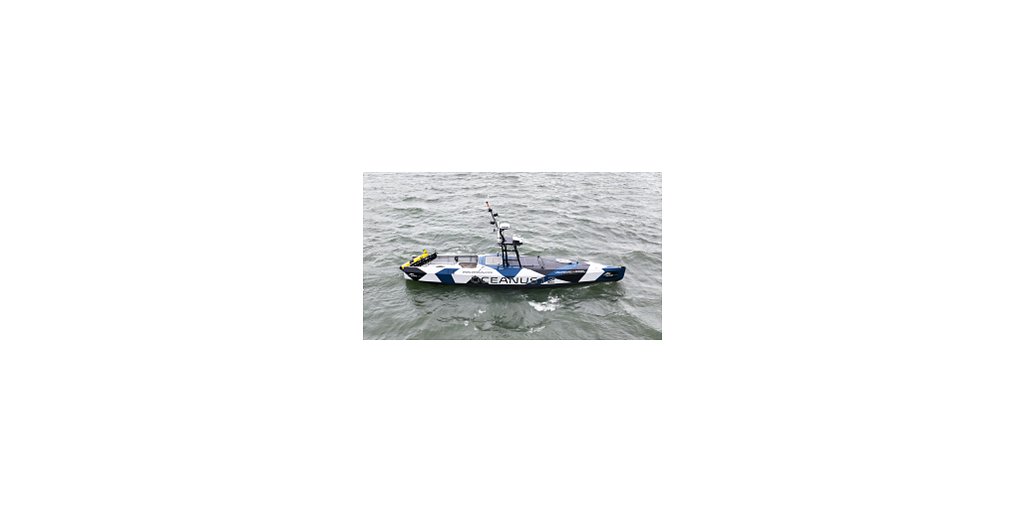
The practical power of this collaboration is already being demonstrated. At the recent REPMUS 2025 exercises, the partners successfully integrated and showcased Teledyne’s high-resolution SeaBat multibeam sonars aboard M Subs’ Zero USV platforms. This allows the uncrewed surface vessel to conduct detailed seabed mapping and mine detection missions with unparalleled precision, a foundational capability for the MHC program.
The partnership’s ambition extends far beyond single-platform integration. Demonstrations planned for the first half of 2026 in the UK and Iceland will showcase a far more complex and powerful "mothership" concept. This will involve the Zero USV acting as a mobile launch and recovery platform for Teledyne’s Slocum gliders and Osprey class AUVs. This integrated system creates a multi-domain force multiplier. The USV can transport the smaller underwater vehicles to a remote operational area, deploy them for clandestine surveillance or detailed inspection tasks, and then serve as a communications relay hub, collecting and transmitting data back to command. This layered approach allows for a single deployment to conduct broad area surveys with the surface vessel while simultaneously performing close-in, persistent monitoring with the underwater assets, dramatically enhancing operational efficiency and situational awareness.
A Proven Partnership with Global Ambitions
The leadership of both companies has expressed strong confidence in the collaboration's potential. Brian Maguire, Teledyne Marine Chief Operating Officer and Vehicles General Manager, stated, “This collaboration represents a significant step forward in advancing maritime technologies. By combining our expertise, we aim to deliver innovative solutions that meet the evolving needs of the UK and international markets.”
Brett Phaneuf, Director of M Subs, highlighted the effective working relationship, adding, “It has been a pleasure to work with Teledyne to integrate the myriad sensors and devices they bring to bear on the marine and defense space; they have proved nimble and forward leaning in our work together, necessary qualities from flagship companies partnered with small SMEs for us to be successful in the future when serving the nation.”
While the immediate focus is on the UK Royal Navy, the scope of the agreement is global. Both companies intend to jointly pursue opportunities with other international naval programs, leveraging Teledyne’s existing relationships with numerous NATO and AUKUS navies. By combining M Subs' cutting-edge platform designs with Teledyne's globally certified and widely deployed sensors and vehicles, the partnership is poised to offer highly advanced, operationally relevant, and technologically mature solutions to allied nations seeking to bolster their own maritime autonomous capabilities.