
- 75% year-on-year increase in international flight bookings to Guilin in Q1 2026
- RMB 15 billion ($2.1 billion USD) investment in inbound tourism promotion over 5 years
- 200 million inbound tourists targeted by 2030
Experts view Trip.com's Guilin strategy as a calculated pivot to capitalize on global slow travel trends, with potential to reshape China's tourism narrative while facing challenges in balancing growth with cultural and environmental preservation.
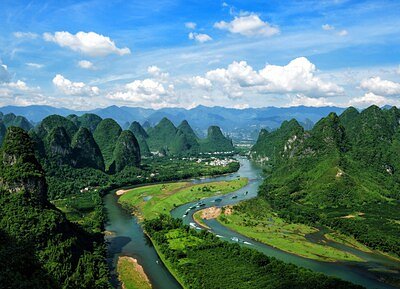
Trip.com's Guilin Gambit: Betting on Slow Travel to Redefine China
GUILIN, China – June 01, 2026 – In a spectacle of drone-lit skylines and celebrity endorsements, global travel behemoth Trip.com Group has declared its next strategic frontier: the mist-shrouded karst mountains of Guilin. The company recently hosted over 3,500 international guests for its “Guilin Night,” an immersive event designed to spotlight a side of China far from the bustling hubs of Beijing and Shanghai. With legendary actor Jackie Chan as its new Global Ambassador for China Travel, the campaign is more than a simple promotion; it’s a calculated pivot, betting that the future of international tourism lies in slower, more culturally immersive experiences.
The initial data suggests the gambit is paying off. The company is touting a staggering 75% year-on-year increase in international flight bookings to Guilin for the first quarter of 2026, a figure that dramatically outpaces the national average growth in inbound flights. This move signals a deliberate effort to engineer a new tourism narrative for China, one that capitalizes on a powerful global trend and aims to funnel international visitors deep into the country’s culturally rich, yet often overlooked, secondary markets.
The Anatomy of a Strategic Pivot
Beneath the surface of celebrity appearances and cultural showcases lies a formidable business strategy. Trip.com Group is not merely suggesting a new vacation spot; it is actively shaping demand and building a new market. The company has pledged to invest RMB 15 billion (approximately $2.1 billion USD) in inbound tourism brand promotion over the next five years, with an audacious goal of attracting 200 million inbound tourists by 2030.
This investment is a direct response to a seismic shift in consumer behavior. The “experience economy” in China has exploded, reaching a market value of 18.4 trillion yuan ($2.68 trillion) in 2025—a 22.6% year-on-year increase that outpaces the global average. As one analyst from iiMedia Research noted, rising per-capita GDP is driving a shift in consumption patterns towards “emotional and psychological fulfillment.” Travelers, particularly younger generations, are no longer content with checklist tourism. They are seeking connection, authenticity, and a slower pace—a trend Trip.com Group is positioning itself to monetize.
“The company’s inbound tourism business is expected to grow by 70-80% in 2026, outperforming the overall market,” Trip.com Group’s Chairman, James Liang, recently stated, expressing confidence that China could surpass Japan as Asia’s top tourism destination within three years. By championing Guilin, the travel giant is creating a template that could be replicated across the nation, leveraging its vast platform—which includes Trip.com, Ctrip, and Skyscanner—to steer the global travel narrative and its associated revenue streams.
Crafting the 'Authentic' Experience
The product at the heart of this campaign is Guilin itself, meticulously packaged as the antidote to modern haste. Jackie Chan’s endorsement frames the destination as a place where travel is about more than sightseeing. “Guilin reminds me that travel is not only about seeing famous sights, but about connecting with the culture of a destination,” Chan shared. “It feels like walking inside a Chinese painting... it slows you down in the best way.”
This curated experience leans heavily on the region’s iconic natural and cultural landmarks. Chan highlights the legendary Li River cruise, a journey through dramatic limestone peaks immortalized on China’s 20 RMB banknote. He points to the 600-year-old Longji Rice Terraces, which transform with the seasons, as a place to contemplate “how much history and human effort exist in this landscape.” The itinerary also includes the surreal, neon-lit underworld of Reed Flute Cave and the adrenaline-fueled skywalks of Ruyi Peak.
At night, the experience culminates in the Impression Liu Sanjie performance, a massive outdoor spectacle directed by famed filmmaker Zhang Yimou. With the Li River as its stage and the mountains as its backdrop, 600 performers bring a local legend to life. “The mountains become part of the show,” Chan added. “It’s very emotional and very Chinese.” This combination of nature, history, and high-production cultural performance is the core of the value proposition: a vision of China that is both timeless and thrillingly accessible.
The Guilin Paradox: Growth vs. Preservation
While the economic upside is undeniable—Guilin saw a 126% surge in tourism revenue during the 2023 May Day holiday compared to pre-pandemic levels—this celebrity-fueled tourism boom presents a classic paradox. Can the very “authenticity” and “timeless scenery” being marketed withstand the pressures of the mass tourism it is designed to attract?
A critical examination of rural tourism in the region reveals potential fault lines. Experts have pointed to significant barriers, including the underdevelopment of local cultural resources and a trend towards the commercialization of tradition. The rich heritage of the Zhuang, Yao, Miao, and Dong peoples is a key selling point, but there are concerns about whether this focus will lead to genuine cultural exchange or simply a more polished, packaged version for tourist consumption.
Furthermore, environmental sustainability hangs in the balance. While local officials are pursuing “high-quality and sustainable development” and can boast excellent air and water quality ratings, research has shown a direct correlation between rising tourist numbers in Guilin and an increased carbon footprint. The delicate balance between welcoming visitors and protecting the pristine landscapes that draw them is becoming increasingly precarious.
The challenge lies in managing this influx to ensure benefits flow to local communities without causing irreversible cultural and environmental degradation. It requires moving beyond spectacle and fostering genuine, respectful engagement—a task far more complex than filling flights and hotel rooms.
This initiative is more than a regional campaign; it’s a microcosm of China's evolving relationship with the world. Supported by new visa-free policies and a national push for high-quality tourism development, the Guilin promotion is a test case for a new era of global outreach. As Jackie Chan advises international visitors to “throw away your pre-existing conceptions and come with an open mind,” the same advice could be given to industry observers. We are witnessing a strategic, well-funded effort to reshape the global perception of China, one slow-boat cruise and terraced rice field at a time.