
- 8 distinct quantum computing configurations available via software switching
- $5 million in seed funding raised in late 2024
- £1.65 million grant from Innovate UK's Quantum Mission Pilot
Experts view TreQ's open-architecture testbed as a transformative step toward accelerating quantum innovation by enabling modular, multi-vendor systems that reduce risk and foster collaboration.
TreQ Unlocks Quantum Future with Open-Architecture Testbed
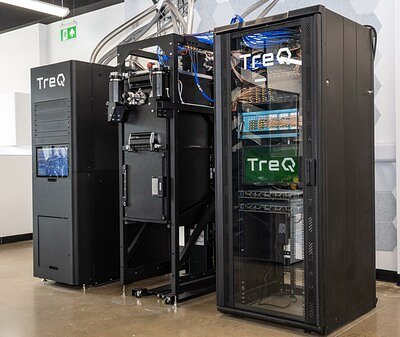
OXFORDSHIRE, UK – April 23, 2026 – In a significant move aimed at reshaping the quantum computing landscape, the systems engineering firm TreQ today announced the successful deployment of its Open-Architecture Quantum (OAQ) Testbed. The fully operational, multi-vendor system, brought online in just three months at its Oxfordshire facility, represents a major departure from the proprietary, single-vendor systems that have long dominated the field.
The software-reconfigurable testbed, a key project within Innovate UK's Quantum Mission Pilot, allows users to mix and match core components from different manufacturers, creating eight distinct quantum computing configurations that can be switched on the fly. This "plug-and-play" approach promises to accelerate innovation, de-risk substantial investments, and foster a more collaborative and competitive ecosystem.
A New Paradigm for Quantum Infrastructure
For years, the quantum industry has been characterized by "walled gardens"—closed, vertically integrated systems where hardware, control electronics, and software are all developed by a single company. While this approach has produced powerful machines, it often leads to vendor lock-in and slows the pace of integration for new, breakthrough components developed elsewhere.
TreQ, a company founded in 2023 by industry veteran Mandy Birch, aims to dismantle these walls. The OAQ Testbed is the physical embodiment of this vision. It operates independent processor, control, and software layers connected through rigorously defined interfaces.
"Open architecture quantum requires systems engineering to define interfaces, validate integration, and operate at system scale. It is much more than assembling components from multiple vendors," said Mandy Birch, Founder and CEO of TreQ, in a statement. "With the OAQ Testbed in operation, we've demonstrated that capital-efficient, flexible quantum infrastructure can be built and operated today."
The system's initial setup features two options each for its core layers: Quantum Processing Units (QPUs) from Rigetti and QuantWare, control hardware from Quantum Machines and Qblox, and two different calibration software packages. All components are housed within a single three-rack footprint, including a Maybell cryostat to maintain the frigid temperatures required for superconducting processors. The ability to switch between these eight configurations via software—without physically rewiring the machine—is a world-first that allows for direct, apples-to-apples comparisons of component performance in a single, stable environment.
De-Risking the Quantum Investment
The development of fault-tolerant quantum computers is a marathon, not a sprint, requiring immense capital investment from both governments and private enterprise. TreQ's model directly addresses the financial risks associated with this long-term endeavor. By creating an adaptable architecture, the company allows infrastructure investments to evolve alongside a dynamic supply chain.
This approach has already attracted significant investor interest. In late 2024, TreQ closed an oversubscribed seed funding round of over $5 million, led by Lavrock Ventures, signaling strong market confidence in its open-systems philosophy.
The OAQ Testbed allows customers to evaluate, upgrade, and incorporate best-in-class technologies as they emerge. If a new, more powerful QPU or a more efficient control system becomes available, it can be integrated into the existing framework without discarding the entire stack. This modularity extends the lifetime of the infrastructure, dramatically improving the return on investment and creating a more sustainable path for organizations exploring quantum's potential.
The rapid three-month timeline from procurement to a fully operational system further underscores the capital efficiency of the model, proving that complex, multi-vendor quantum systems can be deployed with unprecedented speed and agility.
Fostering an Interoperable Ecosystem
A cornerstone of TreQ's strategy is the development of an open-source interface specification for low-level hardware integration. This standard, developed by a TreQ-led consortium, is designed to create a common language for different quantum components, reducing the friction that currently hinders interoperability.
This is not merely a theoretical exercise. The specification has already been integrated into commercial software offerings from key partners Q-CTRL and Qruise, which provide sophisticated calibration and control solutions.
"Interoperability and autonomy are key to deployability," noted Alex Shih, VP of Product at Q-CTRL. "Running our autonomous calibration workflows on multiple configurations within a shared architecture makes it easier for users to pick the best system for their application, and achieve the best possible performance."
This sentiment was echoed by hardware providers. "The Novera QPU is designed for modularity, enabling ease of testing and integrating with new configurations and architectures," said Dr. Subodh Kulkarni, CEO of Rigetti. He added that validating the QPU's performance within TreQ's multi-vendor system provides crucial insights for the future of open systems design.
The specification was also developed to support multiple quantum modalities, with core operations for both superconducting systems and ion trap processors from partners like Oxford Ionics (an IonQ company). This foresight ensures that the open standard can grow to encompass a wider range of quantum technologies. For software vendors, this interoperability is a powerful market expander. "The specification enables our AI-powered calibration technology to be deployed across more backends and increases the market reach of our solutions," confirmed Anurag Saha Roy, Chief Product Officer at Qruise.
Bolstering the UK's Quantum Ambitions
The OAQ Testbed's launch is a significant milestone for the United Kingdom's national quantum strategy. The project is a flagship of the Innovate UK Quantum Mission Pilot, backed by a £1.65 million grant awarded to the TreQ-led consortium. This government support highlights the strategic importance of developing a robust, domestic quantum industry capable of competing on the global stage.
The UK has invested heavily in becoming a world leader in quantum technologies, with initiatives like the National Quantum Computing Centre (NQCC) aiming to accelerate the development and adoption of quantum computing. TreQ's work complements these national efforts by providing a tangible platform for collaboration between hardware manufacturers, software developers, and end-users. It creates a powerful tool for benchmarking new technologies and building a skilled workforce.
By championing an open, collaborative model, the UK-based project positions the nation not just as a developer of quantum hardware, but as a crucial enabler of the entire global ecosystem. The OAQ Testbed serves as a powerful demonstration of how public-private partnerships can remove technological barriers and accelerate the journey from laboratory research to real-world commercial applications.
With the testbed now active and in use by partners, TreQ has established a powerful platform to efficiently evaluate new products and expand its system offerings. This capability is set to accelerate the incorporation of emerging technologies from a rapidly advancing supply chain, pushing the entire field closer to the era of practical quantum advantage. The shift from fixed, monolithic systems to dynamic, adaptable architectures may well be the catalyst needed for the next leap forward in quantum computing.