
- 1.6 Tbps throughput per link targeted by Rivvor's technology by 2028, rivaling next-gen optical interconnects.
- 1600-nanosecond latency achieved in early lab tests, with sub-microsecond latency as the long-term goal.
- 132 kW power densities in modern AI data centers, pushing toward megawatt range, creating cooling and cabling challenges.
Experts would likely conclude that Rivvor’s wireless data center technology presents a high-risk, high-reward innovation with the potential to disrupt AI infrastructure if it can overcome reliability and adoption barriers.
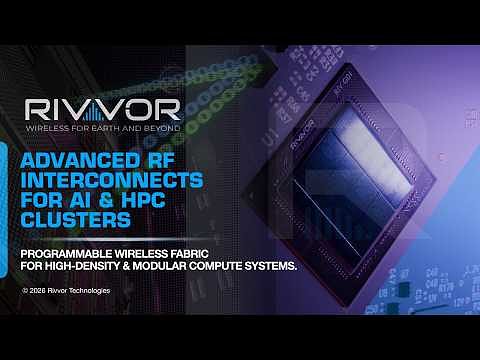
The Untethered Data Center: Rivvor’s Plan to Rewire AI with Radio Waves
ROSEVILLE, CA – June 03, 2026 – The engine of the artificial intelligence revolution is running hotter and faster than ever, but its performance is increasingly throttled by a surprisingly mundane constraint: wires. As companies pack more computational power into data centers, the sheer density of copper and fiber optic cables is creating a physical bottleneck that limits cooling, complicates maintenance, and locks in rigid network designs. Now, a deep-tech startup believes the solution is to cut the cord entirely.
Rivvor, a firm founded by veterans of AMD and federal exascale computing programs, has announced significant progress on a sub-terahertz (sub-THz) wireless platform designed to operate inside the very server racks that power AI. By replacing short-range cables with high-frequency radio links, the company aims to introduce a new layer of dynamic, software-defined connectivity where it's needed most. It’s a bold gambit that positions a nascent technology against entrenched industry standards, but one that directly targets the growing pains of hyperscale AI infrastructure.
The Tyranny of the Cable
To understand Rivvor’s play, one must first appreciate the physical reality of a modern AI data center. Racks are evolving into monolithic compute units, with power densities pushing past 132 kW and marching toward the megawatt range. This concentration of hardware has led to a Gordian knot of cabling for power, data, and management. This dense web of wires obstructs airflow, making the already monumental task of cooling these systems even harder. It also turns routine service and upgrades into complex, high-risk operations.
More critically, this physical infrastructure imposes a rigid network topology. As Rivvor CEO Nazym Paltachev stated, “Cables freeze the network topology the day the rack is built.” This inflexibility is a direct tax on performance. AI workloads, particularly for training large models, are not static; their communication patterns shift constantly. In a cabled world, data often takes inefficient, multi-hop paths between GPUs and switches simply because the direct physical connection doesn’t exist. The result is increased latency, synchronization stalls, and ultimately, underutilized multi-million-dollar GPUs. Operators are paying for computational capacity they cannot effectively use.
Rivvor's proposition is to replace this static grid with a dynamic, wireless mesh. By eliminating the cables handling short-range scale-up and scale-out connections, the company claims it can free up critical space for cooling and power, enable modular rack designs that can be reconfigured in hours, and, most importantly, allow the network to adapt to the workload on the fly. “Link allocations to workloads become software decisions, not cabling decisions,” Paltachev added, outlining a vision where network orchestration moves from a physical task to a software function.
Engineering a Wireless Escape
While the idea of in-rack wireless has been a theoretical possibility for years, Rivvor argues that the technology has finally reached a point of practical implementation. “We are not waiting for new physics,” said CTO and Co-Founder Konstantin Tiutin. “We are applying engineering discipline to a problem the industry is now ready to solve.” This discipline is focused on the sub-THz spectrum, a band of frequencies between millimeter-wave and far-infrared light that offers immense bandwidth over short distances.
Recent lab results from the company point to tangible progress: a 1600-nanosecond (1.6 microsecond) round-trip latency and error-free data transfer in a contained rack environment. While this is an early milestone, the company’s roadmap is far more ambitious. It targets production silicon by early 2028 capable of sub-microsecond latency and a staggering 1.6 Tbps of throughput per link—a figure that puts it on par with next-generation optical interconnects. This technology will be delivered via Wireless Network Interface Cards (WNICs) and rack-level controllers designed to drop into existing server designs.
This isn't happening in a vacuum. Academic research into Terahertz Wireless Data Centers (THz-WDCs) and industry standards like IEEE 802.15.3d have laid the theoretical and practical groundwork for using this spectrum for high-speed communication. Rivvor’s innovation lies in its architectural approach, proposing two methods running on the same chipset: a “Direct Path” architecture using steerable beams for point-to-point links reconfigurable in under a millisecond, and a “Bounded Electromagnetic Corridor” that aims to turn the rack's very structure into a data superhighway, scaling to petabit-class capacity.
Navigating the Competitive Gauntlet
Rivvor is entering a market dominated by titans. NVIDIA’s proprietary NVLink, along with a host of powerful optical and advanced copper solutions from companies like Broadcom and Intel, form the backbone of today’s AI clusters. For Rivvor to succeed, it must offer more than just a novel idea; it needs a seamless integration path and a compelling value proposition.
The company’s “wire-without-the-wire” strategy is designed for just that, promising to transport existing data center protocols without modification. This approach dramatically lowers the barrier to adoption, as it doesn't require a wholesale rewrite of the networking stack. The first major test of this strategy will come at the Open Compute Project (OCP) Global Summit this October, where Rivvor plans a public demonstration. The OCP audience, comprised of the very hyperscale and enterprise architects Rivvor needs to win over, will be a discerning and critical proving ground.
Success will depend on answering tough questions about reliability, security, and interference in a dense, noisy environment. Data center operators are famously risk-averse and demand five-nines reliability—a standard that wired connections have delivered for decades. Rivvor must prove its wireless links can meet or exceed that bar. Yet, the company isn't positioning itself as a total replacement, but as a new tool to complement copper and optical interconnects “where each runs out of headroom.” This pragmatic approach, targeting a specific and growing pain point, may be its sharpest path to market penetration.
From Data Centers to Deep Space
While the immediate focus is on Earth-bound AI clusters, Rivvor’s vision extends to environments where cables are an even greater liability. The press release highlights applications in industrial robotics, modular edge deployments, and, most intriguingly, orbital data centers. In space, every gram matters. The mass of copper and fiber cabling adds significantly to launch costs, and physical connectors are potential points of failure in an environment where repairs are impossible. A robust, lightweight wireless interconnect could be a transformative technology for next-generation computing in orbit.
Closer to home, untethered industrial robots and reconfigurable edge compute pods could benefit from the same flexibility. By engineering a solution for the extreme density of AI racks, Rivvor is simultaneously building a technology platform with the potential to redefine connectivity in a wide array of challenging operational environments. The journey from a lab in Roseville to a data center in orbit is long, but the company is betting that the future of high-performance computing is not bound by wires.