
- 33% reduction in cable usage with Voltage Energy's pre-assembled wiring solutions.
- Up to 50% faster installation times, cutting labor costs and project timelines.
- 2kV architecture adoption projected to surge from <5 GW (2026) to 380 GW by 2030 (S&P Global).
Experts would likely conclude that Voltage Energy's smart wiring innovations are accelerating solar project deployment, reducing costs, and future-proofing infrastructure for higher-voltage systems.
The Unseen Revolution: How Smart Wiring Is Slashing Solar Project Timelines
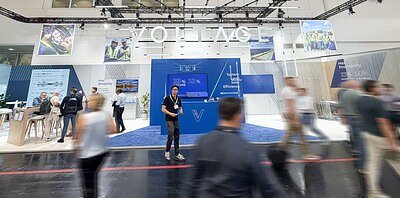
MUNICH, GERMANY – June 24, 2026 – In the sprawling halls of Intersolar Europe 2026, amidst gleaming new panels and powerful inverters, a quieter but equally profound revolution is taking shape. It’s happening in the trenches of utility-scale solar deployment, where the pressure to build bigger, faster, and cheaper has never been more intense. Answering this call is North Carolina-based Voltage Energy Group, which used the event to showcase a suite of pre-assembled wiring solutions that promise to fundamentally reshape the economics of solar construction.
While modules and inverters often steal the spotlight, the electrical balance-of-system (EBOS)—the critical network of cables, connectors, and components that channel energy from the panel to the grid—is where many projects bog down in complexity and cost. Voltage Energy is moving beyond selling individual components to offering a holistic, system-level solution. Its flagship LYNX PLUS and IBEX PLUS products are not just wires; they are factory-assembled, pre-tested systems designed to simplify deployment, slash labor hours, and future-proof assets against evolving grid standards.
The Drive for Efficiency: Slashing Installation Time and Costs
For solar developers and the Engineering, Procurement, and Construction (EPC) firms they hire, time is money. As module prices have plummeted, the focus has shifted to reducing soft costs, particularly the labor-intensive process of field installation. Traditional wiring methods, which involve manually running and connecting thousands of individual cables on-site, are a major bottleneck, prone to errors and delays.
Voltage Energy’s pre-assembled approach directly confronts this challenge. The company claims its solutions can reduce cable usage by up to 33% and, more critically, cut installation time by up to 50%. In an industry grappling with skilled labor shortages, halving the time spent on one of the most complex installation phases is a transformative proposition. This allows EPCs to complete projects faster, reduce labor costs, and deploy teams to more sites, accelerating the overall pace of renewable energy adoption.
“Solar developers and EPCs are under increasing pressure to deliver larger projects with fewer installation resources and tighter schedules,” said Bob Slack, CTO of Voltage Energy, in a recent statement. “We believe the future of EBOS lies in integrated system-level solutions that simplify deployment, help lower project LCOE, while preparing customers for higher-voltage architectures.”
The LYNX PLUS system, designed for high-current applications, exemplifies this philosophy. By handling trunk capacities up to 853 A, it eliminates the need for traditional combiner boxes—bulky enclosures that aggregate power and are a common point of failure and maintenance. Removing them not only simplifies the initial build but also reduces long-term operational expenditures.
Future-Proofing the Grid: The Leap to 2kV Architecture
Perhaps the most forward-looking aspect of Voltage Energy's strategy is its full-throated embrace of 2-kilovolt (2kV) architecture. The utility-scale solar industry is on the cusp of a major transition, moving from the current 1.5kV standard to higher-voltage systems. This shift allows for longer module strings, which increases the power capacity per string by roughly 33%. The result is a cascade of savings: fewer strings, fewer combiner boxes, and 10-15% lower EBOS costs.
According to S&P Global, the 2kV market is projected to surge from less than 5 GW in 2026 to 380 GW by 2030, accounting for over three-quarters of all utility-scale projects. However, a key barrier to this transition has been the lack of certified, system-wide components. A 2kV system requires every part of the chain—modules, inverters, and the entire EBOS—to be rated and tested for the higher voltage.
Here, Voltage Energy has established a significant first-mover advantage. In late 2025, the company became one of the first EBOS providers to receive a full-system certification from UL Solutions for its 2kV product lines, including LYNX PLUS and IBEX PLUS. This certification, a rigorous process confirming the system’s safety and reliability, removes a major roadblock for U.S. developers looking to build next-generation solar farms. With European certification now underway, the company is positioning itself as a key enabler of this global technological shift, offering customers a de-risked path to a lower Levelized Cost of Energy (LCOE).
Beyond Copper: The Rise of Aluminum in Solar Infrastructure
Beneath the system-level design lies a crucial material innovation. The IBEX PLUS solution, which targets the medium-current capacity gap, is built with a 97% flexible aluminum cable design. For decades, copper has been the undisputed champion of electrical conductivity, but its volatile price and significant weight present persistent challenges for large-scale projects.
Aluminum offers a compelling alternative. It is significantly lighter—the IBEX PLUS is up to 41% lighter than its copper equivalent—and can reduce capital expenditures on cabling by as much as 27%. This weight reduction translates into easier transportation and faster on-site handling. Furthermore, aluminum boasts a more favorable environmental profile, with a production process that emits over 70% less carbon than that of copper.
However, aluminum has historically been viewed with skepticism due to concerns about corrosion and thermal expansion, which can lead to loose connections and performance degradation over time. Voltage Energy addresses this head-on with an engineered solution. The use of modern, flexible aluminum alloys improves mechanical performance, while the availability of “copper-aluminum hybrid interface options” ensures that connections are robust and reliable, mitigating the risks associated with joining dissimilar metals. This isn't just a material swap; it's a carefully designed system that aims to capture the best of both worlds—aluminum's cost and weight advantages with copper-like reliability at connection points.
Navigating a Competitive Landscape
Voltage Energy is not operating in a vacuum. The EBOS market is fiercely competitive, with established players like Shoals Technologies Group also offering popular trunk bus solutions. Differentiation is key, and Voltage Energy is carving out its niche through its system-level certification for 2kV, its aggressive push into material innovation with flexible aluminum, and its holistic design philosophy.
The company’s strategy appears to be gaining traction. After successfully navigating a patent dispute with a competitor, its LYNX PLUS design is clear for continued supply to the U.S. market. Furthermore, Voltage Energy is backing its technological ambitions with concrete investment, recently announcing plans for a new U.S. manufacturing facility and global headquarters in North Carolina. This move signals a clear intent to scale production to meet the anticipated demand that its innovations are helping to create. By focusing on the foundational-yet-overlooked wiring that connects a solar farm, Voltage Energy is proving that true innovation can unlock value throughout the entire energy value chain.