
- 6 Consecutive Years: HL Mando named GM's Supplier of the Year for the 6th straight year, placing it in the top 0.5% of GM's 20,000 global suppliers.
- 7.4 Million Units: HL Mando's Alabama plant produces 7.4 million braking systems annually, supporting North American OEMs.
- 12 Total Awards: HL Mando has won GM's Supplier of the Year award a total of 12 times.
Experts would likely conclude that HL Mando's sustained excellence as a GM supplier underscores the critical role of deeply integrated, technology-driven partnerships in modern automotive manufacturing.
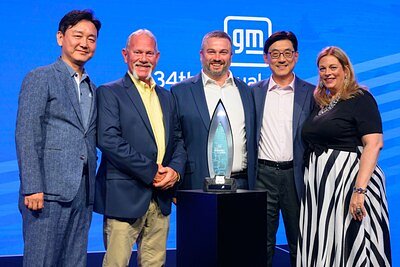
The Silent Partner: How One Supplier Powers GM's Competitive Edge
AUSTIN, TX – June 09, 2026 – In the world of automotive manufacturing, the spotlight almost always shines on the finished product—the sleek sedan, the powerful truck, the futuristic EV. The massive, intricate network of suppliers that forms the bedrock of production often operates in the shadows. Yet, occasionally, a flicker of that spotlight reveals a story that says more about the future of the industry than any car launch ever could. This just happened with General Motors and its partner, HL Mando.
For the sixth consecutive year, the South Korean-based firm has been named one of GM's Suppliers of the Year. This isn't a participation trophy. GM works with roughly 20,000 global suppliers; this award is reserved for the top 0.5%. To win it once is a mark of excellence. To win it six years running—and 12 times in total—is a signal of something far more profound: a systemic integration so deep that the line between supplier and partner begins to blur. The consistent recognition of HL Mando isn't just about delivering quality parts on time; it's a case study in how the engines of global industry are being rebuilt around resilience, localization, and the quiet fusion of advanced hardware and intelligent software.
The Anatomy of an Elite Partnership
Achieving the status of an elite GM supplier is a grueling process. A global, cross-functional team within the automotive giant evaluates partners not just on traditional metrics but on a holistic set of criteria that includes performance, innovation, and cultural alignment with GM's strategic goals. The bar is exceptionally high, and sustained success is rare. HL Mando's streak points to a mastery of the core competencies that now define success in the automotive supply chain.
As Shilpan Amin, GM's Senior Vice President of Global Chief Procurement and Supply Chain, noted, the award highlights partnerships that are central to delivering world-class vehicles. "When our suppliers, such as HL Mando, lean in with us on new technology and flawless execution, we can move faster, compete harder and unlock more value across the entire supply chain," he stated. This language—"lean in," "compete harder"—frames the supplier relationship not as a simple transaction but as a strategic alliance in a high-stakes competitive arena.
HL Mando was specifically recognized in the "Creativity Team of Brake Apply & Control" category. This seemingly technical designation is revealing. It’s not just “Brake Manufacturing”; it’s about creativity in control systems. This speaks to a relationship where GM doesn't just hand over a blueprint but presents a problem, and HL Mando co-develops an innovative solution. The award acknowledges the company's rapid communication, stable quality, and competitive supply, all hallmarks of a deeply integrated partner capable of moving at the speed of a global automaker.
The Localization Imperative
Perhaps the most critical factor in HL Mando's sustained success is its strategic commitment to the North American market. In an era defined by supply chain volatility—from pandemics to geopolitical friction—the concept of localization has shifted from a cost-saving tactic to a strategic imperative. A resilient supply chain is now as valuable as an innovative one, and HL Mando's American manufacturing footprint is a testament to this new reality.
The company’s Alabama plant is a powerhouse, with an annual production capacity of 7.4 million units of its flagship braking systems. This facility, along with its Georgia plant—which also earned a 2025 Supplier Quality Excellence Award from GM—forms the backbone of its service to North American OEMs. This isn't just about assembling parts closer to the final factory floor; it's about embedding R&D, production, and logistics within the ecosystem of the customer.
Jason (Jae-hyuk) Kim, Head of HL Mando Americas Region, directly linked the award to this strategy, stating, "This award is a remarkable achievement made possible through our continued commitment to our North American operations." He noted that GM values speed, resilience, innovation, and agility—all competencies amplified by a localized presence. For GM, having a critical partner like HL Mando operating at scale within the US mitigates risk, shortens lead times, and fosters the kind of close-quarters collaboration needed for rapid innovation cycles. It's a clear example of how building resilient, regionalized supply networks is becoming a decisive factor in global competition.
Beyond Brakes: The Hardware Backbone of the Software-Defined Car
While the awards and production numbers are impressive, the most forward-looking aspect of this story lies in the technology itself. HL Mando identifies as a "global software-defined vehicle leader," a title that might seem odd for a company celebrated for its braking systems. But this is precisely where the future of the automobile is being forged. The modern vehicle is rapidly evolving from a collection of mechanical parts into a cohesive, software-driven platform—and that software needs sophisticated hardware to execute its commands.
HL Mando's flagship product, the Motor-on-Caliper (MoC), is a perfect case study. On the surface, it's a clever piece of engineering that integrates the parking brake function directly into the caliper, saving space and complexity. But its true significance lies in its electronic nature. The MoC is a key enabler for the Software-Defined Vehicle (SDV). It's not a dumb part waiting for a cable to be pulled; it's an intelligent actuator that receives digital commands.
This capability is the physical foundation for a host of modern features. Advanced Driver-Assistance Systems (ADAS), automatic emergency braking, autonomous parking, and sophisticated vehicle stability control all rely on the ability to apply and release braking pressure with digital precision, speed, and reliability. The software can dream up the command, but a component like the MoC is what translates that digital instruction into physical action in milliseconds. The award's category, "Creativity Team of Brake Apply & Control," underscores this reality. The innovation isn't just in the metal caliper, but in the electronic control systems that allow it to be a seamless extension of the vehicle's central brain.
This is the new paradigm for automotive suppliers. They are no longer just metal-benders; they are technology companies creating the physical nodes of a distributed computing network on wheels. The partnership between GM and HL Mando, therefore, is a blueprint for the future of automotive collaboration, where success depends on the seamless fusion of cutting-edge hardware and the software that brings it to life.