
- First Chinese-Sourced Global Standard: iSOFT's intelligent driving operating system becomes the foundational codebase for AUTOSAR's Common Adaptive Platform Implementation (CAPI).
- 300+ Vehicle Models: iSOFT's middleware has been deployed in over 25 million units across more than 300 vehicle models.
- 30% Faster Development: Global automakers aim to shorten vehicle development cycles by up to 30% in response to China's competitive pressure.
Experts agree that iSOFT's contribution marks a paradigm shift in automotive software, accelerating global innovation while solidifying China's role as a leader in technology standards.
China's New Code: iSOFT Rewrites Global Automotive Software Rules
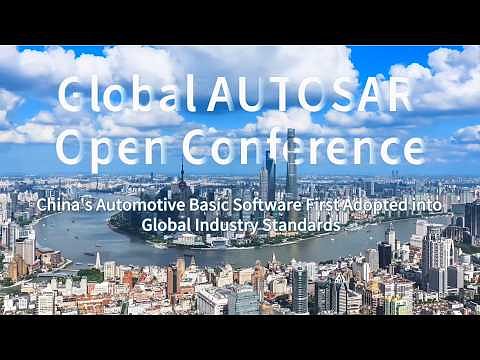
SHANGHAI – June 17, 2026 – The world of automotive software has a new global standard, and for the first time, its source code was written in China. In a landmark move at the 17th AUTOSAR Open Conference in Shanghai, iSOFT Infrastructure Software Co., Ltd. contributed its intelligent driving operating system as the foundational codebase for the AUTOSAR Common Adaptive Platform Implementation (CAPI). This isn't merely a technical update; it's a seismic shift in the global automotive landscape, accelerating the transition to the software-defined vehicle (SDV) and cementing China's role as a creator, not just a consumer, of core technology standards.
For decades, Western and Japanese firms have set the specifications that automakers and suppliers followed. iSOFT’s contribution upends that model. "This is a paradigm shift from 'standard-first' to 'code-first,' responding to new industrial demands of the intelligent connected era," said Liu Hongqian, General Manager of iSOFT. By providing a production-proven, open-source codebase, CAPI allows global enterprises to build on a unified foundation, dramatically altering the economics and speed of vehicle development.
A Paradigm Shift to 'Code-First'
To grasp the significance of this moment, one must understand AUTOSAR (AUTomotive Open System ARchitecture). This global partnership has long worked to standardize software architecture for vehicles, primarily through its Classic Platform for traditional, deeply embedded controllers. However, the rise of autonomous driving and connected services demanded a more flexible solution, leading to the Adaptive Platform (AP) for high-performance computing.
Until now, the Adaptive Platform provided specifications—a detailed blueprint of what to build. Individual vendors would then invest immense resources to interpret those blueprints and create their own proprietary middleware. The CAPI initiative, with iSOFT’s code at its core, changes the game by providing the actual building—a tangible, high-quality, open-source implementation of how to build it. This 'code-first' approach eliminates redundant development of non-differentiating foundational software, allowing developers to focus their energy on creating the innovative applications and features that define a modern vehicle.
This shift promises to solve a core industry headache. As noted by Yu Peng, Technical Center GM at XPENG Motors, CAPI solves the "structural tension where foundational software moves too slowly while upper layers iterate in weeks." By providing a stable, common base, the entire ecosystem—from chip vendors to automakers—can co-develop on the same baseline, accelerating feedback loops and innovation cycles.
'China Speed' Goes Global
That iSOFT is the source of this baseline is profoundly significant. It's a direct reflection of a phenomenon the industry has dubbed 'China speed'—the blistering pace of development and innovation within the world's largest automotive market. With an annual market of 30 million vehicles, China has become a crucible for automotive technology, forcing a software-first mindset and extreme industrial agility.
"China is the world's largest automotive market... Other countries are keeping a close eye on Chinese-developed technology," noted Joachim Langenwalter, an AUTOSAR spokesperson. He explained that iSOFT leveraged "'China speed' to establish CAPI's foundation, allowing specifications and code to evolve in lockstep with shortened feedback cycles." It’s a powerful example of mass-production practices in one region feeding back to create a new global standard. This move validates China's broader national strategy to transition from a follower of international standards to a premier architect of them.
This trend is forcing legacy automakers to adapt. Reports indicate that global giants like Volkswagen are actively localizing R&D in China and re-engineering their processes to shorten vehicle development cycles by as much as 30%, a direct response to the competitive pressure set by local players.
Remaking the Automotive Supply Chain
The practical, business-oriented advantages of a common code baseline are compelling. For Original Equipment Manufacturers (OEMs), it promises a trifecta of benefits. First, it reduces redundant costs spent on developing and validating foundational middleware. Second, it enhances supply chain security and transparency by moving away from black-box proprietary solutions. Third, and perhaps most importantly, it accelerates ecosystem collaboration.
This new collaborative model is already taking shape. Patrick Will, Head of SW Product Marketing & Management at chipmaker Infineon, highlighted this alignment. "iSOFT and Infineon are aligned in a shared vision: to streamline software development processes," he said, noting that Infineon's DRIVECORE platform already integrates iSOFT's middleware. This allows customers to "kick off their projects swiftly without encountering licensing barriers."
Will also touched on a critical geopolitical reality: "'China-for-China' development is increasingly essential, yet global collaboration matters — walls make no sense." In an era of increasing technological nationalism, AUTOSAR’s move to adopt a Chinese baseline for a global standard is a powerful statement. As Langenwalter put it, "AUTOSAR transcends geopolitical boundaries; this unified codebase will be used worldwide."
A New Competitive Landscape
iSOFT's contribution, backed by a production track record of over 25 million units deployed across more than 300 vehicle models, is set to roil the competitive automotive OS and middleware market. For years, the space has been dominated by players like BlackBerry's QNX and various Linux-based systems, alongside proprietary middleware from Tier 1 suppliers like Bosch and Continental.
The CAPI initiative challenges this model by championing an open-source alternative that is not just a community project, but an officially sanctioned, automotive-grade standard. This could level the playing field, lower barriers to entry, and force competitors to re-evaluate their value propositions. With foundational middleware becoming a standardized commodity, the battle for market share will increasingly be fought at the application layer, focusing on unique user experiences, advanced AI-driven features, and novel in-car services.
By providing the core code, iSOFT has not only elevated its own global standing but has also fundamentally altered the terrain on which the future of the software-defined vehicle will be built.