
- 115 Chinese-made light rail vehicles deployed for the 2026 World Cup in Mexico, designed to carry 1.25 million passengers daily. - High-altitude challenge: Trains operate at 2,200 meters in Mexico City, testing resilience in extreme conditions. - Strategic investment: CRRC has implemented a three-tier emergency response system to prevent reputational risks.
Experts would likely conclude that China's deployment of rail technology during the World Cup is a calculated geopolitical and commercial move, testing both its infrastructure capabilities and long-term influence in Latin America.
China's World Cup Gambit: High-Stakes Rail Tech on Trial in Mexico
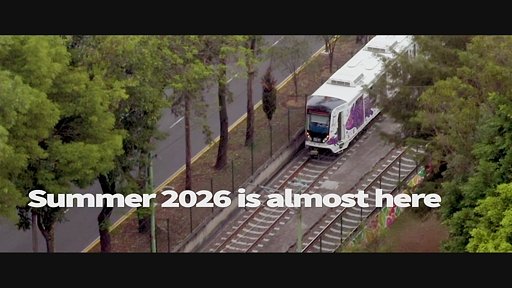
MEXICO CITY, Mexico – June 17, 2026 – As the roar of the crowd for the World Cup's opening match echoed from Estadio Azteca last week, another sound, far quieter but no less significant, hummed beneath Mexico's host cities: the smooth glide of 115 brand-new, Chinese-made light rail vehicles. For the millions of fans descending on Mexico City, Monterrey, and Guadalajara, these trains are a convenience. For their manufacturer, CRRC Corporation Limited, they represent a high-stakes, real-time stress test of technology, logistics, and geopolitical ambition on one of the world's biggest stages.
The state-owned rail behemoth has positioned this deployment as a triumph of practical cooperation and sustainable mobility. The press release speaks of carrying 1.25 million passengers daily and providing a "visible example of China's advanced rail transit technology." But behind the polished corporate narrative lies a far more complex story of operational pressure, strategic economic diplomacy, and the calculated leveraging of a global sporting event to secure a long-term commercial and political foothold in Latin America. This isn't just about moving people from point A to B; it's about cementing China's role as a global infrastructure powerhouse.
The High-Altitude, High-Stakes Test
Executing a flawless mass transit operation during a World Cup is a monumental challenge in any city. In Mexico, the difficulties are amplified. The CRRC vehicles serving Mexico City’s Estadio Azteca, for instance, must perform reliably at an altitude of 2,200 meters, navigating the city’s notorious seasonal downpours. The company touts features like regenerative braking and low-noise ventilation, but the real test is operational resilience under the strain of unprecedented passenger surges.
To that end, CRRC has not left performance to chance. The firm has deployed what it calls an "all-weather operation support program," embedding senior service engineers on-site and establishing a 24/7 emergency support team. This is a tacit acknowledgment of the immense risk. A single high-profile breakdown on a match day would not just strand thousands of fans; it would deliver a devastating blow to the "Made in China" brand that Beijing is so keen to promote. The investment in a three-tier coordinated response mechanism is less a customer service perk and more a strategic insurance policy against reputational disaster.
While the new trains are a welcome upgrade, they are being integrated into complex, and at times strained, existing systems. Some analysts have pointed to potential bottlenecks, such as Mexico City’s Metro Line 2, which already operates over its theoretical limit and could face severe crowding during peak hours. The success of CRRC’s hardware is inextricably linked to the resilience of the entire municipal transit network.
Beyond the Beautiful Game: A Geopolitical Power Play
The deployment of these 115 light rail vehicles is a masterclass in what has become a hallmark of Chinese foreign policy: infrastructure diplomacy. This project is far more than a simple commercial sale; it is a tangible, long-term asset that binds Mexico's urban infrastructure to Chinese technology for decades to come. The trains will continue to run long after the final whistle blows on the World Cup, requiring Chinese parts, maintenance expertise, and potential future upgrades.
This venture fits neatly into CRRC's aggressive global expansion and China's broader strategy of building economic partnerships across Latin America, a region traditionally within the U.S. sphere of influence. In Monterrey, new CRRC trains have been running since April 2025, connecting the city to the Estadio BBVA. While the press release highlights this success, it’s worth noting that other ambitious projects, like the CRRC-supplied monorail for new city lines, are longer-term developments not expected to be fully operational for the tournament. This illustrates the strategy: use a high-profile event as a catalyst, but build a relationship that endures.
By providing advanced, reliable technology for a globally televised event, CRRC and, by extension, Beijing, are sending a clear message to other developing nations: China is a partner that can deliver complex, large-scale infrastructure projects that Western firms may deem too risky or insufficiently profitable. Every smooth journey a fan takes on a CRRC train is a subtle endorsement of this model, chipping away at the dominance of established players like Alstom and Siemens.
The Green Goal, The Gritty Reality
A key pillar of CRRC's public relations strategy is sustainability. The company highlights the trains' energy-efficient design and has launched a "Green Energy Station" initiative to encourage fans to make low-carbon mobility choices. These efforts are commendable and tap into the growing demand for major sporting events to mitigate their environmental impact. The use of regenerative braking, which captures and reuses energy, is a genuinely positive feature that contributes to more efficient operations.
However, the glossy "green" narrative sometimes collides with the gritty reality of urban transit logistics. In Guadalajara, for example, the new Line 4, served by CRRC, extends into southern neighborhoods. But to reach Estadio Akron, fans must transfer to a bus rapid transit system. Local reports indicate that this last leg can be time-consuming, with severe traffic congestion around the stadium on event days remaining a significant challenge. While the train line is an improvement, it doesn't represent the seamless, fully integrated "green" solution the marketing might suggest.
This gap between the PR and the on-the-ground experience is where the real story lies. The infrastructure is a major step forward, but it's not a silver bullet. The success of the "Green Energy Station" will depend less on the company's intentions and more on whether the overall transit experience is convenient enough to persuade fans to leave their cars behind. The true test will be whether these initiatives translate into tangible behavioral change or simply serve as well-intentioned window dressing for a complex operational reality. The performance of these systems over the coming weeks will be scrutinized not just by fans and transit authorities, but by governments and competitors worldwide, watching to see if China's high-stakes infrastructure bet pays off.