
- 1,000+ aircraft orders: Bye Aerospace's eFlyer 2 and eFlyer 4 have secured over 1,000 pre-orders from major flight training organizations.
- 80% cost reduction: The eFlyer 2 claims to slash maintenance and energy costs compared to conventional piston-engine trainers.
- 2028 certification target: Bye Aerospace aims to achieve FAA type certification for the eFlyer 2 by 2028.
Experts would likely conclude that Bye Aerospace's eFlyer 2 represents a significant step forward in electric aviation, with strong industry backing and promising cost-saving potential, though its success hinges on navigating the complex FAA certification process and competing in a rapidly evolving market.
The Signal and the Noise: Bye Aerospace's eFlyer 2 Nears a Critical Test
DENVER, CO – June 17, 2026 – In the world of business momentum, signals of genuine progress can often be drowned out by the noise of ambitious promises. But in the quiet suburbs of Denver, a signal is growing clearer. Bye Aerospace, a pioneer in the nascent electric aviation sector, is on the verge of a milestone that could send ripples across the entire industry: the first flight of its production-conforming eFlyer 2 aircraft.
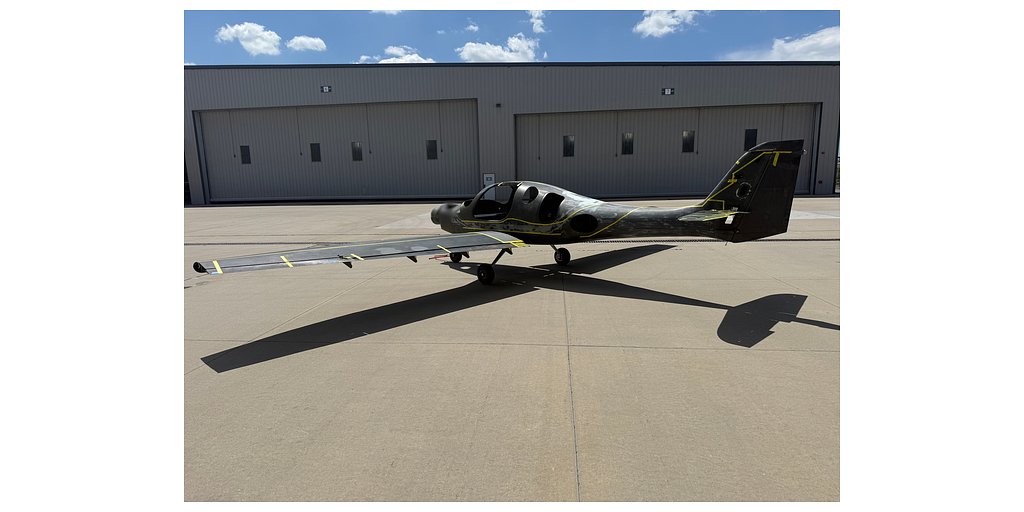
The company recently pulled back the curtain on the extensive network of global suppliers powering the two-seat, all-electric trainer, a move that signals not just an impending flight but a maturing of the aircraft from concept to certifiable reality. While a developmental prototype took to the skies as early as 2018, this upcoming flight of Serial Number 001 (SN001) is different. This is the aircraft intended to navigate the rigorous FAA certification process, making its performance a critical barometer for the future of electric flight training.
The Power of Partnership: Assembling a Tier-One Ecosystem
A key growth signal for any complex manufacturing venture is the quality of its supply chain. Bye Aerospace’s announcement reads like a who's who of aerospace and technology leaders, a deliberate strategy to de-risk a program built on innovation. This ecosystem of tier-one partners validates the technical approach and instills confidence in a market still finding its footing.
“Our partners supporting the eFlyer 2 program represent some of the most respected names across the aviation industry,” said Rod Zastrow, CEO of Bye Aerospace. “Their involvement reflects the low-risk approach and technical progress of the program, as well as the growing confidence in electric aviation.”
At the heart of the eFlyer 2 is the ENGINeUS 100B1 electric motor from French giant Safran Electrical & Power. This EASA-certified propulsion system is the muscle, designed for high performance and quiet operation. Powering that motor is an advanced energy storage system from magniX USA, whose Samson battery pack is engineered for high energy density and a long cycle life—a critical factor for the high-utilization environment of flight schools. This partnership with magniX, solidified in late 2025, marks a key decision in the aircraft's final configuration.
The aircraft’s structure and systems are a testament to this collaborative strategy. Toray Composite Materials America provides the advanced, lightweight composites for the airframe, while Garmin supplies its industry-standard G500 TXi avionics suite for the cockpit. Specialized firms like Composite Approach are handling the prototype’s final assembly, with others like Flying S and M4 Engineering fabricating the tail and doors, respectively. This intricate web of specialists, from Sensenich Propellers to Risse Racing’s precision landing gear components, demonstrates that bringing a next-generation aircraft to market is a multidisciplinary symphony, not a solo performance.
Reshaping the Economics of Pilot Training
The ultimate test of the eFlyer 2 will be its market adoption, and the primary signal here is economic disruption. Bye Aerospace’s headline claim is that its electric aircraft can slash maintenance and energy costs by up to 80% compared to conventional piston-engine trainers like the Cessna 172. For flight schools grappling with high fuel prices and intensive maintenance schedules, this is a powerful incentive.
The market appears to be listening. The company’s order book for the eFlyer 2 and its four-seat sibling, the eFlyer 4, reportedly exceeds 1,000 aircraft, with deposits from premier flight training organizations like Spartan College of Aeronautics & Technology, Skyborne Academy, and Europe’s KLM Flight Academy. This backlog, valued in the hundreds of millions, indicates strong preliminary demand, predicated on the promise of making flight training more affordable and accessible at a time of a persistent global pilot shortage.
However, Bye Aerospace is not flying in clear skies. The competitive landscape is heating up. The Pipistrel Velis Electro, now under the wing of Textron eAviation, is already EASA-certified and is pursuing FAA validation. Meanwhile, Diamond Aircraft is developing its eDA40. Bye’s strategic differentiator is its clean-sheet design, purpose-built from the ground up to meet the FAA’s modern, performance-based Part 23 Amendment 64 standards, a path it hopes will yield a highly optimized and safe platform for the U.S. market and beyond.
Navigating the Uncharted Path to Certification
Perhaps the most significant growth signal is Bye Aerospace's methodical progress through the complex FAA certification process. The company was the first to apply for certification of an all-electric aircraft under the new Part 23 rules, effectively making it a pathfinder for the industry. This journey has been deliberate and arduous, marked by key regulatory victories.
The FAA’s approval of the G-1 (Certification Basis) and G-2 (Means of Compliance) issue papers were pivotal moments, establishing the fundamental safety and design criteria for this new class of aircraft. More recently, the FAA accepted the company's Functional Hazard Analysis, further validating the eFlyer 2’s design integrity. These are not just bureaucratic checkboxes; they are foundational agreements that de-risk the path to final type certification, which the company now projects for 2028.
Before SN001 can fly, it must endure a gauntlet of ground-based trials. The press release confirms the completion of rigorous structural load testing on the wing and fuselage, along with low- and high-speed ground tests. A specialized mobile test rig, nicknamed “The Beast,” has been instrumental in validating the propulsion system’s performance. These exhaustive pre-flight checks are essential for ensuring that when the eFlyer 2 does take flight, it does so with a mountain of safety and performance data behind it.
Building the Foundation for Electric Skies
The long-term success of the eFlyer 2 and its contemporaries hinges on more than just the airframe; it requires a new ecosystem on the ground. Recognizing this, Bye Aerospace has proactively partnered with Electro.Aero to develop the crucial fast-charging infrastructure needed to support flight school operations. With portable chargers capable of replenishing two aircraft in under 30 minutes, the partnership aims to solve the turnaround-time challenge, ensuring electric trainers can match the operational tempo of their fossil-fuel-powered predecessors.
As the eFlyer 2 prototype (SN001) sits on its wheels in Denver, poised for its imminent first flight, it represents more than just one company's ambition. It is a tangible signal of a broader industrial shift. The convergence of a robust supply chain, a clear economic value proposition, and steady progress through a novel regulatory landscape indicates that the momentum behind sustainable aviation is building. The upcoming flight will be a test not only of an aircraft, but of an entire ecosystem's readiness to embrace a quieter, cleaner, and more cost-effective era of aviation.