
- 75+ years of service: Willie Jordan dedicated over three-quarters of a century to serving the vulnerable.
- 30-year leadership: She led Fred Jordan Missions for 30 years, transforming its focus to include women and children.
- 20,000 families served: Her Holiday Celebrations in the Streets reached up to 20,000 families in a single day.
Experts would likely conclude that Willie Jordan’s leadership redefined compassionate service in Skid Row, bridging faith and action to address systemic homelessness with innovative, inclusive solutions.
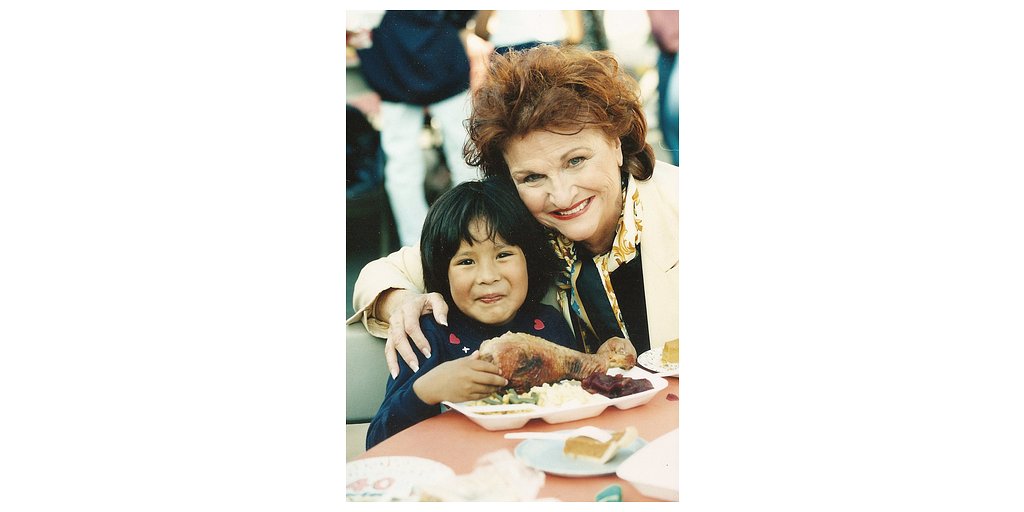
The Matriarch of Skid Row: Willie Jordan’s Unflinching Legacy of Service
LOS ANGELES, CA – June 19, 2026 – Willie L. Jordan, the pioneering missionary who became the only female president of a major Skid Row mission and reshaped its focus with a mother’s fierce compassion, passed away on June 13 at her home in Glendora. She was 93. For more than three-quarters of a century, her voice—broadcast into living rooms and echoing down the city’s harshest streets—was a constant call to confront the suffering of the world’s most vulnerable.
Her passing marks the end of an era for Fred Jordan Missions, the inner-city institution she led for 30 years, transforming it from a ministry focused primarily on homeless men into a haven for women and children. “My mom went to sleep in her home and woke up to Jesus saying, ‘Well done, thy good and faithful servant,’” said her son, Joe Jordan, who now serves as the Mission’s president. “She finished her race and now walks on streets of gold with Jesus.” But the race she ran was here on earth, on the broken pavement of Skid Row, where her legacy is not just one of faith, but of radical, adaptive action.
A Life Forged in Crisis
Long before she became a fixture in Los Angeles, Willie Jordan’s life was defined by a refusal to look away from hardship. Called to service at 13, she was a traveling teacher by 15. Her conviction soon took her to the ruins of post-war Korea, a journey that would irrevocably shape her ministry. There, she witnessed a horror that became her crucible: a baby, having fallen into an open fire while his mother foraged for food, died in her arms.
That single, searing moment changed everything. Jordan returned to the United States not with despair, but with a singular purpose. She raised the necessary funds and, just seven months later, was back in Korea overseeing the construction of an orphanage. That facility, born from tragedy, has since grown into one of the largest of its kind in the country, a testament to a resolve that would define her life’s work. It was this shared commitment to addressing both spiritual and physical hunger that drew her to Fred Jordan, whose American Soul Clinic she joined in 1949. Together, they built a global network of missions, but it was in Los Angeles where Willie Jordan’s most profound impact would be felt.
Reshaping a Skid Row Institution
When Fred Jordan died in 1988, Willie Jordan stepped into a leadership role unheard of for a woman in the male-dominated world of downtown missions. She became president, renaming the organization Fred Jordan Missions to honor her late husband, but the changes she implemented were entirely her own vision. In 1989, she formally expanded the mission’s focus to serve women and children, a prescient move that responded to a grim reality unfolding on the streets.
The 1980s had seen an explosion in homelessness, and the demographics of Skid Row—long considered a bastion of transient single men—were shifting dramatically. The city’s unofficial “containment zone” policy had concentrated social services, but it also concentrated poverty, and increasingly, that poverty had the face of a single mother and her children. Jordan saw this shift not as a statistic, but as a mandate. “The face of America has changed,” she once noted, observing that at least 40% of the homeless were single mothers.
Under her leadership, the Mission launched its first Back-to-School event in partnership with Footlocker, providing thousands of children with new clothes and supplies. Daily meals were provided for nearly a thousand people, with a specific focus on mothers and children. The Mission became a critical source for baby necessities, emergency supplies, and shelter. The legendary Holiday Celebrations in the Streets swelled, serving as many as 20,000 families in a single day and drawing support from a vast coalition of corporations, politicians, and celebrities. She proved that compassion could be a powerful organizing principle.
The Voice from the Inner City
Willie Jordan understood that to serve the needy, you first had to make them seen. Alongside her husband, she appeared on “Church in the Home,” a weekly television program launched in 1951 that became one of the longest-running religious broadcasts in the nation. The show carried the stark needs of Skid Row and impoverished communities worldwide directly into the living rooms of an otherwise insulated public. It was a pioneering use of mass media for social advocacy, turning viewership into a form of witness.
Later, as the host of the radio program “Take Three,” she broadcast a daily message of compassion, challenging listeners to act on the empathy she believed was at the core of her faith. This media savvy allowed the Mission to build a formidable support base entirely from private donations. Fred Jordan Missions receives no government funding, operating within a framework common to faith-based organizations that grants it autonomy but also demands a relentless effort to communicate its value. This model, which exempts the organization from filing public financial disclosures like the IRS Form 990, places the burden of trust squarely on the relationship between the Mission and its donors—a relationship Willie Jordan masterfully cultivated for decades.
A Legacy of Compassion in Action
In 2018, Willie Jordan passed the leadership of the Mission to her son, Joe, ensuring the continuity of the work her family started in 1944. “What a blessing and honor it is to carry on the work,” Joe Jordan said, affirming his commitment to the founding vision. “We declare and demonstrate the love of Jesus to those in need and those who are hopeless, hurting, and helpless.”
Raising her seven children while taking them to Skid Row from infancy, Willie Jordan instilled a foundational belief that proximity to need was essential for a compassionate life. She often said her greatest joy was seeing the gratitude in the eyes of those she helped. That legacy of hands-on service continues as the Mission adapts to new challenges, with its current leadership embracing social media and YouTube to expand its reach beyond downtown Los Angeles into other pockets of poverty.
Willie Jordan’s life was a testament to the power of a single, determined individual to bend the arc of an institution toward a more inclusive and empathetic vision. She saw a world of need and refused to be paralyzed by its scale, focusing instead on the one child, the one mother, the one family in front of her, and in doing so, provided a lifeline for tens of thousands.