
- $5.99 for up to $18 worth of popcorn: Surprise Bags offer significant savings on leftover snacks.
- 168 Cineplex locations nationwide: Partnership scales across all ten Canadian provinces.
- 120M+ global users: Too Good To Go's existing platform minimizes implementation risks.
Experts would likely conclude that Cineplex's partnership with Too Good To Go is a strategic win, combining financial efficiency with sustainability, while meeting evolving consumer demands for affordability and accountability.
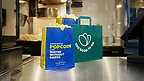
The Second Act for Movie Snacks: Cineplex Taps the Surplus Economy
TORONTO, ON – June 10, 2026 – Today, Cineplex, Canada's entertainment giant, announced a nationwide partnership with the surplus food app Too Good To Go. On the surface, the deal is simple: Canadians can now buy bags of leftover movie theatre popcorn and other concession snacks for a fraction of their retail price. But to see this as just a bargain on treats is to miss the plot entirely. This collaboration is a masterclass in strategic innovation, a quiet but powerful signal of how legacy industries are adapting to the converging pressures of economic frugality, consumer conscience, and operational efficiency. It's a story about the burgeoning surplus economy, and Cineplex is now one of its biggest stars.
A New Script for Concessions
The mechanics are elegantly straightforward, designed for the app-native consumer. Through the Too Good To Go platform, participating Cineplex theatres across all ten provinces will now offer daily "Surprise Bags." A "Popcorn Surprise Bag" will set you back $5.99 for what the companies claim is up to $18 worth of the theatre's iconic, buttery staple. For a few dollars more, an $8.99 "Concession Surprise Bag" offers a grab-bag assortment that could include popcorn, nachos, or even hot dogs—items that would have otherwise met their end in a bin at closing time.
This isn't just about preventing waste; it's about decoupling the product from its traditional environment. By designating these bags as exclusively for takeout, Cineplex and Too Good To Go are cleverly repositioning the movie snack as an everyday indulgence. "By teaming up with Too Good To Go, we're giving Canadians a whole new way to enjoy our iconic treats," said Kevin Watts, Cineplex's Executive Vice President, Exhibition, LBE & Film. The vision is clear: that surplus popcorn isn't just for movie buffs but for park picnics, late-night study sessions, and backyard hangouts. It's a move that extends the brand's reach far beyond the theatre lobby, embedding it into new corners of the consumer's life. This transforms a perishable liability into a flexible, high-margin-on-salvage asset.
The Economics of Surplus
While the environmental narrative is compelling, the "why behind the buy" for a publicly traded company like Cineplex (TSX: CGX) is rooted in shrewd economics. Food waste is not just an ethical failing; it's a financial drain. Every unsold hot dog and every scoop of popcorn left in the warmer represents a sunk cost. This partnership introduces a mechanism to reclaim value from inventory that was previously a write-off, turning a cost center into a modest but welcome new revenue stream. It’s a textbook example of circular economy principles applied at a national scale.
This isn’t a sudden pivot for the entertainment behemoth. According to company information, Cineplex has been focused on environmental initiatives, including waste management, since as far back as 2011. The adoption of the Too Good To Go platform represents the next logical evolution of that strategy—moving from simple waste diversion like recycling and composting to active value recovery. By integrating a third-party digital platform, Cineplex can implement this new operational model with minimal disruption, piggybacking on an existing user base of over 120 million people globally who are already conditioned to hunt for these deals. It’s a low-risk, high-reward strategy that addresses consumer demand for value while burnishing the company's corporate social responsibility credentials.
A Competitive Landscape in Sustainability
Cineplex’s move, while significant, is not happening in a vacuum. It’s a direct response to a landscape where sustainability is rapidly shifting from a public relations talking point to a competitive necessity. In fact, rival chain Landmark Cinemas launched a similar partnership with Too Good To Go back in February 2025, positioning itself as the first Canadian cinema chain to join the movement. Cineplex's entry into the space a year later isn't about being first; it's about leveraging its larger footprint of 168 locations to execute the strategy at a scale its competitor cannot match.
This dynamic illustrates a broader trend: in the 2026 marketplace, sustainability initiatives are becoming table stakes. The true innovation lies not in the "what" but in the "how" and "how well." As Chris MacAulay, Vice President of Operations for Too Good To Go North America, stated, "This partnership… is another great example of how businesses can meet evolving consumer needs while taking meaningful action on food waste." The "evolving consumer" is key here—a consumer who now expects brands to be both affordable and accountable. Failure to meet this dual expectation is no longer an option, it's a competitive disadvantage.
Beyond the Bag: The Broader Social Impact
Zooming out, the significance of this partnership extends far beyond corporate strategy and bottom lines. It's a tangible intervention in one of Canada's most pressing environmental challenges. With nearly half of all food produced in the country going to waste—generating millions of tonnes of CO2 equivalent emissions annually—every initiative that diverts edible food from landfills matters. Too Good To Go reports it has already helped save over 600 million meals globally, and adding Cineplex’s national network to its roster will undoubtedly add millions more to that tally.
Furthermore, the social dimension cannot be ignored. At a time when one in four Canadian households reported experiencing food insecurity in 2024, the affordability aspect of this program takes on a deeper meaning. While a bag of discount popcorn is not a solution to systemic food insecurity, it represents a small but meaningful way for families to access affordable treats, stretching tight budgets a little further. It democratizes an iconic, often overpriced, experience. This partnership, therefore, operates at a unique intersection of environmental sustainability, corporate innovation, and social accessibility, demonstrating that a business can do well by doing good, turning what was once waste into an opportunity for all.