
- Power Efficiency: Inseye Tiny® operates on just 2.8 milliwatts, a 98% reduction compared to typical camera-based eye trackers (200 milliwatts).
- High-Frequency Sampling: The sensor samples eye movements at 100 Hz to decode cognitive states.
- Market Timing: Pilot manufacturing begins in 2026, with potential consumer products in 2028.
Experts would likely conclude that Inseye Tiny® represents a significant leap forward in AI glasses technology, addressing critical barriers in power efficiency, privacy, and user experience, though its long-term success hinges on developer adoption and ethical data handling.
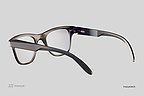
The Quiet Revolution: How a Tiny Sensor May Finally Make AI Glasses Smart
LONG BEACH, CA – June 15, 2026 – For years, the dream of intelligent eyewear has been just out of reach, hampered by clunky designs, dismal battery life, and the pervasive creepiness of face-mounted cameras. While the industry has made strides, our interactions with so-called smart glasses have remained stubbornly basic, a clunky dance of voice commands and touchpad swipes. At the Augmented World Expo (AWE) today, a small company unveiled a piece of technology that doesn't just inch the needle forward—it aims to fundamentally redefine the relationship between us and our wearable devices.
Inseye Technologies, a distributed firm with roots in medical technology, introduced the Inseye Tiny®, a behavioral co-processor and eye-motion sensor. It’s a diminutive piece of hardware, but its promise is enormous: to give AI glasses the one thing they've desperately lacked—context. By understanding not just what we look at, but how we look, the company claims its technology can enable a new generation of proactive, intuitive, and, most importantly, non-intrusive AI assistants.
Beyond Reactive AI: The Quest for Digital Empathy
The current generation of AI assistants, whether in our phones or glasses, are fundamentally reactive. They wait for a trigger word or a tap, process a command, and deliver a result. This model is functional, but it’s far from intelligent. A truly useful assistant, as Inseye’s CEO Piotr Krukowski argues, knows when to stay silent.
"A truly intelligent assistant is never intrusive but always understands precisely if and how the user needs help and which experience to activate next," Krukowski stated in the announcement. "When the user is in a focused state of flow, the best interface is likely no interface at all."
This is the core problem Inseye Tiny® sets out to solve. The sensor functions as a “behavioral layer,” sampling eye movements at a high frequency (100 Hz) to decode the subtle patterns that reveal our cognitive state. According to CTO Michal Meina, the system can distinguish between activities like reading dense text, scanning a room, searching for an object, or maintaining deep focus. It can also detect signals of distraction or context switching.
By translating these raw eye movements into high-level behavioral signals, the technology provides the device’s AI with a continuous stream of user context. Is the user struggling to read small print? The system could proactively offer to zoom in. Is their focus drifting during a work session? A gentle, private notification could help them get back on track. By analyzing patterns over weeks, it could even offer insights into personal productivity, helping users understand when and where they work best. It’s a shift from a simple tool to a cognitive partner.
A Paradigm Shift in Power and Privacy
While the concept is compelling, the technical execution is where Inseye’s claims become truly disruptive. The two greatest engineering hurdles for all-day smart glasses have been power consumption and privacy. Inseye Tiny® attacks both with a novel design.
First, the sensor is camera-free. Instead of using power-hungry cameras to visually record the eye, it relies on a proprietary, ultra-efficient photosensor architecture. This design choice has a staggering impact on energy use. While typical camera-based eye trackers can consume around 200 milliwatts, Inseye’s first reference design reportedly operates on a mere 2.8 milliwatts—a reduction of over 98%. This isn't an incremental improvement; it's an enabling factor that could finally make always-on eye tracking feasible in a lightweight, all-day wearable without requiring a bulky battery pack.
The camera-free design also directly addresses the biggest social and ethical roadblock for smart glasses: privacy. Devices with visible cameras have been met with suspicion and hostility, creating a social stigma that has stifled adoption. By eliminating the camera, Inseye eliminates the possibility of surreptitiously recording other people, dismantling a key source of public anxiety.
This “privacy-first” approach, however, opens a new, more nuanced conversation. While the sensor doesn't see what the user sees, it intimately monitors the user's own biological responses. The collection of granular behavioral data, even for the user’s own benefit, treads into new territory for data ethics. Securing this deeply personal information will be paramount for any OEM that adopts the technology.
Beyond passive understanding, the sensor also enables a new mode of active control. Inseye COO Klaudia Borowczyk emphasizes that "the human gaze is not a mouse pointer." Instead of crude point-and-click interactions, the system is designed to recognize subtle, intuitive “gaze gestures.” A specific glance could answer a call, a brief look could expand a notification, and a natural reading motion could scroll text automatically. This promises a more fluid and less physically demanding user interface.
Fueling the Next Wave of Intelligent Eyewear
Inseye’s announcement comes at a critical moment. Market analysts project that 2026 is an inflection point for the smart glasses industry, with consumer adoption set to surge as multimodal AI becomes more integrated. For the Original Equipment Manufacturers (OEMs) racing to build the category-defining product, a component like Inseye Tiny® could be a powerful differentiator.
By providing a solution to the core challenges of power, privacy, and user experience, Inseye is positioning itself as a key enabler for the entire ecosystem. The company has already begun pilot manufacturing and is taking pre-orders from qualified OEMs, with evaluation kits scheduled to ship in November 2026. This timeline suggests that products integrating the technology could potentially reach the market within the next two years.
In a competitive landscape that includes established players like Tobii and research-focused firms like Pupil Labs, Inseye is carving out a unique niche with its explicit focus on ultra-low power consumption and a camera-free architecture. Its success will depend on how effectively developers can leverage this new layer of contextual data.
"The result is a shift from reactive AI glasses to proactive AI glasses," Borowczyk summarized. The technology provides the building blocks for systems that respond not only to external events but also to the user's own attention and intent. For the first time, our devices may learn to work with the rhythm of our minds, offering help when needed and stepping back when we are in the zone, achieving a quiet intelligence that has long been the stuff of science fiction.