
- €1.6 billion: Assets under management by Optimum Asset Management.
- €800 million: Joint venture with Blackstone in German real estate.
- €400 million: Investments in U.S. life sciences and technology sectors.
Experts would likely conclude that the summit underscored the critical intersection of geopolitics and private equity, emphasizing the need for investors to integrate political risk assessments into their strategies.
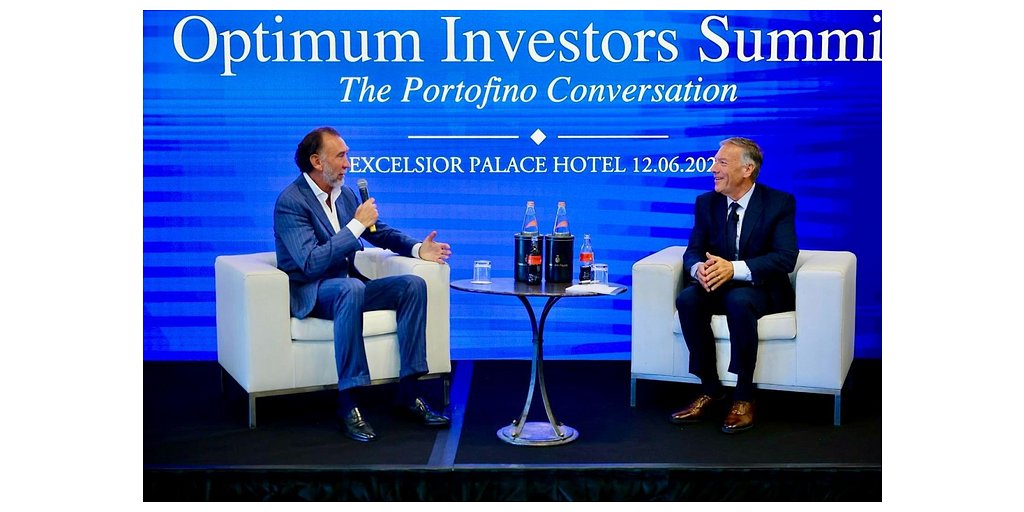
The Portofino Conversation: Where Global Politics Shapes Private Equity
RAPALLO, Italy – June 16, 2026 – On the sun-drenched Italian Riviera, a location synonymous with leisure, a new and far more serious conversation is taking shape. European private equity firm Optimum Asset Management recently concluded its inaugural Investor Summit, dubbed “The Portofino Conversation,” transforming the idyllic setting into a crucible for high-stakes geopolitical and economic debate. The event, which drew institutional investors, government leaders, and financial professionals, served as a powerful declaration: in the modern world of investment, understanding global power dynamics is no longer a niche specialty but a core requirement.
While hosted by an asset manager with over €1.6 billion in assets, the summit’s agenda felt more akin to a G7-prep meeting. The headline speaker, former U.S. Secretary of State and CIA Director Mike Pompeo, was joined by former Italian Prime Minister Matteo Renzi and a host of current Italian government officials. Their discussions moved far beyond market trends, tackling the foundational challenges reshaping global capital flows: US-China competition, the war in Ukraine, instability in the Middle East, and European strategic autonomy. As the partners of Optimum Asset Management stated, the ambition was “to engage with investors in a different way,” fostering a dialogue where “economics, growth, investments, geopolitics and competitiveness were at the heart of the debate.” The outcome was a clear illustration of how geopolitical risk has migrated from the foreign policy briefing room to the center of the investment committee table.
The Pompeo Doctrine and the New Investment Calculus
Mike Pompeo’s keynote address set a stark and uncompromising tone. He delivered an unvarnished assessment of global threats, arguing that the defining contest of the 21st century is not with a resurgent Russia but with an ideologically driven China. “The real strategic challenge is not Russia, but the Chinese Communist Party,” Pompeo stated, framing Beijing as a “systemic threat to the model of liberal democracies.”
His warning to the assembled investors was direct and practical: “Xi Jinping does not believe in private property. If you are doing business with a Chinese company, you are doing business with the Chinese Communist Party.” This is not abstract political theory; it is actionable intelligence for any firm with exposure to global supply chains. For asset managers like Optimum, which has over €400 million invested in the U.S. life sciences and technology sectors, this perspective forces a radical reassessment of risk. The era of purely cost-driven, globalized supply chains is over, replaced by a new paradigm of “partner-shoring” and technological sovereignty. Investment in a life sciences firm, for example, now requires deep due diligence into its reliance on Chinese-sourced active pharmaceutical ingredients (APIs) and the potential for supply disruption due to political tensions.
Pompeo’s analysis of the Middle East was equally blunt. Expressing profound skepticism about the prospects of normalizing relations with Tehran, he argued, “The Iranians have violated every agreement they have signed in the past. The regime must change.” For investors in energy and real assets, this translates to sustained volatility and the need to price in regional conflict risk. His call for Europe and the U.S. to increase investment in security, cybersecurity, and critical infrastructure was not just a political appeal but an outline of emerging investment sectors driven by geopolitical necessity.
A Masterclass in Soft Power
For Optimum Asset Management, hosting “The Portofino Conversation” represents a sophisticated strategic pivot. While the firm has a proven track record, including a joint venture with Blackstone managing over €800 million in German real estate, this summit elevates its brand far beyond its balance sheet. It is a masterclass in soft power, positioning the firm not merely as a manager of capital but as a convener of influence and a thought leader in a complex world.
By creating a platform for figures like Pompeo and Renzi, Optimum signals to its clients—pension funds, institutional investors, and family offices—that it understands the new rules of the game. The ability to attract such speakers and facilitate these conversations demonstrates a level of access and strategic insight that transcends traditional financial analysis. It suggests that the firm’s “granular approach” to identifying undervalued assets is now augmented by a macro-level understanding of the political forces that can make or break an investment thesis.
This move is particularly relevant given Optimum’s focus areas. Its investments in U.S. life sciences R&D facilities in hubs like Boston are directly impacted by the geopolitical tug-of-war over technology and intellectual property. Similarly, its extensive real estate holdings in Berlin are subject to the economic crosscurrents of European energy security and defense spending—issues central to the summit’s discussions. By orchestrating this dialogue, Optimum is not only building its brand but also actively stress-testing its own investment worldview and gathering invaluable, forward-looking intelligence.
Italy's Bid for the Global Stage
The summit’s location and the prominent role of Italian leaders were no coincidence. The strong presence of former Prime Minister Matteo Renzi, Deputy Minister Edoardo Rixi, and regional presidents from Liguria and Calabria signaled a coordinated effort to position Italy as a destination for international capital and a hub for strategic discourse. The Italian Riviera, in this context, became more than a scenic backdrop; it was a stage for the nation to project economic ambition.
Matteo Renzi’s participation was particularly telling. He reportedly used the platform to advocate for the political and administrative reforms necessary to make Italy more attractive to foreign investors. His message was clear: Italy is open for business, and its leadership understands the need to create a stable, predictable environment for capital to thrive. The involvement of Cassa Depositi e Prestiti, Italy’s state-backed investment institution, further underscored the alignment between public policy and private investment objectives.
By successfully hosting a forum that blends global geopolitical strategy with tangible investment opportunities, Italy and Optimum together demonstrated a model that may become increasingly common. As capital becomes more sensitive to political risk, nations and firms that can effectively bridge the gap between Washington, Brussels, and Wall Street will hold a distinct competitive advantage.
From Dialogue to Deals: Geopolitical Due Diligence
The ultimate takeaway from “The Portofino Conversation” is the formal integration of geopolitics into the fabric of investment due diligence. The high-level discussions on strategic autonomy, energy independence, and technological competition are no longer theoretical. They are direct inputs for risk models and capital allocation decisions across private markets. An investment in a data center is now an investment in cybersecurity and data sovereignty. A stake in a commercial real estate portfolio is now contingent on the stability of regional energy supplies and the economic impact of shifting trade alliances.
The success of this inaugural summit, confirmed by the heavy presence of major media outlets, suggests it is poised to become a recurring and influential event. It has established a new benchmark for investor engagement, one where the quality of the geopolitical insights is as important as the presentation of financial returns. For investors navigating the 21st century, the path from Portofino to a successful portfolio is now paved with geopolitical intelligence.