
- Kot Auto Group now operates 12 dealerships, making it the largest Hyundai retailer in Western Canada.
- The group opened Canada's largest Hyundai dealership (75,000 sq ft) in Langford in April 2026.
- The acquisition includes strategic integration of Duncan Hyundai's local team, including Managing Partner Jordan Reymer.
Experts would likely conclude that Kot Auto Group's consolidation strategy represents a forward-thinking model for adapting to automotive industry shifts, particularly in electrification and mobility services, while balancing corporate efficiency with local community trust.
The New Regional Grid: Kot Auto’s Dealership Consolidation Reshapes Mobility
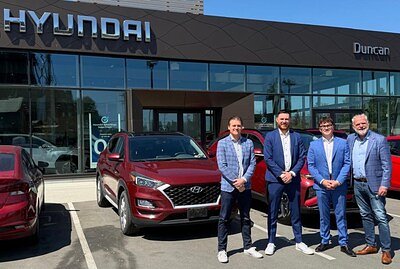
DUNCAN, BC – June 02, 2026 – On the surface, the announcement that Kot Auto Group has acquired Duncan Hyundai is a standard story of regional business expansion. It marks the family-run enterprise's 12th dealership, solidifying its position as the largest Hyundai retailer in Western Canada. But to see this merely as a line item on a corporate growth chart is to miss the more significant story unfolding beneath the surface. This acquisition is a strategic move in the construction of a new kind of regional infrastructure—a consolidated, powerful network designed not just to sell cars, but to manage the future of personal mobility in British Columbia.
The traditional, fragmented landscape of independent, family-owned dealerships is rapidly giving way to centralized, multi-brand networks. These emerging automotive grids are better capitalized, more operationally efficient, and strategically positioned to handle the immense technological shifts—from electrification to connectivity—that are redefining the vehicle and our relationship with it. Kot Auto Group's calculated expansion is a prime example of this trend, revealing a blueprint for how the invisible networks of capital, service, and logistics are being rebuilt to support the cars of tomorrow.
A Calculated Conquest for Scale
Kot Auto Group's growth has been anything but accidental. The acquisition of Duncan Hyundai is the latest move in a deliberate strategy that has seen the group expand rapidly since its founding in 2011. Now boasting four Hyundai dealerships across British Columbia—in Kelowna, Maple Ridge, Victoria, and Duncan—the group has achieved a dominant position with the Korean automaker, a brand that is itself a major player in the electric vehicle transition.
This pattern of aggressive growth is a response to the changing economics of the automotive industry. "This acquisition represents another exciting milestone for Kot Auto Group," stated John Kot, President of the group. "Duncan Hyundai has built a strong reputation for customer service and community involvement, and we're excited to continue that legacy while bringing additional resources, innovation, and opportunities to the dealership and the Cowichan Valley region."
The keywords here—"resources" and "innovation"—point to the core advantage of consolidation. A larger group wields significant economies of scale. This includes immense buying power for inventory, favorable financing terms from financial institutions, and the ability to centralize costly back-office functions like marketing and HR. This isn't just about becoming bigger; it's about becoming more resilient and agile. The acquisition of Okanagan Dodge from the publicly-traded giant AutoCanada in 2024, and now the integration of Duncan Hyundai, demonstrates a clear ambition to build a regional powerhouse capable of competing at the highest level. This consolidation is creating a formidable service and sales backbone across British Columbia.
The Dealership as an Infrastructure Node
The true significance of this consolidation becomes clear when we stop viewing dealerships as simple retail showrooms and start seeing them as critical infrastructure nodes. In the age of electric vehicles, the dealership is no longer just a point of sale; it is a hub for high-voltage servicing, specialized technician training, battery management, and customer education. The capital investment required to build and maintain this new infrastructure is staggering and often beyond the reach of a single, independent operator.
Kot Auto Group's recent actions show they understand this shift intimately. In April 2026, just months before this acquisition, the group opened what it calls Canada's largest Hyundai dealership in Langford. This 75,000-square-foot facility is more than just a big building; it's a statement of intent. Designed to accommodate the growing demand for EVs on Vancouver Island, it features advanced service capabilities like drive-through express lanes, signaling an investment in the efficiency and technological capacity needed for the next generation of vehicles.
By acquiring Duncan Hyundai, Kot is extending this advanced network. They are not just buying a customer list; they are acquiring a strategic geographic point and integrating it into their larger, more capable system. Furthermore, the group's recent launch of a rental company, 'Rent Direct,' shows a broadening vision of mobility services. This diversification from sales into rentals indicates a strategic pivot towards providing mobility as a service, where the network of physical dealership locations can serve as hubs for a variety of transportation options, not just ownership.
Weaving the Human Network
While technology and capital form the hard infrastructure of this new automotive grid, the network cannot function without its human component. A key challenge for any large, consolidating entity is maintaining the local trust and community connection that smaller, family-run businesses are built on. A faceless corporate entity can alienate the very customers it seeks to serve.
Kot Auto Group appears keenly aware of this "soft infrastructure." The press release makes a point of highlighting the continuity at the local level. The existing team at Duncan Hyundai will remain, and perhaps most importantly, Jordan Reymer, son of the former owner Tony Reymer, will stay on as Managing Partner and General Manager. This move is strategically vital. It ensures that the institutional knowledge and community relationships built over years are not lost in the transition. It provides a familiar face for loyal customers and a sense of stability for employees.
By publicly thanking former owner Tony Reymer "for his leadership and the strong foundation he built," the Kot family signals respect for the dealership's legacy. This is a deliberate strategy to absorb the goodwill of the acquired business rather than simply overwriting it. Their own history as a family-run enterprise, with multiple family members managing different dealerships, likely informs this approach. They understand that in a business built on trust—from the sales floor to the service bay—the human network is as critical as the financial and logistical one. Their established community initiatives, like coat drives and charity donations, are tools they will likely deploy in the Cowichan Valley to further embed themselves in the local fabric.
The successful integration of Duncan Hyundai will depend on how well the Kot Auto Group can infuse its corporate resources and innovative systems without severing the deep community roots the Reymer family cultivated. It's a delicate balance between the efficiency of a centralized network and the personal touch of a local partner. This acquisition, therefore, is not just a test of their business model, but of their ability to manage and grow a complex socio-technical system. The future of mobility will not be built by technology alone; it will be built by networks that successfully integrate capital, infrastructure, and community.