
- 94% of parents approve of expanding CTE programs, reflecting strong public support. - 40% of CTE programs struggle to secure meaningful employer partnerships, highlighting a key challenge. - 45% increase in credential completion demonstrated by Ivy Tech Community College’s Career Accelerator model.
Experts agree that the future of career education lies in collaborative, industry-aligned programs that integrate both technical and durable skills, leveraging technology like AI to prepare students for long-term career success and economic mobility.
The New Blueprint for Career Education: Inside the Model for Tomorrow's Workforce
BOSTON, MA – February 18, 2026 – Across the United States, a quiet revolution is reshaping the high school experience. Career and Technical Education (CTE), once relegated to the background as “vocational tech,” is stepping into the spotlight, driven by soaring student interest and urgent employer demand. With public approval for expanding CTE programs at 94% among parents, the question is no longer if these programs are valuable, but how to build them for the modern economy.
In response, Boston-based youth development nonprofit The Possible Zone has articulated a five-point framework that offers a compelling blueprint. Based on emerging national research and its own hands-on work, including a healthcare-focused course at Lawrence High School, the organization’s model moves beyond theory to provide a practical guide for creating pathways that prepare students not just for a first job, but for a lifetime of career growth and economic mobility.
The New Collaborative Blueprint
The cornerstone of modern CTE is a fundamental shift in the relationship between schools and industry: from consultation to co-creation. According to The Possible Zone's framework, the most effective programs are designed with industry, not just for it. This means treating employers, higher education institutions, and community organizations as genuine co-developers of the curriculum.
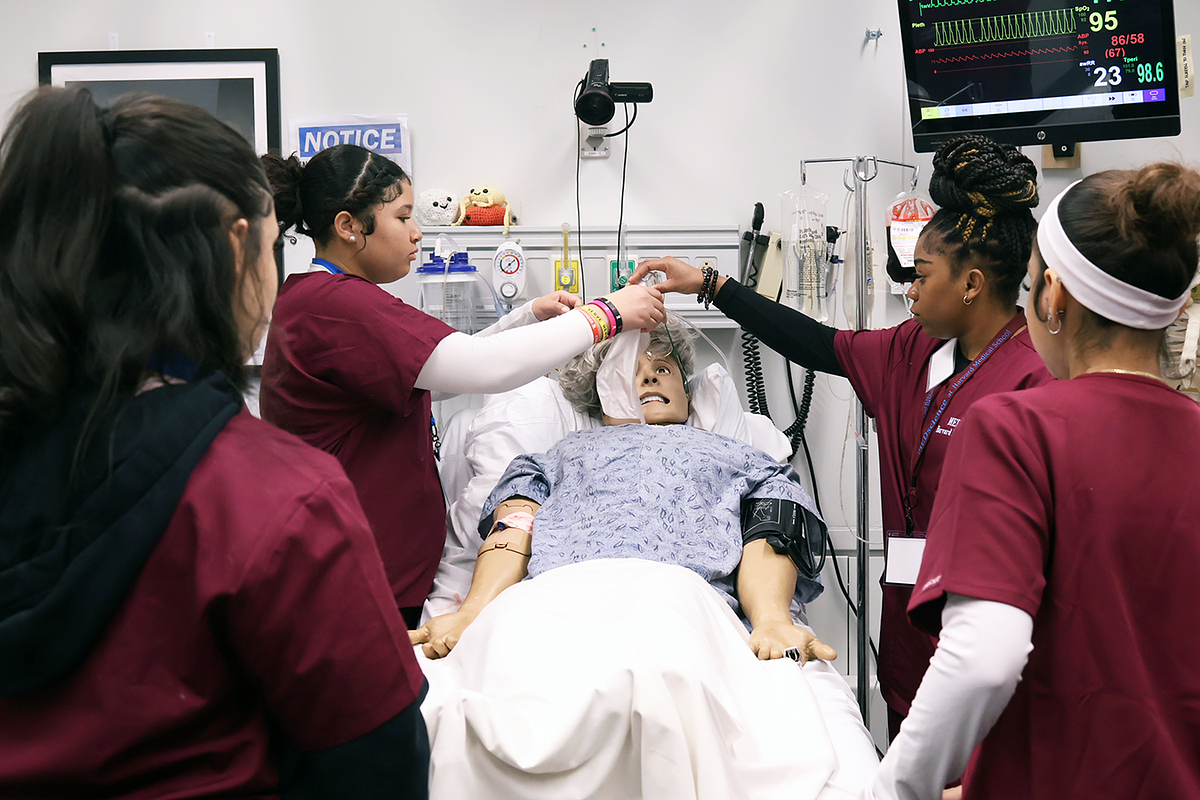
This approach directly tackles one of the most persistent hurdles in the field, as national data shows 40% of CTE programs report struggling to secure meaningful employer partnerships. The Possible Zone’s partnership at Lawrence High School with Lawrence General Hospital serves as a prime example of this model in action. Local nurses and healthcare technicians helped shape course modules, pressure-test projects for authenticity, and ensure the tools and problems students engage with reflect current workplace realities.
“When nurses, technicians, and industry professionals help shape curriculum and projects, students encounter authentic problems, current tools, and real-world expectations,” noted Meg Riordan, Ph.D., Chief Learning Officer at The Possible Zone, in the organization’s announcement. This collaboration ensures students aren't just “playing” at a profession but are genuinely preparing for it, building a robust talent pipeline for regional employers in the process.
This collaborative spirit extends into the classroom itself, which in high-quality CTE programs looks less like a lecture hall and more like a design studio or laboratory. Instruction is anchored in applied, project-based pedagogy where students learn by doing. Complex projects that mirror real-world assignments require them to collaborate, communicate, and problem-solve, embedding essential professional competencies alongside technical skills.
More Than Technical: The Rise of Durable Skills
For decades, the value of skills like communication, teamwork, and adaptability were often dismissed as “soft.” Today, they are recognized as essential, durable competencies that are critical for long-term career success. A key insight from recent workforce analysis reveals that these durable skills appear nearly four times more frequently in job postings than the top technical skills.
Recognizing this, leading CTE programs now make these skills explicit, visible, and assessable. The model championed by The Possible Zone integrates a set of critical competencies directly into the curriculum. Students at Lawrence High School are taught to identify skills like opportunity recognition and creativity in their own work. They actively reflect on their progress, selecting from drafts and work samples to build a portfolio that demonstrates their growth. This process not only makes learning tangible but also fosters a deep sense of ownership and self-efficacy.
This focus aligns with a national movement to codify and integrate these competencies into education. Frameworks like the one developed by the nonprofit America Succeeds are being adopted by curriculum providers to ensure students are systematically developing the skills that employers universally demand, regardless of industry.
AI as Co-Pilot, Not Autopilot
As artificial intelligence continues to reshape industries, educators face the challenge of teaching students to use it as a powerful tool rather than a shortcut that circumvents critical thinking. The Possible Zone's approach is to integrate AI and emerging technologies to deepen, not replace, human learning.
To that end, the organization is piloting a “Navigator App” designed to act as a personalized “co-pilot” for students. The app gamifies the learning experience and works alongside teachers to help assess student progress, identify new areas for exploration, and suggest expanded opportunities tailored to individual interests and goals. This strategy positions AI as a supportive instrument for fostering creativity and problem-solving.
This forward-thinking application of technology is mirrored in innovative CTE programs nationwide. In Florida, a state-level AI-specific CTE pathway has been adopted by over a dozen high schools. In other programs, AI-powered simulations allow healthcare students to practice diagnostic decision-making in a safe environment, while automotive students use AI-enhanced tools to troubleshoot complex systems. By embracing AI responsibly, these programs are preparing students to navigate a workforce where human-AI collaboration will be the norm.
Building Ladders to Economic Opportunity
The ultimate goal of a robust CTE program is to create clear and accessible pathways to economic advancement. The most effective models achieve this by building a coherent system that stacks credentials and expands opportunity. This involves aligning high school coursework with postsecondary credit, work-based learning, and valuable industry certifications.
At Lawrence High School, the healthcare CTE course is designed to provide students with a ladder of credentials, including OSHA safety certification, CPR-First Aid, and Certified Nursing Assistant (CNA) certification. These credentials not only position young people for immediate employment in high-demand roles but also serve as on-ramps to further education and more advanced roles within the healthcare sector.
This strategy of “stackable credentials” is gaining significant traction nationally. The federal Perkins V Act, which provides over $1.4 billion annually for CTE, strongly emphasizes work-based learning and the creation of seamless transitions between secondary and postsecondary education. Models like Ivy Tech Community College’s Career Accelerator have demonstrated the power of this approach, showing a 45% increase in credential completion by allowing students to earn meaningful certifications in short cycles. When these practices come together, CTE becomes a powerful bridge connecting education, industry, and community, positioning young people not only to access the careers of the future, but to shape them.