
- Frequency Spectrum Coverage: 10 MHz to 18 GHz, with an instantaneous bandwidth of 1 GHz.
- Data Rates: Up to 100 Gbps for real-time spectrum data processing.
- Contract Wins: $9.1 million from the Office of Naval Research for AI/ML-enabled EW capabilities.
Experts would likely conclude that Pacific Defense's SDR4320VP represents a significant advancement in battlefield technology, aligning with the DoD's MOSA mandate to enhance interoperability, reduce development timelines, and improve electronic warfare capabilities.
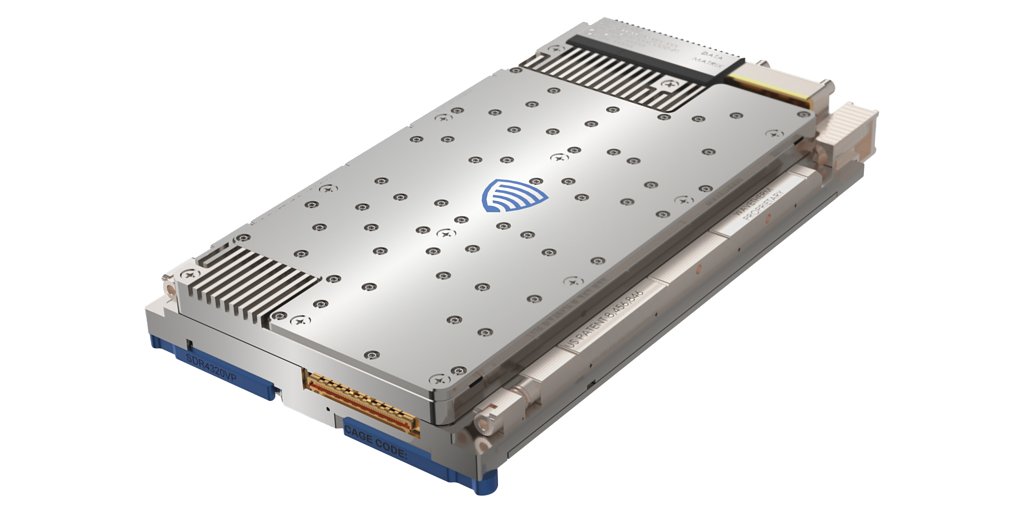
The MOSA Mandate: How Pacific Defense's New SDR Redefines Battlefield Tech
EL SEGUNDO, CA – December 09, 2025 – In a move that underscores a seismic shift in defense technology, Pacific Defense has launched the SDR4320VP, an advanced software-defined radio (SDR) transceiver. While the product boasts impressive specifications for electronic warfare (EW) and signals intelligence (SIGINT), its true significance lies not just in the hardware, but in the philosophy it embodies. This launch is a potent example of how the Pentagon’s mandate for a Modular Open Systems Approach (MOSA) is moving from a procurement buzzword to a tangible, battlefield-ready reality, reshaping the competitive landscape for defense contractors and the strategic calculus for investors.
A Paradigm Shift in Defense Procurement
For decades, the defense industry operated on a proprietary model, leading to vendor lock-in, prolonged development cycles, and staggering lifecycle costs. A new system often meant a complete, multi-year overhaul. The Department of Defense (DoD), facing rapidly evolving threats from near-peer adversaries, recognized this model as an existential risk. In a landmark 2019 memo, the DoD declared MOSA a “warfighting imperative,” a strategy now codified in U.S. law. The goal is simple yet revolutionary: create a plug-and-play ecosystem for military hardware and software.
This is where the architecture of the SDR4320VP becomes so critical. By aligning with standards like the Sensor Open Systems Architecture (SOSA) and the C5ISR/EW Modular Open Suite of Standards (CMOSS), Pacific Defense is not just selling a product; it is delivering a component designed for interoperability. These standards, built upon the OpenVPX framework, define the physical and electrical interfaces for modules, allowing the military to source the best-in-class processor from one company, the best sensor from another, and integrate them seamlessly into a single chassis. This breaks the proprietary stranglehold, fosters competition, and dramatically accelerates the timeline for deploying new capabilities—from years to months. For companies like Pacific Defense, founded in 2020 with a mission to drive this open-systems transformation, the MOSA mandate is not a constraint but a foundational business opportunity.
Engineering the Electromagnetic Edge
The SDR4320VP is more than just compliant; it aims to be a leader within the new open framework. The 3U OpenVPX card packs a formidable technological punch, pushing the boundaries of what’s possible in a compact, ruggedized form factor. At its heart is a state-of-the-art Radio Frequency System-on-Chip (RFSoC) from AMD’s Zynq UltraScale+ family, a powerful integrated circuit that enables a fully software-defined signal chain.
Technically, the device’s specifications set a new benchmark. It covers an exceptionally wide frequency spectrum from 10 MHz up to 18 GHz, with an instantaneous bandwidth of 1 GHz. This far exceeds the range of many competing SDRs, which often top out around 6 GHz. This broad coverage is critical for modern EW and SIGINT missions, which must detect, identify, and counter a vast and growing array of threat signals. Furthermore, with data rates reaching 100 Gbps, the module can process immense volumes of spectrum data in real-time, a necessity for complex tasks like geolocation, beamforming, and executing sophisticated jamming techniques.
“The SDR4320VP continues our track record of delivering the most advanced MOSA products on the market,” said Pedja Mitrovic, VP of Modular Products at Pacific Defense. “This SDR pushes the state of the art in 3U SOSA signal-processing capability, giving system designers greater power and flexibility to meet demanding mission requirements.” This statement highlights the dual focus: achieving peak performance while strictly adhering to the open standards that guarantee future flexibility and upgradeability.
From the Lab to the Modern Battlefield
The strategic value of the SDR4320VP becomes clear when translating its technical prowess into operational capability. The term “software-defined” is key. In a contested electromagnetic environment, an adversary can introduce a new radar frequency or communication waveform overnight. With legacy hardware, countering this new threat would require a lengthy and expensive physical redesign and replacement of equipment.
With a software-defined platform like the SDR4320VP, the response can be a simple software patch. New algorithms for direction-finding, new jamming techniques, or entirely new waveforms can be developed and deployed to units in the field without ever opening the hardware chassis. This provides warfighters with unprecedented agility and adaptability, enabling them to out-maneuver adversaries in the electronic domain. This capability directly addresses the needs of critical U.S. Army modernization programs like the Terrestrial Layer System (TLS) and Multifunction Electronic Warfare – Air Large (MFEW-AL), both of which prioritize modular, COTS-based solutions for rapid capability insertion.
Pacific Defense’s Strategic Ascent
The launch of the SDR4320VP is not an isolated event but the latest move in Pacific Defense’s calculated strategy to become a dominant force in the MOSA ecosystem. Since its inception, the company has focused exclusively on open-architecture C5ISR and EW solutions. This singular focus has paid dividends, leading to significant contract awards that validate its approach.
Recent wins include a $9.1 million contract from the Office of Naval Research to develop AI/ML-enabled EW capabilities and an award from the U.S. Army for its CMFF (CMOSS Mounted Form Factor) program. These contracts demonstrate trust from key military branches and position the company at the heart of the nation’s most advanced modernization efforts. By consistently delivering high-performance, MOSA-aligned products—from chassis to processing cards to specialized transceivers—Pacific Defense is building a comprehensive portfolio that offers an integrated, open-standard solution. This strategy not only meets the DoD's immediate needs but also establishes the company as a pivotal partner in building the future, interoperable force, solidifying its growth trajectory in the evolving defense market.