
- 1.6 million people sought medical treatment for pollution-related ailments in early 2024.
- 29,000 premature deaths in Thailand linked to PM2.5 pollution in 2021.
- Thai air purifier market projected to more than double by 2030, with a 13%+ CAGR.
Experts agree that while outdoor air pollution in Thailand remains a complex, long-term challenge, Levoit's focus on indoor air quality solutions offers a practical and immediate health benefit for consumers.
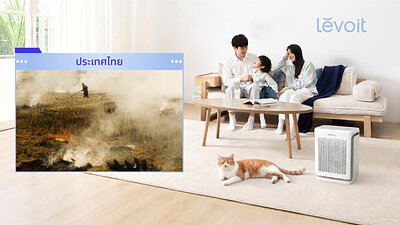
Levoit’s Clean Air Gambit in Thailand’s Smog Season
BANGKOK, THAILAND – December 08, 2025 – As the cool, dry season settles over Thailand, a familiar and unwelcome haze begins to descend upon its cities and countryside. This is not the gentle mist of a tropical morning but the leading edge of the annual “smog season,” a predictable yet devastating environmental and public health crisis. With the recent memory of early 2024, when an estimated 1.6 million people sought medical treatment for pollution-related ailments, the nation is bracing for another difficult winter. The primary culprit remains the open-field burning of agricultural waste, a practice that, combined with urban and industrial emissions, blankets the country in a toxic soup of PM2.5 particles.
In this environment of recurring crisis, a distinct market dynamic is taking shape. While government agencies deploy policies ranging from burning bans to financial incentives for farmers, a growing number of consumers are taking matters into their own hands. They are fortifying the one space they can control: their homes. This shift has created a significant opportunity for companies specializing in air purification, and few are moving as strategically as Levoit, a leading U.S. brand making a concerted push into the Thai market.
The Anatomy of a Crisis
The air quality challenge in Thailand is a complex, multi-faceted issue with profound consequences. During the peak season from December to April, major urban centers like Bangkok and northern cities such as Chiang Mai frequently register among the world's most polluted. PM2.5, a class of fine particulate matter small enough to enter the bloodstream, regularly soars past levels deemed safe by the World Health Organization. The health toll is staggering. Beyond the acute symptoms of burning eyes and respiratory distress, long-term exposure is a silent killer. In 2021 alone, PM2.5 pollution was linked to an estimated 29,000 premature deaths in Thailand, a figure that eclipses fatalities from road accidents and violent crime combined.
The Thai government, facing mounting public pressure, has initiated a multi-pronged response. The Ministry of Industry has set targets to reduce burnt sugarcane, while the Ministry of Finance is exploring tax incentives for factories that purchase agricultural waste for biomass fuel. On the ground, authorities have cracked down on illegal burning and distributed over a million protective masks. Yet, these measures address the symptoms of a deeply entrenched economic and agricultural system. The sheer scale of the problem, which often involves transboundary haze from neighboring countries, means that a comprehensive solution for outdoor air remains years, if not decades, away.
This is the strategic gap that Levoit and its parent company, VeSync, are targeting. The company's messaging astutely pivots the conversation from the intractable outdoor problem to the solvable indoor one. “Outdoor Air pollution problem is a global challenge with a long road ahead, while indoor air quality is an often-overlooked factor that we can improve,” stated Oscar Mei, VeSync’s Regional Business Director for the Asia Pacific. This statement encapsulates a powerful business strategy: empowering consumers to create personal safe zones.
The Indoor Sanctuary Strategy
Levoit's approach is not merely to sell an appliance but to offer a comprehensive indoor air quality solution. The company’s products are built around a core 3-stage filtration system, which has become the industry standard for effective purification. A preliminary filter captures large particles like dust and pet hair; a High-Efficiency Particulate Air (HEPA) filter targets 99.97% of fine particles, including smoke and allergens; and an activated carbon filter neutralizes odors and volatile organic compounds (VOCs). Independent tests of models like the Core 300S and Vital 200S confirm their efficacy in clearing airborne particulates in small to large rooms.
Beyond filtration, the company differentiates itself with a suite of proprietary technologies. Vortexair™ Technology is designed for efficient, whole-room circulation, while AirSight™ Plus sensors provide real-time, automated air quality monitoring, adjusting fan speeds as needed. This “set it and forget it” smart functionality is crucial for appealing to busy urban consumers. By making their purifiers 100% ozone-free—avoiding ionizers or UV-C lights that can produce this harmful byproduct—Levoit also addresses a key safety concern for families, a core target demographic.
This technological focus is coupled with a segmented product strategy. The compact Core Mini is positioned as a personal, whisper-quiet purifier for bedrooms or small offices. The smart Core 300S, with its app and voice control, is aimed at modern, tech-savvy families. And the powerful Vital 200S, with its specialized U-shaped intake designed to prevent pet hair clogs, directly targets the growing demographic of pet owners. This demonstrates a nuanced understanding of the market, recognizing that “clean air” is not a one-size-fits-all proposition.
Market Dynamics and Competitive Pressures
Levoit is entering a Thai air purifier market that is not just growing, but accelerating. Valued at over USD 136 million in 2024, the market is projected to more than double by 2030, with a compound annual growth rate exceeding 13%. This expansion is fueled by the potent combination of persistent pollution, rising health consciousness, and increasing urbanization. During past pollution spikes, brands like Sharp and 3M have seen their products fly off the shelves, signaling a highly responsive and motivated consumer base.
The key challenge in this market has traditionally been the high initial cost of purifiers and the recurring expense of filter replacements, which can be prohibitive for many households. Levoit's strategy appears to tackle this head-on by positioning its products in the mid-range, offering performance and smart features often associated with more premium brands at a more accessible price point. This value proposition is critical for capturing the burgeoning middle class.
Furthermore, the company’s timing is impeccably strategic. The launch of a major “12.12” promotion on Shopee, a dominant e-commerce platform in the region, is no coincidence. By offering discounts of up to 25% on its entire range of clean air solutions just as the smog season begins, Levoit is leveraging a period of peak consumer anxiety to drive sales and cement brand loyalty. It transforms a seasonal health crisis into a predictable, high-stakes retail event.
From Crisis to Consumerism
Ultimately, Levoit's strategy in Thailand is a case study in modern crisis-driven consumerism. The company is selling more than just hardware; it is selling peace of mind, control, and a sense of sanctuary in a world where the air outside is increasingly hostile. By focusing on the indoor environment, Levoit sidesteps the political and logistical complexities of outdoor pollution, offering an immediate, tangible benefit to concerned families.
The success of this model hinges on the ability to align product, price, and promotion with the rhythm of the environmental crisis. As long as the skies over Thailand turn grey each winter, the demand for a personal bubble of clean air will persist. This intersection of environmental crisis, consumer technology, and strategic market timing offers a powerful blueprint for growth in other emerging markets facing similar atmospheric challenges.