
- GDP Growth: Malaysia's GDP expanded by 5.2% in Q3 2025, driven by strong domestic demand.
- Air Pollution Levels: PM10 concentrations in Kuala Lumpur range from 41.4–65.9 µg/m³, posing significant health risks.
- Market Growth: Malaysia's air purifier market is projected to grow at a CAGR of over 7%, potentially reaching USD 400 million by the early 2030s.
Experts agree that Malaysia's rapid urbanization and economic growth are exacerbating air pollution, particularly from traffic emissions, which poses serious health risks to urban residents, especially vulnerable populations. This has created a significant market opportunity for air purifier companies to provide effective solutions.
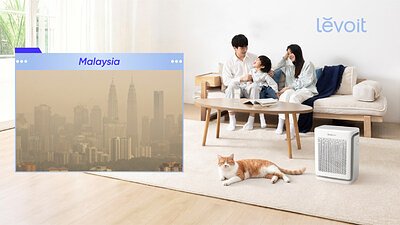
Malaysia's Growth Paradox: The Business of Clean Air in Polluted Cities
KUALA LUMPUR, Malaysia – December 08, 2025 – The skyline of Kuala Lumpur, punctuated by cranes and gleaming new high-rises, tells a story of robust economic success. With Malaysia's GDP projected to have expanded by 5.2% in the third quarter of 2025, driven by strong domestic demand, the nation's rapid urbanization appears as an undeniable engine of progress. Yet, beneath the hum of construction and commerce, a less visible but equally significant consequence is unfolding: the degradation of air quality, not just on the streets, but inside the very homes that symbolize this newfound prosperity.
As Malaysia's urban centers swell, so does the volume of traffic. The steady increase in registered vehicles—with motorcycles and cars growing by 4.5% and nearly 4% respectively in recent years—clogs major arteries and emits a constant stream of pollutants. For the growing population living in vertical communities, from luxury condos to affordable apartments, the proximity to these busy thoroughfares creates a hidden health risk. Particulate matter, specifically PM10, and other volatile organic compounds (VOCs) from vehicle exhaust don't simply dissipate; they infiltrate indoor spaces, lingering long after the rush hour traffic has subsided. This creates a chronic environmental stressor, turning the home from a sanctuary into a potential source of long-term health issues.
This paradox—where economic growth inadvertently compromises domestic well-being—is creating a fertile ground for a new category of strategic investment and consumer technology focused on indoor environmental quality. Companies are now positioning themselves not merely as appliance manufacturers, but as essential providers of in-home health infrastructure.
The Anatomy of an Urban Health Challenge
The link between traffic emissions and public health is well-documented, but the specific dynamics in Malaysia's cities paint a concerning picture. Research conducted in Kuala Lumpur has identified private cars and motorcycles as the dominant sources of PM10 emissions, with annual concentrations in the city center often hovering in the 41.4–65.9 µg/m³ range—levels that can pose significant health risks with prolonged exposure. Studies have shown that even a 30% reduction in traffic could meaningfully lower these concentrations, highlighting the direct causality.
These pollutants are particularly insidious because they affect the most vulnerable populations. Malaysian health studies have drawn clear associations between indoor exposure to PM2.5, PM10, and VOCs and an increase in respiratory symptoms and reduced lung function in children. For families with young children, elderly members, or individuals with pre-existing conditions like asthma, the air inside their home becomes a critical health determinant.
While public awareness of air quality issues, heightened by seasonal haze from regional forest fires and the global pandemic, is growing, a perception gap remains. Many urban residents may associate poor air quality primarily with visible smog, underestimating the pervasive threat of invisible traffic pollutants seeping through windows and ventilation systems. This disconnect highlights a crucial need for both public education and accessible technological solutions.
The Business of Breathing: A Strategic Market Entry
Enter Levoit, the U.S.-leading air purifier brand, which is making a strategic push into the Malaysian market by directly addressing this urban pollution problem. The company's approach offers a compelling case study in market strategy, moving beyond generic wellness claims to target a specific, data-validated environmental challenge. This is not just about selling a product; it's about framing a solution to the anxieties of modern urban living.
The Southeast Asian air purifier market is already on a steep growth trajectory, with a projected Compound Annual Growth Rate (CAGR) exceeding 10.5%. The Malaysian market alone is forecast to grow at a CAGR of over 7%, potentially reaching a valuation of over USD 400 million by the early 2030s. Levoit's strategy is designed to capture a significant share of this expanding pie by building credibility and demonstrating efficacy.
A cornerstone of this strategy is technological validation. The brand's signature 3-stage filtration system—combining a pre-filter for large particles, an activated carbon filter for odors and VOCs, and a true HEPA filter—is designed to meet the challenge. Adhering to the U.S. Department of Energy's standard, the HEPA filter is capable of removing 99.97% of airborne particles as small as 0.3 micrometers. This specific standard is crucial for capturing the fine particulate matter common in traffic pollution. Furthermore, independent certifications, such as the AHAM VERIFIDE mark on models like the Core 300-P, provide third-party validation of performance metrics like the Clean Air Delivery Rate (CADR), a key differentiator in a crowded market.
Levoit is also embedding proprietary technologies to enhance performance. The ARC Formula®, for instance, chemically decomposes trapped odors and pollutants within the carbon filter, specifically targeting the kinds of VOCs found in vehicle exhaust and preventing filter oversaturation. Meanwhile, features like VortexAir™ Technology aim to increase air circulation efficiency, a critical factor in the open-plan layouts common in modern condominiums. By combining standardized, verifiable performance with proprietary enhancements, the company is building a multi-layered value proposition.
Navigating a Crowded and Competitive Landscape
Levoit is not entering an empty arena. The Malaysian market is fiercely competitive, with established players like South Korea's Coway and Cuckoo, which have built formidable businesses around rental and service-based models. These companies have successfully embedded themselves in Malaysian households by removing the upfront cost barrier and offering regular maintenance, a powerful proposition for many consumers. They are joined by global electronics giants such as Philips, Dyson, and the value-oriented Xiaomi, each vying for market share with different strengths in design, branding, and smart home integration.
Levoit's strategy appears to be a direct challenge to these incumbent models. By focusing on direct-to-consumer sales through dominant e-commerce platforms like Shopee—as evidenced by its 12.12 promotional campaign—the company is betting on a growing segment of consumers who prefer ownership over rental and are comfortable making significant purchases online. This approach leverages the massive digital adoption across Southeast Asia and caters to a digitally-native consumer base.
The company's tiered product portfolio also reflects a nuanced understanding of the market. With offerings ranging from the compact, affordable Core Mini for smaller rooms to the powerful Vital 200S designed for larger spaces and pet owners, Levoit is able to target multiple consumer segments and price points. This flexibility is critical in a market where price sensitivity remains a significant factor. The integration of smart features, such as app and voice control in models like the Core 300S, further aligns the brand with the growing consumer demand for connected home ecosystems.
As urbanization continues to reshape economies and lifestyles across Southeast Asia, the tension between development and environmental health will only intensify. The resulting demand for solutions that create safer, healthier indoor spaces represents a significant and durable market opportunity. For global brands and investors, the key to unlocking this market lies not just in selling products, but in providing tangible, credible solutions to the invisible challenges of modern urban life.