
- $1.83 trillion: The asset size of T. Rowe Price, highlighting its influence in the financial industry.
- 2024: Launch year of 'The Angle' podcast, marking T. Rowe Price's shift toward thought leadership.
- 15 years: Lawrence Evans' experience coaching professional asset managers.
Experts would likely conclude that while AI enhances data analysis, human discipline and self-awareness remain irreplaceable for long-term investment success.
The Investor's Paradox: Why Human Discipline Outweighs AI and Returns
BALTIMORE, MD – June 04, 2026 – In a financial world increasingly mesmerized by algorithmic speed and explosive short-term gains, a quiet but powerful counter-narrative is emerging. It argues that the most critical factor in long-term investment success isn't the brilliance of an algorithm or the luck of a hot streak, but the rigorous, often tedious, discipline of the human mind. This is the central theme of a compelling new podcast episode from asset management giant T. Rowe Price, which puts the investor’s own behavior under the microscope.
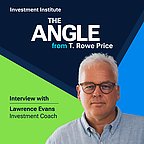
In the latest episode of "The Angle from T. Rowe Price," titled "The Loser's Game: Lawrence Evans on Skill, Bias, and Better Decisions," the firm gives a platform to a philosophy that runs counter to much of Wall Street's adrenaline-fueled culture. The featured guest, investment coach Lawrence Evans, argues that true skill is not measured by near-term returns but is instead forged through process, self-awareness, and the relentless practice of overcoming our own worst instincts.
Redefining Skill Beyond the Bottom Line
The conversation, hosted by Justin Thomson, head of the T. Rowe Price Investment Institute, dissects what separates consistently successful investors from the pack. The answer, according to Evans, is profoundly human.
"Lawrence offers a thoughtful perspective on what may separate stronger investors from the rest; not short-term results, but the discipline of process, the ability to recognize bias, and the commitment to continuous practice," Thomson states in the announcement. "For investors, this episode highlights how better decision-making can be developed over time, and what it really means to be a skilled investor."
Evans is uniquely positioned to make this case. A former successful US equities trader at Salomon Brothers in the 1990s, he has since dedicated over 15 years to coaching professional asset managers through his firm, Salomon Partners. His methodology draws from a diverse well of modern physics, behavioral psychology, and competitive sports, all aimed at a single goal: helping investors get out of their own way. He argues that the investor’s chief problem is often themselves, and that rigorous self-analysis is the only path to improvement.
This framework directly confronts the psychological traps, or behavioral biases, that have been extensively documented by academics like Daniel Kahneman. Biases such as loss aversion—the tendency to feel the pain of a loss more acutely than the pleasure of an equal gain—often cause investors to hold onto losing positions far too long. Conversely, overconfidence bias might lead to excessive trading and an underestimation of risk. Evans’ coaching focuses on building explicit processes, like checklists, that function as a form of "outsourced discipline" to short-circuit these irrational impulses before they can derail a sound strategy.
The Asset Manager as Educator
That a $1.83 trillion asset manager like T. Rowe Price is championing this message is significant. It signals a strategic shift in the financial industry, moving beyond simply providing investment products to educating clients on the very nature of decision-making. "The Angle," launched in 2024, is a key tool in this effort. The podcast is a flagship initiative of the firm's Investment Institute, a think tank established in 2025 to generate high-level thought leadership.
This educational push is part of the firm's broader global branding campaign, "The Power of Curiosity," which emphasizes active questioning and deep research as differentiators. By hosting conversations on topics ranging from the blue economy to financial history, the firm is positioning itself not just as a manager of capital, but as a facilitator of deeper market understanding. This strategy acknowledges a fundamental truth: in an era of information overload, the ability to think clearly and systematically is the ultimate competitive advantage.
This podcast is the firm’s second major audio series, following the successful multi-season run of "CONFIDENT CONVERSATIONS® on Retirement." The dual strategy allows the company to address both the practical, goal-oriented needs of retirement savers and the more complex, philosophical questions that preoccupy curious investors seeking a deeper informational edge.
Man and Machine: The Enduring Value of Human Judgment
Perhaps the most forward-looking aspect of the discussion is its take on artificial intelligence. While the financial world is rushing to adopt AI for its power to process data and recognize patterns, the podcast sounds a note of caution. It posits that while AI is an invaluable tool for knowledge acquisition, it cannot replace the essential components of human competence.
AI can analyze millions of data points to flag an anomaly or predict a trend, but it cannot navigate an ethical dilemma, understand the subtle context of a CEO's public statement, or exhibit the creative foresight needed to identify a truly novel investment theme. These tasks require wisdom, experience, and a nuanced understanding of human behavior—the very skills that Evans champions.
The future, as envisioned in this conversation, is not one of human versus machine, but of human-AI collaboration. AI will handle the immense task of data crunching, freeing up human analysts to focus on higher-level strategy, qualitative assessment, and, most importantly, managing their own decision-making processes. The discipline to formulate the right questions, interpret AI-generated insights critically, and resist the psychological biases that cloud judgment will become more valuable than ever.
Ultimately, the lessons from the podcast are universally applicable. The individual investor battling the fear of missing out (FOMO) and the institutional portfolio manager wrestling with a complex exit decision are facing the same internal adversary. By focusing on a disciplined process, both can improve their odds of success, transforming investing from a game of chance into a practice of skill.