
- 23 systems sold globally: IQM has delivered more commercial quantum computers than any other manufacturer.
- $146 million PIPE investment: Significant institutional backing for IQM's U.S. public listing.
- Oak Ridge National Laboratory (ORNL) installation: First on-premises U.S. system integrated with a leading supercomputing center.
Experts would likely conclude that this partnership marks a critical step toward practical quantum computing, validating hybrid models as the near-term solution for enterprise adoption.
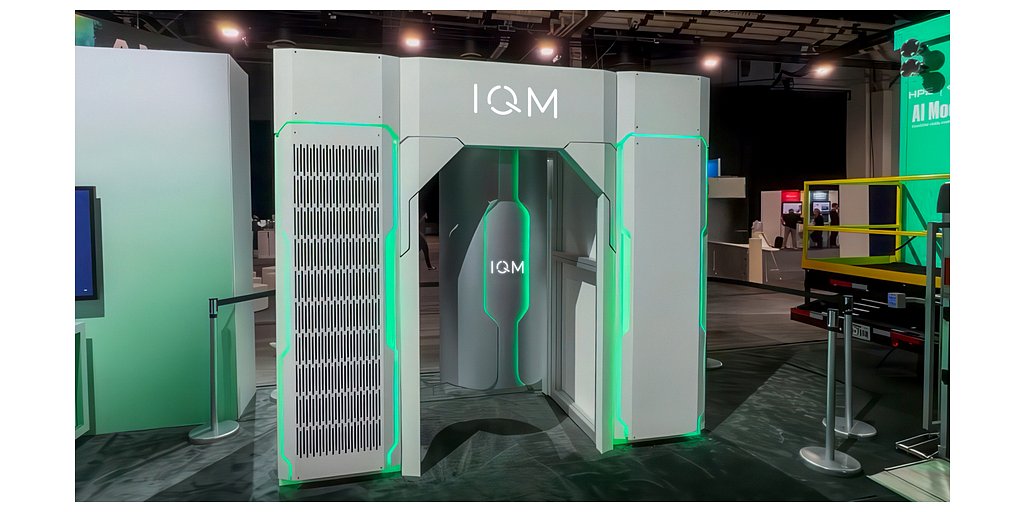
The Hybrid Frontier: IQM and HPE Unite for Practical Quantum Computing
ESPOO, Finland & PRINCETON, NJ – June 22, 2026
Hewlett Packard Enterprise (HPE) has selected IQM Quantum Computers as a key collaborator for its ambitious new hybrid computing platform, a move that signals a significant industry shift toward integrating quantum systems directly into high-performance computing (HPC) environments. Announced at HPE Discover Las Vegas, the initiative will see IQM’s superconducting quantum processor technology integrated with HPE’s renowned Cray supercomputing infrastructure.
This partnership places the Finnish quantum hardware leader at the core of a concerted effort to bridge the gap between the theoretical promise of quantum computing and its practical application. By pairing quantum processors with classical supercomputers, HPE aims to create a powerful, unified system where each component handles the tasks it is best suited for. For IQM, a company on the verge of a U.S. public listing, this collaboration is a powerful validation of its technology and its distinct on-premises business model, accelerating its mission to bring quantum out of the laboratory and into the data center.
A Pragmatic Path to Quantum Advantage
The industry consensus is crystallizing around a single, pragmatic strategy for the near term: hybrid quantum-classical computing. The approach acknowledges that today’s noisy intermediate-scale quantum (NISQ) devices, while powerful for specific tasks, have significant limitations in qubit count and stability. A hybrid model circumvents these issues by using classical supercomputers for data preparation, error mitigation, and post-processing, while offloading the most complex, computationally intensive kernels of a problem to the quantum processor.
“This is where the rubber meets the road,” one industry analyst noted. “Pure-play quantum is still years away for most problems; hybrid is how businesses will get value in the near term.”
HPE’s platform is a direct response to this reality. By creating a multi-modality environment, it plans to offer a unified experience for users to harness different quantum technologies alongside its powerful classical resources. The initiative isn't limited to a single quantum architecture; HPE is also collaborating with ion-trap leader Quantinuum and neutral-atom specialist Pasqal, alongside software firms like SandboxAQ and Classiq. This ecosystem approach underscores HPE's ambition to build a comprehensive, hardware-agnostic quantum bridge for enterprise and research.
However, building this bridge is fraught with challenges, including the technical complexity of integrating disparate hardware and software stacks, managing latency between classical and quantum components, and addressing a persistent talent gap. HPE’s initiative, with IQM as a central hardware provider, represents a major strategic investment aimed at overcoming these hurdles and defining the programming paradigms for the future of accelerated computing.
IQM's On-Premises Bet Pays Off
While many competitors focus on providing remote quantum access via the cloud, IQM has carved out a distinct and successful niche by delivering full-stack, on-premises quantum computers. This model, which gives customers direct ownership and control over the hardware, has proven highly attractive to government labs, research institutions, and enterprises with stringent data security and intellectual property requirements. The HPE collaboration serves as a major endorsement of this strategy.
The benefits are tangible. On-site systems allow for deep, low-latency integration with existing HPC infrastructure—a critical factor for effective hybrid computing. It also empowers organizations to build in-house expertise and maintain absolute control over sensitive data and the IP generated from their research. This approach is exemplified by IQM’s recent landmark installations.
In a significant milestone, the company installed its first on-premises system in the United States at Oak Ridge National Laboratory (ORNL), one of the world's foremost supercomputing centers. The integration of an IQM quantum computer with ORNL's existing world-class resources is a living blueprint for the future of scientific discovery. As IQM CEO and Co-founder Jan Goetz stated, “IQM is relentlessly focusing on Production Quantum and scaling the adoption of quantum computing through data-center integration: the work that matters now is closing the gap between a quantum computer that runs in a lab and one that runs in a data center; being part of HPE's platform and live at Oak Ridge is that work, for customers who own their systems.”
This on-premises success extends globally. IQM has delivered the world's first commercial quantum computer to a private enterprise, Galaxy Systemy Informatyczne in Poland, and is facilitating Japan's first enterprise quantum computer purchase through a partnership with TOYO Corporation. With a claimed 23 systems sold globally—more than any other quantum hardware manufacturer—IQM has demonstrated a clear market appetite for its customer-controlled model.
From Finnish Startup to Global Contender
Founded in 2018, IQM’s rapid ascent from a European startup to a global quantum leader is a compelling story of strategic focus and technical execution. The collaboration with HPE is the latest in a series of pivotal milestones that are positioning the company for its next major leap: a public listing on the Nasdaq Global Exchange.
IQM is currently in the process of merging with the special purpose acquisition company Real Asset Acquisition Corp. (Nasdaq: RAAQ), a transaction that would make it the first European quantum computing company to be publicly listed in the United States. The combined entity is expected to trade under the ticker symbol “QIQM” upon closing.
Investor confidence in this move was recently bolstered by an upsized PIPE (private investment in public equity) of over $146 million, which included a new commitment from Finnish pension giant Ilmarinen. Such significant institutional investment underscores growing confidence not only in IQM’s technology and on-premises strategy but also in the commercial viability of the broader quantum market.
Beyond its core hardware business, the firm is also tackling practical bottlenecks in the quantum stack through strategic partnerships, such as its collaboration with NVIDIA on applying AI for agentic calibration of quantum systems. This holistic approach—addressing hardware delivery, data center integration, and operational efficiency—paints a picture of a company executing a long-term vision.
The partnership with HPE is therefore more than a single deal; it is the culmination of a strategy focused on building tangible, integrated quantum systems for a world that needs them now. By helping power one of the industry's most significant hybrid platforms, IQM is not just expanding its global footprint but actively helping to define the era of practical, data center-ready quantum computing.