
- 16 million barrels of oil flowed through the Strait of Hormuz in a single day post-conflict.
- The Strait handles one-fifth of the world’s petroleum.
Experts would likely conclude that while Oman and Iran's joint working group represents a fragile step toward stability, it faces significant legal and geopolitical challenges in balancing global trade principles with Iran's sovereign ambitions.
The Hormuz Test: Oman and Iran Chart a Perilous Course for Global Trade
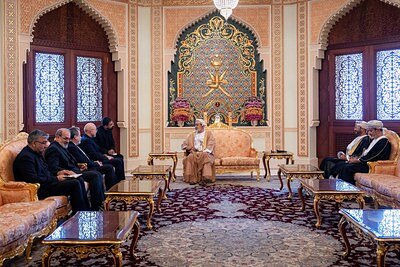
MUSCAT, Oman – June 24, 2026 – In the quiet, deliberate world of diplomacy, a joint statement can be both a milestone and a map. The one released this week by Oman and Iran is no exception. On its surface, the commitment to form a joint working group for the “future administration of navigation in the Strait of Hormuz” appears to be a welcome, stabilizing development after the waterway’s de facto closure during the recent, and costly, “2026 Iran war.”
This move is a direct deliverable from the fragile, Pakistan-brokered Islamabad Memorandum of Understanding (MoU) signed on June 17, which halted hostilities between the U.S. and Iran. The MoU explicitly tasked Tehran with engaging Muscat on this very issue. However, a grounded analysis reveals this is not a simple return to business as usual. Instead, it is the start of a complex negotiation that pits the foundational principles of global commerce against the sovereign ambitions of a coastal state, with Oman caught in its traditional, and unenviable, role as mediator.
A High-Stakes Legal and Economic Chessboard
The core of the issue lies in a decades-old legal schism. The international community, led by the United States, operates under the United Nations Convention on the Law of the Sea (UNCLOS), which establishes the right of “transit passage” through international straits like Hormuz. This regime grants all ships, including military vessels, continuous and expeditious passage that cannot be impeded or suspended. It is the legal bedrock upon which the free flow of global trade, including the one-fifth of the world’s petroleum that traverses the Strait, is built.
Iran, however, is not a party to UNCLOS, having signed but never ratified the treaty. It argues that the more restrictive regime of “innocent passage” applies, granting it, as a coastal state, far greater authority to supervise, impose conditions, and even restrict passage it deems a threat to its security. This is the legal justification Tehran has used for past threats and, during the recent conflict, for its effective blockade, which involved mine-laying and missile attacks that brought global shipping to a standstill.
The new working group is now the official venue for this legal clash. The joint statement’s language is carefully chosen, speaking of “services” and associated “costs.” This opens a narrow path for a potential compromise. While outright tolls on transit are forbidden under international law—a point the U.S. State Department has “categorically rejected”—legitimate fees for specific navigational services like pilotage or search-and-rescue are permissible. The challenge will be defining where one ends and the other begins, especially given Iran’s long-held ambition to monetize the waterway.
Oman's Quiet Diplomacy in a Noisy Neighborhood
Steering this process is the Sultanate of Oman, a nation that has built its modern foreign policy on being the region’s indispensable, and discreet, intermediary. Its history of facilitating backchannel talks, from the Iran-Iraq war to the initial discussions for the 2015 nuclear deal (JCPOA), gives it unique credibility. Unlike many of its Gulf Cooperation Council (GCC) neighbors, Oman maintains deep historical and economic ties with Iran, allowing it to operate with a level of trust no other regional actor can match.
This role, however, is not without its perils. Recent reports indicated a degree of U.S. “unhappiness” with Omani mediators during the frantic negotiations for the Islamabad MoU, with one official anonymously describing them as overly sympathetic to the Iranian position. Yet, the MoU itself validates Oman’s centrality by naming it as Iran’s negotiating partner for the Strait’s future. Oman is performing a delicate balancing act, evidenced by its simultaneous engagement with Iran and its coordination with the International Maritime Organization to establish temporary, toll-free maritime corridors to get commerce flowing again.
Oman’s motivation is rooted in pragmatism. As a nation pursuing its own ambitious “Vision 2040” economic diversification plan, regional stability is not an abstract ideal but an economic necessity. A stable Hormuz, governed by predictable rules, is critical to its own port development and trade ambitions. Its role in the working group is therefore not just one of a neutral facilitator, but of a stakeholder with a vested interest in a functional, lawful outcome.
The Unsettled Reactions of a Wary World
While the guns have fallen silent and a record 16 million barrels of oil flowed through the Strait on a single day last week, the region’s other players are not standing still. The recent conflict was a brutal lesson in the waterway’s vulnerability. The United Arab Emirates, having suffered direct strikes, is accelerating its “zero dependency” plan, investing heavily in pipelines and ports on its eastern coast to bypass Hormuz entirely. This shift in infrastructure represents a permanent hedge against future instability, regardless of the current diplomatic thaw.
Other GCC states that formally protested Iran’s earlier attempts to establish a “Persian Gulf Strait Authority” and impose tolls remain deeply skeptical. Meanwhile, Qatar, another key mediator and major LNG exporter, has stressed the need for a direct U.S.-Iran communication hotline to prevent the miscalculations that could easily reignite the conflict, particularly as complex mine-clearing operations continue in the Strait’s central channel.
The Oman-Iran joint working group is thus more than a technical body; it is a microcosm of the new, fragile order taking shape in the Persian Gulf. Its success or failure will have quantifiable impacts on global energy prices, shipping insurance premiums, and the strategic calculations of nations from Washington to Beijing. The talks will test whether pragmatic diplomacy can build a durable framework for commerce on the turbulent waters where international law and national ambition collide.