
- 105m x 68m: FIFA-mandated natural grass pitch dimensions, requiring costly NFL stadium renovations.
- $Multi-million: Cost of renovations for stadiums like MetLife and AT&T to meet width requirements.
- 24,500+: Number of field installations completed by TenCate, including 600 FIFA-certified surfaces.
Experts agree that while the engineering challenges of adapting NFL stadiums for the 2026 World Cup are substantial, specialized firms like TenCate are successfully navigating these hurdles through advanced synthetic turf systems and vertically integrated solutions.
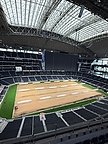
The Hidden Hurdle: Engineering the World Cup's American Makeover
CHATTANOOGA, TN – June 11, 2026 – This summer, the world’s game arrives on America’s gridirons. As the FIFA World Cup 2026™ kicks off, a handful of iconic NFL stadiums will trade touchdowns for goals, transforming into global soccer amphitheaters. But this metamorphosis is far more than a cosmetic rebranding. It represents a monumental engineering and logistical challenge, exposing the hidden costs and complexities of adapting billion-dollar venues for a purpose they were never designed for.
Beneath the spectacle of global sport lies a foundation of rigid standards and non-negotiable safety protocols. The successful conversion of these stadiums hinges not on the main pitch alone, but on the often-overlooked ancillary spaces where the integrity of the game—and the safety of its players—is truly tested. It’s a world of tight tolerances and immense pressure, where specialized firms operate in the shadows to ensure a seamless and safe global event.
The Anatomy of a FIFA-Compliant Pitch
Hosting a World Cup match requires adherence to a rulebook far thicker than any NFL playbook. FIFA’s requirements for stadium infrastructure are notoriously stringent, born from a century of managing the world’s most popular sport. While fans see a simple rectangle of grass, organizers see a precisely engineered environment where every millimeter matters.
At the forefront is the pitch itself. For the 2026 tournament, all playing surfaces must be natural grass, conforming to a standardized dimension of 105 meters by 68 meters. This presents an immediate and costly problem for many NFL venues, which are built narrower to optimize sightlines for American football. To comply, stadiums like MetLife in New Jersey and AT&T in Texas are undertaking multi-million-dollar renovations, physically removing thousands of seats or raising the entire field level to carve out the necessary width. SoFi Stadium in Los Angeles reportedly lost its bid to host the final match precisely because of the immense difficulty in meeting this fundamental requirement.
However, the real forensic work begins at the field's edge. FIFA mandates a level, grassed perimeter extending several meters beyond the touchlines and goal lines. This run-off area is not dead space; it’s a critical safety zone for players moving at high speed. Furthermore, dedicated warm-up areas, typically behind each goal, must feature a surface consistent with the field of play to prevent injuries. This is where the challenge intensifies. These perimeter zones endure immense wear and tear from player warm-ups, sideline activity, and the constant movement of broadcast crews and equipment. Natural grass would quickly degrade under such stress, creating an uneven and hazardous surface.
A Seamless Surface Under Pressure
This is the hidden hurdle where specialized engineering becomes paramount. To solve the perimeter problem, stadium operators are turning to advanced synthetic turf systems that can withstand high traffic while mimicking the performance and safety characteristics of the natural grass pitch. One of the key players in this niche field is TenCate, a global leader in sports surface technology. Through its subsidiary, Hellas Construction, the company has been tasked with installing these critical perimeter systems at venues including SoFi Stadium and AT&T Stadium.
"The FIFA World Cup represents a massive operational undertaking, with stadiums undergoing continual transformation to meet the demands of the global game," said Sydney Stahlbaum, Vice President of Marketing for TenCate Americas. "Our teams are working within highly coordinated construction environments to deliver systems that not only perform at the highest level, but also support the intensity of tournament operations."
This work requires absolute precision. The synthetic turf must integrate seamlessly with the natural grass, ensuring there is no dangerous lip or change in footing that could trip a player. The systems must meet the rigorous standards of the "FIFA Quality Programme for Football Turf," which certifies surfaces for ball-surface interaction, player-surface interaction, and durability. This ensures that a player stepping off the pitch experiences a consistent, safe surface that absorbs shock and provides stable traction, mitigating the risk of ankle and knee injuries. The installation is a race against time, executed in parallel with numerous other trades, all working within fixed schedules where delays are not an option.
The Vertically Integrated Advantage
In high-stakes environments where timelines are absolute and performance is non-negotiable, supply chain integrity is everything. TenCate’s ability to execute these complex installations stems from its vertically integrated business model—a structure that gives it control over the entire process, from material science and manufacturing to on-site installation and even post-use recycling. This model minimizes reliance on external suppliers and allows for the rapid development of tailored solutions, a critical advantage when retrofitting unique, large-scale venues.
With a global portfolio of over 24,500 field installations, including more than 600 certified by FIFA, the company brings a deep reservoir of institutional knowledge to the project. This experience is essential for navigating the complex interplay between different stadium systems, from drainage to broadcast cabling, ensuring the turf installation complements the broader operational needs of the tournament.
The Future of Adaptable Venues
The massive effort to prepare American stadiums for the World Cup offers a glimpse into the future of sports infrastructure. As the cost of building new venues soars, the ability to adapt existing facilities for a variety of global events becomes a crucial factor in their long-term economic viability. The 2026 tournament serves as a large-scale case study in flexible design, demonstrating that with specialized engineering and strategic investment, a stadium built for one sport can be successfully repurposed for another.
This trend places a premium on companies that can provide the modular, high-performance systems needed to bridge the gap between different sporting requirements. The work being done by firms like TenCate highlights a shift from static infrastructure to dynamic, adaptable event spaces. The long-term plan for these perimeter systems post-tournament remains a key question, but the underlying technology points toward a future where stadium surfaces can be as versatile as the events they host, ensuring these colossal structures remain valuable assets for decades to come.