
- $2,500: Cost of the Dual Sympathetic Reset (DSR) procedure, often not covered by insurance.
- 2006: Year Dr. Lipov first adapted the stellate ganglion block (SGB) for trauma treatment.
- 2020: Year of a multisite clinical trial showing significant PTSD symptom reduction with SGB.
Experts view the stellate ganglion block (SGB) as a promising but still emerging treatment for trauma, requiring more rigorous long-term studies to confirm its efficacy and durability as a complementary tool alongside traditional therapies.
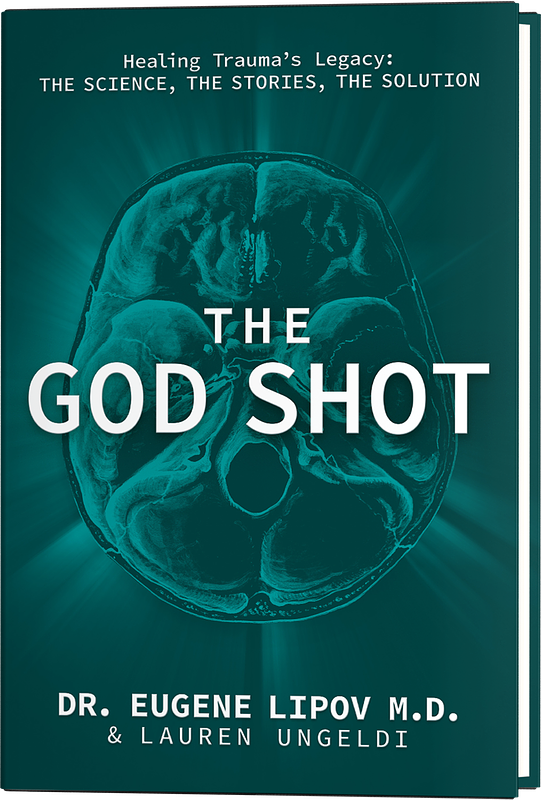
The God Shot: Can an Injection Reset the Traumatized Brain?
CHICAGO, IL – February 17, 2026 – A Chicago physician is challenging decades of conventional wisdom on mental health with a provocative new book and a treatment that reframes post-traumatic stress not as a psychological disorder, but as a treatable physical injury. In his book, THE GOD SHOT, released today, Dr. Eugene Lipov argues that the key to healing trauma may lie in an injection that can “reboot” the body’s haywired stress response.
Dr. Lipov, a board-certified anesthesiologist and pain management specialist, is the pioneer behind the adaptation of a procedure known as the stellate ganglion block (SGB) for treating trauma symptoms. The treatment, which he has since refined into a protocol called the Dual Sympathetic Reset (DSR), involves injecting a local anesthetic into a bundle of nerves in the neck. The goal is to interrupt the chronic fight-or-flight state that leaves trauma survivors in a state of constant hypervigilance.
“What if everything we thought we knew about trauma was incomplete?” Dr. Lipov stated in the announcement for his book. “When we recognize trauma as a physical injury to the nervous system, we can move beyond simply managing symptoms and begin focusing on recovery and healing.”
This perspective forms the core of THE GOD SHOT, which blends Dr. Lipov's clinical journey, the neuroscience of stress, and powerful stories from patients who have undergone the procedure. His work aims to shift the conversation from lifelong management to tangible recovery, a message that is gaining traction among a population desperate for new solutions.
The Science of a Biological 'Reset'
The concept behind the Stellate Ganglion Block is not new. The FDA-approved procedure has been used since the 1970s to treat pain and circulation disorders. However, its application for psychological trauma is a relatively recent innovation spearheaded by Dr. Lipov, who first adapted the technique for this purpose in 2006, reportedly inspired by his own family's struggles with trauma.
The sympathetic nervous system is the body’s alarm system, triggering the “fight-or-flight” response in the face of danger. In individuals with post-traumatic stress, this system can become stuck in the “on” position, leading to debilitating symptoms like anxiety, insomnia, irritability, and a constant feeling of being on edge. Dr. Lipov’s theory is that trauma leads to an increase in nerve growth factor, causing excessive nerve sprouting in the stellate ganglion—a key control center for the sympathetic nervous system. This creates a hyperactive feedback loop.
The SGB procedure aims to break that loop. By injecting an anesthetic, the block temporarily shuts down the overactive nerve signaling. This pause, according to proponents, allows the system to reset to a pre-trauma state, much like restarting a malfunctioning computer. The effect can be profound and, for many, almost immediate. Patient testimonials frequently describe a sudden sense of calm, a “quieting of the mind,” and the ability to sleep soundly for the first time in years.
A Shifting Paradigm in Trauma Care
For decades, the primary treatments for post-traumatic stress have been rooted in psychology and pharmacology. Therapies like Cognitive Behavioral Therapy (CBT) and Eye Movement Desensitization and Reprocessing (EMDR), along with antidepressant medications, have helped millions. Yet, they are not universally effective, and progress can be slow and arduous.
Dr. Lipov’s work represents a significant entry in a growing movement toward biology-based interventions that acknowledge the deep connection between the mind and body. This paradigm shift includes other emerging treatments like ketamine-assisted therapy and Transcranial Magnetic Stimulation (TMS), which also directly target the brain's neural circuits.
Advocates for SGB are careful to note that it is not necessarily a cure-all or a replacement for traditional therapy. Instead, many view it as a powerful complementary tool. By calming the nervous system, the treatment may make it possible for patients to engage more effectively in the psychological work needed for long-term healing. One patient who received the treatment at Stella Mental Health, the clinic Dr. Lipov co-founded, noted that the SGB “significantly decreased their symptoms, enabling them to engage in cognitive therapeutic work that was previously too overwhelming.”
This approach is further bolstered by Dr. Lipov’s long-standing advocacy to reclassify Post-Traumatic Stress Disorder (PTSD) as Post-Traumatic Stress Injury (PTSI). He testified before the U.S. House Committee on Veterans' Affairs on this issue in 2010, arguing that the term “disorder” carries a stigma of permanence and personal failing, whereas “injury” accurately frames it as a wound that can heal.
The Evidence and the Debate
While patient anecdotes are compelling, the scientific community has been cautiously optimistic, awaiting more rigorous, large-scale data. The use of SGB for trauma remains an “off-label” application, meaning it is not officially approved by the FDA for this specific purpose, though the practice is legal and supported by a growing body of research.
Several recent studies have shown promising results. A 2020 multisite, randomized clinical trial involving active-duty service members found that two SGB treatments significantly reduced PTSD symptoms over an eight-week period. Another randomized controlled trial reported that symptom reduction in the SGB group was twice as large as in a group that received a sham injection. These studies, while positive, often come with caveats about their limited size or short follow-up periods.
Currently, several larger and more definitive trials are underway to assess the efficacy, durability, and biological mechanisms of the treatment, particularly within the veteran population. Researchers are using advanced imaging to understand how SGB changes brain activity. While the procedure is considered minimally invasive with a strong safety profile, the call for more robust evidence remains a central part of the conversation among clinicians and researchers.
The High Cost of Calm
Despite the hope it offers, the promise of a biological reset comes with a significant financial barrier. The Dual Sympathetic Reset procedure at a clinic like Stella Mental Health can cost around $2,500, and it is rarely covered by insurance for the treatment of trauma. This reality places the innovative therapy out of reach for many who might benefit from it most.
The commercialization of the treatment through specialized clinics highlights a growing trend in mental healthcare, where cutting-edge, private-pay options are creating a tiered system of access. While Dr. Lipov and his organization, Stella Mental Health, have treated thousands of patients and are expanding their reach, the question of equitable access remains a critical challenge.
As THE GOD SHOT brings this revolutionary approach to a wider audience, it will undoubtedly fuel the debate over the future of trauma care. It pushes readers to consider trauma not just as an emotional scar, but as a physiological wound, and asks a critical question: if we have a tool that can help heal that wound, how do we ensure it reaches everyone who is hurting?