
- 896-unit apartment community: Pacifica Place in Southern California is the first to offer instant, seamless 3-gigabit Wi-Fi 7 internet access upon move-in.
- 3-gigabit speeds: Dedicated fiber line to each unit ensures full, symmetrical speeds unaffected by neighbors' usage.
- Wi-Fi 7 technology: Enables multi-gig speeds, lower latency, and support for up to 21 connected devices per household.
Experts would likely conclude that this initiative sets a new standard for multifamily connectivity, transforming internet access into a core utility and creating a competitive advantage for property owners in tech-driven markets.
The End of the ISP Appointment: A New Digital Foundation for American Homes
IRVINE, CA – June 16, 2026 – The familiar, often frustrating, ritual of moving into a new home is being rewritten. Gone is the frantic call to the internet service provider, the multi-day wait for a technician, and the struggle to get online before the boxes are even unpacked. At a new 896-unit apartment community in Southern California, internet access has become as instantaneous as flipping a light switch. This isn’t a futuristic concept; it’s the new reality at Irvine Company’s Pacifica Place, thanks to a groundbreaking partnership between internet provider GFiber and smart property technology firm Quext.
The collaboration debuts what they are calling the next generation of multifamily connectivity: a seamless, property-wide network delivering 3-gigabit speeds with the latest Wi-Fi 7 technology. For residents, this means their private, secure network is active the moment they walk in the door, following them from their living room to the community pool without interruption. It represents a fundamental shift in how we view connectivity—not as an aftermarket service, but as a core, integrated utility, as essential as water and electricity.
The New Digital Utility
For decades, internet access in multifamily buildings has been an uneven experience, often involving convoluted contracts, shared bandwidth that slows to a crawl during peak hours, and a stark digital divide between a resident’s private unit and the building's common areas. The GFiber and Quext model at Pacifica Place aims to eliminate these friction points entirely.
"This launch represents a transformational shift in how the internet is delivered to multi-family communities," said John Keib, Chief Technology & Product Officer at GFiber. "By delivering a personal network with a multi-gig fiber connection to every apartment home at Pacifica Place powered by the latest Wi-Fi, we’re setting a new standard for resident experience and eliminating connectivity friction from day one."
The core of this new standard is GFiber’s Fiber-to-the-Unit (FTTU) architecture. Unlike systems that bring a single large connection to a building and then divide it among residents, this approach runs a dedicated 3-gigabit fiber line directly into each of the 896 apartments. This guarantees that every household receives the full, symmetrical speed they are promised, unaffected by their neighbors' streaming habits. Symmetrical speeds—equal for uploads and downloads—are a critical, and often overlooked, component for the modern digital lifestyle, essential for seamless video conferencing, remote work, and content creation.
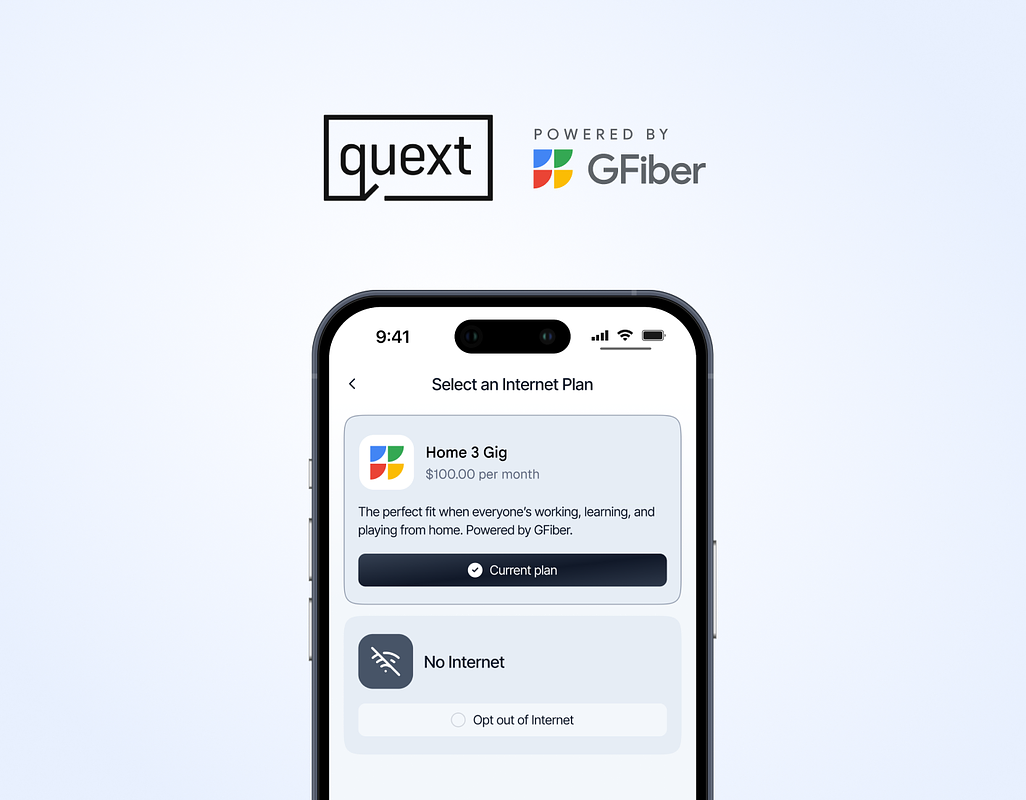
This robust connection is activated through Quext's “Instant On Connectivity.” New residents simply download the Quext app and securely set up their Personal Area Network (PAN) in seconds. This private Wi-Fi network isn’t confined to their apartment walls; it extends across the entire property, from the gym to the lobby, ensuring a continuous, secure connection without the need to log into insecure public hotspots.
Under the Hood: Wi-Fi 7 and the Multi-Gig Mandate
The engine powering this seamless experience is the potent combination of multi-gig fiber and Wi-Fi 7. While many households are still adapting to gigabit speeds, this initiative leaps ahead to a 3-gigabit standard, a move designed to future-proof the property for years to come. With the average household now juggling between 17 and 21 connected devices—a number set to explode with the growth of the Internet of Things (IoT)—the demand for bandwidth is insatiable.
The deployment of Wi-Fi 7 (also known as 802.11be) is the key to unlocking the fiber’s full potential wirelessly. This next-generation standard offers significantly higher throughput, lower latency, and greater capacity than its predecessors, Wi-Fi 6 and 6E. It is specifically designed to handle dense environments with numerous devices, making it ideal for a multifamily community. For a resident, this means they can experience multi-gig speeds on their Wi-Fi 7-enabled laptop or smartphone, stream multiple 4K videos, and engage in competitive online gaming with minimal lag, all at the same time.
While some industry analysts question the immediate need for Wi-Fi 7, arguing that Wi-Fi 6E is sufficient for current devices, its inclusion here is a strategic play. It provides a longer technological runway for the property, ensuring the infrastructure can support the next wave of consumer devices and applications without requiring a costly overhaul in the near future.
A Strategic Blueprint for Real Estate
For a major developer like Irvine Company, this investment is about more than just a flashy amenity. It is a calculated strategy to build a more competitive and resilient property. According to the National Multifamily Housing Council, nearly 75% of renters now consider pre-installed Wi-Fi an important amenity, and the quality of that connection is a major factor in their housing decisions.
"At Irvine Company, we’re always looking for innovative ways to elevate the resident experience," said Jinda Reining, Vice President at Irvine Company. "By partnering with GFiber and Quext, we’re proud to be the first location to offer a 3 Gig and Wi-Fi 7 solution where connectivity can be enabled instantly upon move-in."
By treating high-performance internet as a core asset, property owners can create a powerful draw for attracting and retaining high-value tenants, particularly in tech-centric markets like Irvine. The managed Wi-Fi model, facilitated by Quext, also introduces a new business model. It allows property owners to become, in effect, their own internet service provider, generating new Net Operating Income (NOI) through transparent bulk internet fees. This transforms connectivity from a simple amenity into a revenue-generating asset, while offloading the complexities of customer support and maintenance to Quext.
This integrated approach also streamlines operations. The same system that provides resident internet also supports property management functions, from secure, self-guided tours for prospective tenants using guest Wi-Fi to managing smart locks and thermostats across the entire community. This consolidation reduces the need to juggle multiple vendors and technology platforms, boosting operational efficiency.
The Zero-Friction Community
The ultimate vision extends beyond fast internet. The unified digital infrastructure serves as the foundation for a true smart community. Through the Quext app, residents don’t just manage their Wi-Fi; they control their physical environment. They can adjust their smart thermostat for energy efficiency, grant temporary access to a dog walker via the smart lock, or check on leak detection sensors, all from a single interface.
This integration creates a cohesive and simplified living experience. The technology fades into the background, working to make daily life more convenient and secure. Even the leasing process is enhanced, with the system integrating with Irvine Company’s Tour Guide app to provide a seamless and secure experience for prospective residents on self-guided tours.
What is happening at Pacifica Place is a microcosm of a larger trend. The partnership between a fiber pioneer, a smart-tech integrator, and a forward-thinking developer provides a compelling blueprint for the future of residential living. It signals a move away from siloed services and toward holistic, embedded digital ecosystems that enhance value for residents and owners alike. This is the new front line in the battle for competitive advantage, where the resilience of a community is measured not just in bricks and mortar, but in gigabits and milliseconds.