
- 98 million users: Life360's user base, representing a massive network for Uber's integration.
- 2023 launch: Uber's teen account infrastructure, enabling supervised rides for ages 13-17.
- Select U.S. markets: Initial rollout excludes California due to strict privacy laws.
Experts would likely conclude that while the Life360-Uber partnership offers unprecedented convenience and safety features for teen mobility, it also raises significant privacy and surveillance concerns that warrant careful consideration by families and regulators.
The Digital Chaperone: Uber and Life360 Redefine Teen Mobility
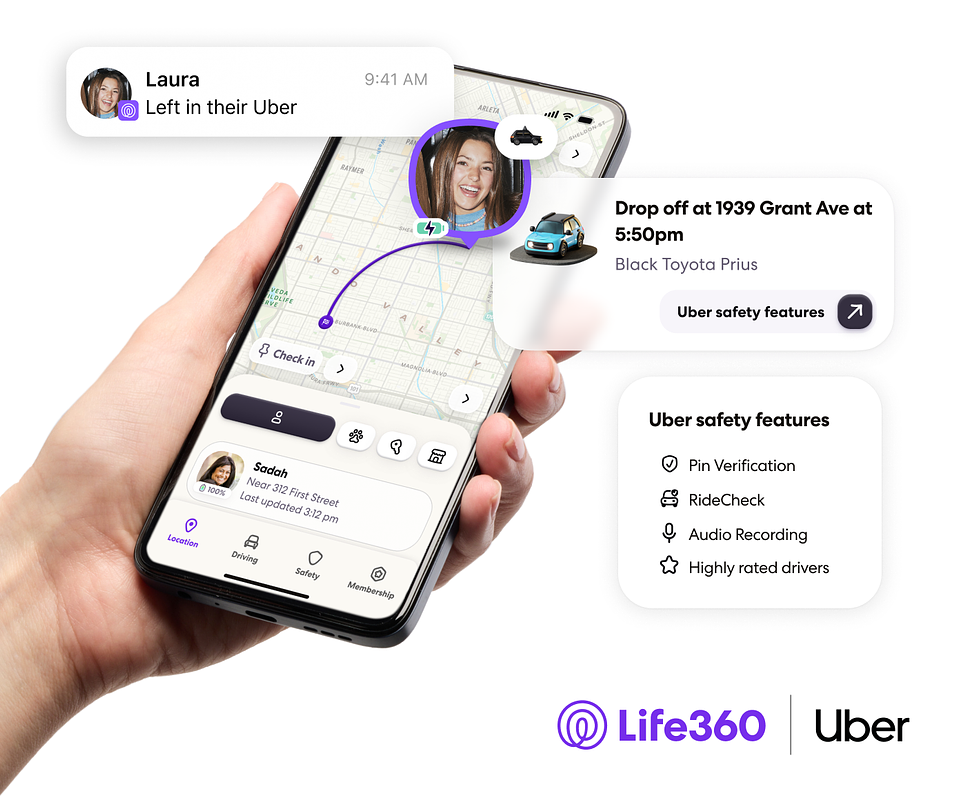
SAN FRANCISCO, CA – June 18, 2026 – The logistical chaos of managing a teenager’s social calendar—the rides to the mall, the last-minute trips to a friend’s house, the sports camp pickups—is a universal parental challenge. Today, two technology giants, Life360 and Uber, announced a partnership that aims to replace that chaos with a few taps on a smartphone screen. The integration allows parents to order and monitor Uber rides for their family members directly within the Life3-60 app, promising a new era of streamlined, digitally supervised transportation.
This is more than a simple feature update; it’s a calculated move to embed transactional services into the very fabric of family life. “Family life is full of moments that don't fit the routine, and getting loved ones where they need to go safely has become one of the biggest coordination challenges for modern families,” said Kevin Sung, VP of Product for Life360. By bringing Uber’s ride-hailing network into its location-aware platform, the company is making a significant play to solve that challenge. Margarita Peker, Head of Family Verticals at Uber, echoed this sentiment, noting that the goal is to make transportation “simpler, more transparent, and easier to manage for everyone, all under one app.” The question is whether this fusion of tracking and transport creates true peace of mind or simply a new set of digital anxieties.
The Mechanics of Modern Mobility
From a practical standpoint, the integration is designed for seamless execution. A parent using Life360 can now tap on their child’s icon on the map and select an option to request an Uber ride directly to that child’s real-time location. The pickup details are automatically populated, eliminating the need to toggle between apps or manually enter addresses. Once the ride is underway, its progress can be monitored on the Life360 map, alongside the locations of other family members, or within the Uber app itself.
This functionality is built upon Uber’s existing “teen account” infrastructure, launched in 2023, which allows parents to invite their children (ages 13-17) to a supervised Uber profile. For this integration to work, the family must be linked on an Uber Family Profile, and all members must consent to sharing ride activity within the Life360 Circle. While Life360 displays the car type and estimated arrival, it deliberately walls off certain information; driver details and payment information remain exclusively within the Uber app, creating a controlled data-sharing environment focused on logistics and location, not financial or personal driver data.
Engineering Peace of Mind
The partnership’s success hinges on its ability to convince parents of its safety. Both companies are leveraging their respective strengths to build a multi-layered security protocol. Uber’s teen accounts already come with a suite of safety features born from years of navigating public trust issues. Only highly-rated, experienced drivers who pass extensive background checks are eligible to accept teen ride requests. Furthermore, every teen trip is protected by a mandatory PIN verification, ensuring the rider is getting into the correct vehicle. Uber’s RideCheck feature also monitors for unusual deviations or prolonged stops, and live trip tracking is automatically shared with the parent.
Life360 adds a persistent, overarching layer of visibility. The platform’s core function—consensual location sharing among a family “Circle”—means a parent’s oversight isn’t limited to the 20-minute Uber ride. They can see where their teen was before the ride was requested and confirm they arrived safely at their destination using Place Alerts. However, this fortified digital bubble is not without potential cracks. Some drivers on public forums have expressed concerns about Uber’s policy allowing teen riders to bring guests, citing the difficulty of verifying age and consent for multiple young passengers. Moreover, Life360 has long navigated criticism from those who view its service as a tool for excessive surveillance, a perception that this deep integration with a commercial service is unlikely to quell.
The Super App Endgame
This partnership is a textbook example of a broader industry trend: the race to build the “super app.” For Life360, this is a pivotal step in its evolution from a location-tracking utility to what it calls a “family super app.” With a user base of nearly 98 million, the company is strategically integrating essential services—location, driving safety, item tracking via its Tile acquisition, and now transportation—into a single, indispensable hub. The goal is to become the default operating system for family life, increasing user engagement and creating a powerful competitive moat.
For Uber, the strategy is equally astute. By integrating with Life360, it taps directly into a massive, highly motivated customer segment: parents coordinating family logistics. This move deepens its presence in the “Family Verticals” market, a key growth area. With tens of millions of teen trips already completed globally since 2023, Uber has validated the demand for supervised youth mobility. This partnership effectively outsources customer acquisition to Life360’s enormous network, positioning Uber as the default transportation solution for the next generation of riders before they even have a driver’s license.
Data, Privacy, and the Price of Convenience
Ultimately, this integration is a transaction. In exchange for convenience and a sense of security, families are agreeing to a deeper level of data sharing and algorithmic oversight. Both companies maintain that their systems are built on consent—teens must be invited by parents, and all Life360 members must agree to be part of a Circle. Yet the normalization of such comprehensive, interconnected tracking raises important questions, particularly for minors.
The data exchanged is, by design, specific and limited. Life360 gets ride status, while Uber gets location data to initiate the ride. But the combined dataset creates a remarkably detailed portrait of a family's movements and habits. As this service rolls out to select U.S. markets—notably excluding California, a state with its own stringent privacy laws—it underscores the complex regulatory and ethical landscape these companies must navigate. The convenience is undeniable, but the long-term cost of weaving our lives so tightly into these interconnected platforms is a variable that remains to be calculated.