
- 260 aircraft: Wizz Air is deploying Bluetooth-enabled in-seat ordering across its entire fleet of Airbus A320 and A321 jets.
- €14 billion: The airline's three-year 'Customer First' plan focuses on leveraging technology to enhance the travel experience.
- 5 aircraft: A six-month connectivity trial is running on select UK-based aircraft to test new digital services and operational tools.
Experts would likely conclude that Wizz Air's digital overhaul represents a strategic shift towards a unified, data-driven cabin ecosystem that enhances passenger convenience, operational efficiency, and revenue potential in the low-cost aviation sector.
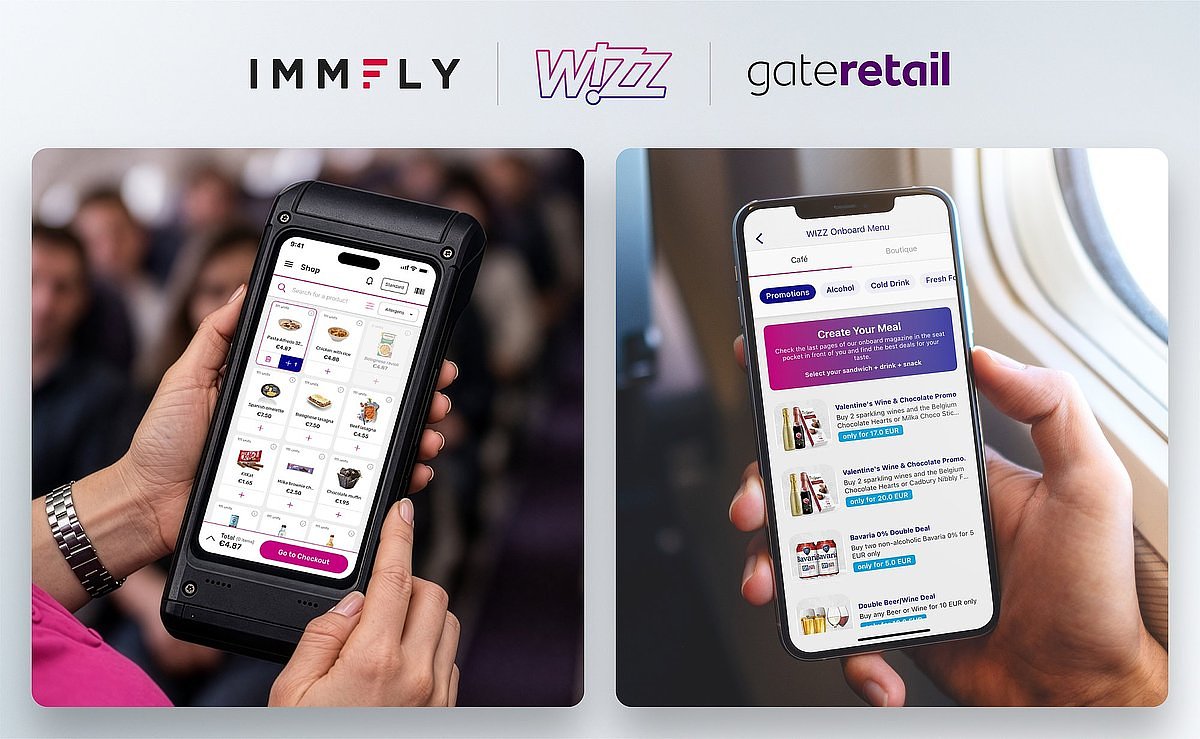
Wizz Air's Digital Overhaul Redefines Low-Cost In-Flight Experience
BARCELONA, Spain – March 25, 2026 – In a move set to challenge the conventions of budget air travel, Wizz Air, in partnership with digital solutions provider Immfly and retail expert gateretail, has launched an ambitious integrated digital cabin ecosystem. The initiative, announced today, unifies onboard retail, connectivity, and critical operational data into a single platform, signaling a significant digital leap for the low-cost aviation sector.
The collaboration introduces two major programs: the immediate fleetwide deployment of Bluetooth-enabled in-seat ordering across more than 260 aircraft, and a six-month connectivity trial on select aircraft designed to test a suite of new digital services and operational tools.
Redefining the Low-Cost Cabin
At the heart of the passenger-facing changes is the rollout of a Bluetooth-powered in-seat ordering system across Wizz Air’s entire fleet of Airbus A320 and A321 jets. Passengers who download the airline’s app before their flight can now browse the full menu of food, drinks, and boutique items and place orders directly from their personal devices. Crucially, the system functions without an internet connection, using Bluetooth to transmit orders directly to the cabin crew’s devices.
This technology aims to solve several long-standing challenges in the low-cost cabin. It empowers passengers with more control and convenience, allowing them to order at their leisure rather than waiting for the trolley to pass. For the crew, it streamlines the service flow, providing a real-time view of passenger requests, which is expected to improve fulfillment efficiency and reduce wait times. This initiative is a core component of Wizz Air’s broader digital transformation, which includes a €14 billion, three-year “Customer First” plan focused on leveraging technology to enhance the travel experience.
“This launch is about rethinking what the onboard experience looks like in a low-cost environment,” said Ian Malin, Chief Commercial Officer at Wizz Air. “We are investing in smart, scalable technology that gives customers more control and more choice, from ordering at their seat to staying connected in the air. At the same time, it helps our crews deliver a faster, more seamless service.”
The system is underpinned by gateretail’s deep understanding of passenger retail behavior. “In-seat ordering by Bluetooth represents an important breakthrough for both passengers and airline partners,” commented Jose Lirio, VP at gateretail. “Backed by gateretail’s expertise in passenger behaviour and retail technology, it is designed to strengthen engagement and unlock greater revenue potential.”
The Power of an Integrated Ecosystem
Beyond just ordering a drink, this initiative represents a deeper strategic shift towards a unified digital cabin. The partnership moves away from the historically fragmented, siloed approach to onboard technology, where entertainment, retail, and operational systems often function independently. Immfly’s platform serves as the central nervous system, integrating these disparate data flows into a single, cohesive environment.
This unified approach was significantly bolstered by Immfly’s 2025 acquisition of Data Clarity, an AI-powered data intelligence firm. The integration allows the platform not only to manage transactions but also to analyze them, providing Wizz Air with predictive insights into retail demand, passenger preferences, and operational patterns. This data-driven foundation is what truly differentiates the ecosystem, turning the aircraft cabin into a source of valuable real-time business intelligence.
“This partnership marks a major step forward in bringing the digital cabin to life,” said Fernando Guinea, President of Immfly. “With Immfly’s unified digital ecosystem at the core — combining retail, connectivity, and operational data — we’re enabling Wizz Air to elevate every aspect of the onboard experience. From Bluetooth in-seat ordering to real-time operational insights, this programme demonstrates how Immfly’s technology drives stronger engagement, higher retail performance, and meaningful operational and commercial efficiencies across the airline.”
Connectivity for More Than Just Passengers
Running in parallel to the fleetwide Bluetooth deployment is a more advanced Proof of Concept (PoC) on five UK-based aircraft. This six-month trial introduces low-bandwidth connectivity powered by Immfly’s proprietary, lightweight Equilux server and the Iridium satellite network.
For passengers on these flights, this enables a new tier of paid services, including messaging packages with WhatsApp bundles, access to a library of wireless in-flight entertainment, and live credit card payment authorization—a key upgrade from offline payment systems. While Iridium’s network offers lower bandwidth compared to high-speed broadband solutions, its global reliability is ideal for enabling these specific, targeted services without the high cost and complexity of a full-scale Wi-Fi installation.
Perhaps more significantly, the PoC extends connectivity into the cockpit. The system facilitates real-time data sharing between the aircraft and ground operations, providing decision-support tools for pilots and flight planners. This capability can lead to tangible cost savings through improved route planning, fuel optimization, and more efficient fleet management. It marks a shift in the purpose of in-flight connectivity, framing it not just as a passenger amenity but as a critical operational tool.
Immfly’s Equilux server is designed to be “SATCOM-agnostic,” meaning it can work with various satellite providers. This allows Wizz Air to start with a reliable low-bandwidth solution for operational data and basic passenger services, while leaving the door open to integrate higher-speed connectivity from providers like Eutelsat OneWeb in the future without requiring a complete hardware overhaul. This modular, future-proofed approach is critical for a fast-growing airline focused on maintaining cost discipline while scaling its digital capabilities. Pending successful results from the trial, the program could be expanded across more of the Wizz Air fleet, further embedding this data-driven model into its daily operations.