
- Price: $99,999
- Performance: Up to 20 PFLOPS of AI performance
- Memory: 748GB coherent memory pool
Experts would likely conclude that ASUS's ExpertCenter Pro ET900N G3 represents a significant shift towards hybrid AI infrastructure, balancing cloud flexibility with on-premises control for security, cost-efficiency, and performance.
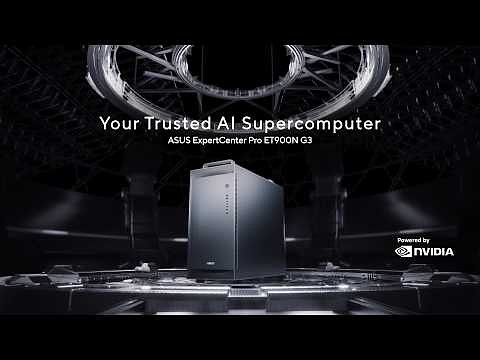
The Data Center on Your Desk: ASUS Redefines Enterprise AI Access
TAIPEI, Taiwan – June 24, 2026 – The long-held paradigm of artificial intelligence development, tethered almost exclusively to sprawling, remote data centers, is facing its most significant disruption yet. This week, ASUS announced the global availability of its ExpertCenter Pro ET900N G3, a machine it dubs a "deskside AI supercomputer." This isn't just another powerful workstation; it's a statement of intent and a tangible sign of a strategic shift in how businesses will develop, deploy, and control the next generation of AI.
Powered by NVIDIA's formidable GB300 Grace Blackwell Ultra Desktop Superchip, the ET900N G3 promises to deliver the computational might once reserved for hyperscale cloud providers directly into the hands of enterprise teams, researchers, and developers. By compressing petaflop-scale performance into a chassis that fits under a desk, ASUS is directly addressing the growing chorus of concerns around cloud dependency, data sovereignty, and the unpredictable costs of innovation. This move signals that the future of AI may not be entirely in the cloud, but in a hybrid model where immense local power plays a newly critical role.
A New Paradigm in AI Infrastructure
For years, the cloud has been the default arena for serious AI work, offering scalability and access to powerful hardware without massive upfront capital. However, this convenience comes with trade-offs that are becoming increasingly untenable for many organizations. The ET900N G3 is engineered as a direct answer to these challenges, championing a return to on-premises control for the most critical AI workloads.
The most compelling argument for this shift is data privacy. In sectors like finance, healthcare, and government, where data is the most sensitive asset, sending it to a third-party cloud for processing creates complex compliance and security risks. Regulations like GDPR and HIPAA impose strict rules on data handling, and a local supercomputer ensures that proprietary information and sensitive customer data never leave an organization's secure perimeter. This allows businesses to fine-tune large language models (LLMs) on their own private datasets without fear of exposure.
Beyond security, latency and cost are driving the move to local AI. Real-time applications, such as autonomous AI agents or high-frequency financial modeling, cannot tolerate the network delays inherent in cloud computing. The ET900N G3 eliminates this bottleneck. Furthermore, while cloud services appear economical initially, costs can spiral unpredictably with heavy use. Recent industry analyses have highlighted this disparity; one study found that self-hosted inference can be up to 18 times cheaper than cloud APIs over a three-year period, with a return on investment often realized in under six months. For a system with a price tag of $99,999, the long-term total cost of ownership (TCO) becomes a powerful strategic advantage for enterprises with sustained AI workloads.
Under the Hood: The Blackwell Revolution
The performance claims of the ET900N G3 are staggering, and they are made possible by the groundbreaking architecture of its NVIDIA GB300 Grace Blackwell Ultra Desktop Superchip. This isn't simply a powerful GPU bolted onto a motherboard; it's a deeply integrated system built on the NVIDIA DGX Station architecture. At its heart, a high-speed NVLink-C2C interconnect fuses an NVIDIA Grace CPU with an NVIDIA Blackwell Ultra GPU, allowing them to operate as a single, cohesive processor.
This integration enables the system's most revolutionary feature: a massive 748GB pool of coherent memory. This unified memory allows the CPU and GPU to access the same data without the slow, power-hungry process of copying it back and forth. For AI developers, this is a game-changer. It unlocks the ability to work with frontier AI models of up to one trillion parameters locally, a task that was previously impossible on any deskside machine. The bottlenecks that have plagued AI development on conventional workstations are simply erased.
Delivering up to 20 PFLOPS of AI performance, the system provides the raw power for the most demanding tasks. In its own stress tests, ASUS demonstrated this capability by running the large, open-source Qwen AI model, achieving an output throughput of approximately 864 tokens per second. This level of performance drastically accelerates workflows for LLM fine-tuning, generative AI, deep learning research, and complex simulations, turning what used to be weeks of computation into days or even hours.
The Shifting Competitive Landscape
The arrival of the ET900N G3 places it in a unique position within the market. While competitors like Dell, HP, and Lenovo are also integrating NVIDIA's Blackwell architecture into their new professional workstations, the ASUS machine's enormous coherent memory capacity sets it apart. It carves out a new category between high-end workstations, which typically top out with far less VRAM, and full-blown data center racks, which require specialized infrastructure and cooling.
Its primary competitor, therefore, is not another piece of hardware but the cloud itself. The ET900N G3 is a direct challenge to the AI-as-a-Service model offered by AWS, Azure, and Google Cloud. It embodies the growing trend towards a hybrid AI strategy, where organizations don't choose between on-premises and cloud but strategically leverage both. Routine tasks and burst capacity may remain in the cloud, but the development of core intellectual property, the processing of sensitive data, and latency-critical inference are brought back in-house.
This hybrid model offers the best of both worlds: the security and performance of local hardware combined with the flexibility of the cloud. It represents a maturation of the market, where enterprises are moving beyond a one-size-fits-all approach to build more resilient, cost-effective, and secure AI ecosystems.
The Dawn of Autonomous Agents and Localized AI
The implications of democratizing supercomputer-level AI extend far beyond faster model training. This technology is a critical enabler for the next frontier of artificial intelligence: autonomous agents. These advanced AI assistants, capable of performing complex multi-step tasks, require immense computational power and secure, always-on environments to operate effectively.
By supporting platforms like NVIDIA's NemoClaw toolkit, the ET900N G3 provides a secure sandbox for enterprises to build and deploy these agents locally. This allows for the creation of sophisticated internal assistants that can automate workflows and interact with proprietary systems without exposing sensitive operations to external networks. As these agents become more integrated into business processes, the need for powerful, on-premises hardware to run them will only grow.
Ultimately, the availability of machines like the ExpertCenter Pro ET900N G3 accelerates the entire cycle of innovation. It empowers smaller research labs and enterprise teams to compete with tech giants, fostering a more diverse and dynamic AI ecosystem. As this power becomes more distributed, it will undoubtedly raise new questions around governance and ethics, but it also marks a pivotal moment where the tools to build the future of AI are becoming more accessible than ever before.