
- 90% off retail price: OFF BEAUTY sells authentic beauty products at up to 90% discounts.
- KRW 5–6 billion (USD 4–5 million) monthly sales: The Gwangjang flagship store reports this revenue, proving strong demand.
- 100 stores nationwide: OFF BEAUTY aims to expand its footprint significantly in 2026.
Experts agree that OFF BEAUTY’s aggressive discount model poses a significant challenge to Olive Young’s dominance, but its long-term success hinges on sustainable inventory management and maintaining brand value.
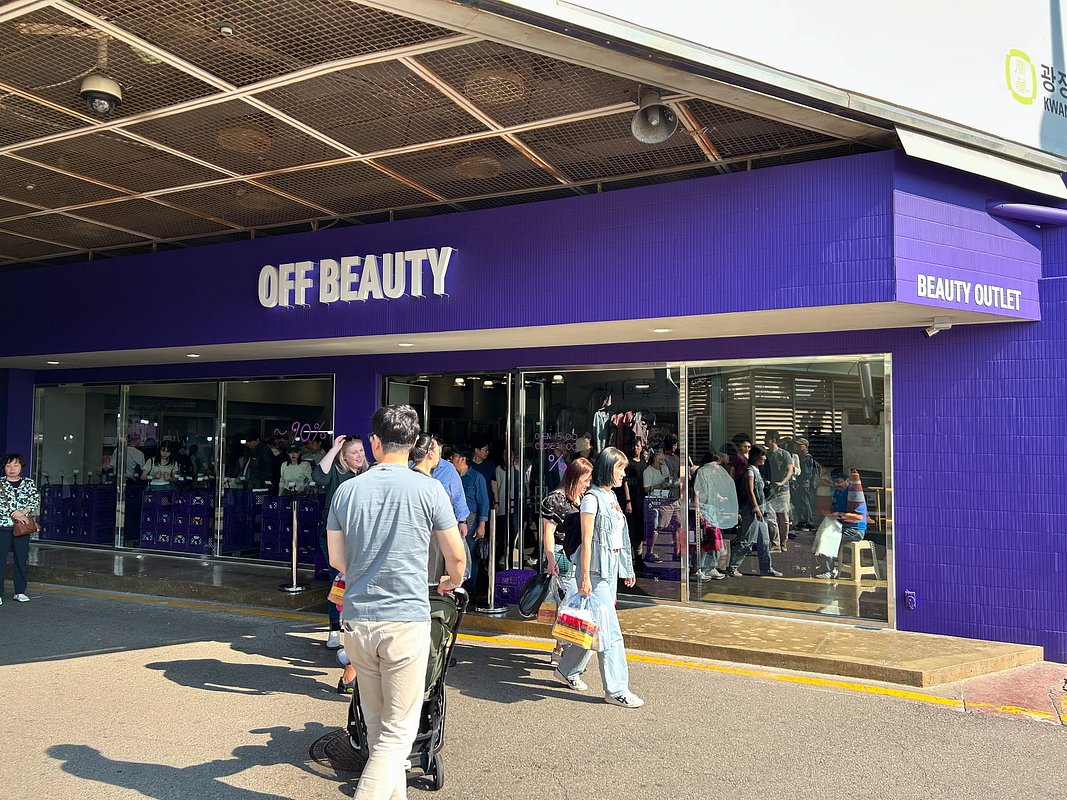
The Costco of K-Beauty: A New Outlet's Bid to Topple a Retail Empire
Seoul, South Korea – February 13, 2026 – Shoulder-to-shoulder crowds pack a warehouse-style store in Seoul’s Gwangjang Market, their baskets overflowing with luxury serums and cult-favorite creams. The scene is not a flash sale at a department store, but a typical day at OFF BEAUTY, a new retail force aggressively positioning itself as the “Costco of the beauty industry.” By announcing a nationwide expansion, this discount outlet chain is firing a direct shot at the heart of South Korea’s established beauty retail landscape, a market long dominated by a single titan.
Operated by Q&B International, OFF BEAUTY is rapidly expanding on a simple yet disruptive premise: selling authentic beauty products for up to 90% off their retail price. This aggressive pricing strategy is shaking up the highly competitive K-beauty market and raising a critical question: can a discount model unseat a reigning champion?
A New Retail Model Shakes the Market
OFF BEAUTY’s strategy is a calculated departure from the traditional health and beauty (H&B) store model. While established players offer periodic promotions, OFF BEAUTY has built its entire identity around being a dedicated discount outlet. The company bypasses intermediary vendors, purchasing products in bulk directly from domestic manufacturers and using parallel imports for overseas brands. This streamlined supply chain, combined with a minimal margin structure, allows it to pass enormous savings on to consumers.
The products lining its shelves are not defective, but rather a mix of overstocked inventory and items with a remaining shelf life of one to one-and-a-half years. Products nearing their expiration date are marked down even further, creating a treasure-hunt atmosphere for savvy shoppers. While the fashion industry has long relied on outlet stores to clear seasonal inventory, the beauty sector has lacked a similar structured system. OFF BEAUTY has capitalized on this market gap, creating what it calls a “Downtown Beauty Warehouse Outlet.”
The appeal is broad, attracting everyone from teenagers to consumers in their 40s and 50s. “I was skeptical at first because luxury department store brands were being sold at up to 90% off,” said one female customer in her 30s. “But it’s a great opportunity to purchase proven, high-quality products at affordable prices.” This sentiment reflects a growing consumer trend in South Korea, where shoppers are increasingly seeking high value and quality without the premium price tag.
The Olive Young Challenge
The stage for this retail battle is dominated by one colossal player: CJ Olive Young. With an estimated 90% market share, over 1,300 stores, and revenues that recently surpassed those of legacy cosmetic giants like Amorepacific, Olive Young is more than just a retailer; it is a cultural institution that defines K-beauty trends. Its success is built on an omnichannel strategy, experiential "beauty playground" stores, and a powerful ability to curate and launch indie brands into the mainstream.
OFF BEAUTY’s expansion, with a target of 100 stores nationwide this year, represents the most significant challenge to this dominance in recent memory. While Olive Young engages in promotions, its core model is not deep discounting. The emergence of a dedicated outlet chain intensifies the existing "price wars" within the market, forcing a new competitive dynamic. Industry analysts note that while Olive Young will likely lean on its strengths—exclusive brand partnerships, experiential retail, and its powerful app—it cannot ignore the pull of a competitor built entirely on price. The Gwangjang flagship store’s reported monthly sales of approximately KRW 5–6 billion (USD 4–5 million) prove that the demand for this model is substantial and immediate.
The long-term sustainability of OFF BEAUTY’s deep discount model, however, remains a key question for financial experts. Success hinges on masterful inventory management—securing a continuous supply of desirable products at a low cost and selling through them before they expire. It is a high-volume, low-margin tightrope walk that has proven successful in other retail sectors but is relatively untested at this scale in the Korean beauty market.
A Lifeline for Indie Brands?
Beyond the consumer-facing discounts, OFF BEAUTY is carving out another crucial role within the K-beauty ecosystem: a growth engine for small and mid-sized brands. In a market where hundreds of indie labels compete for limited shelf space, gaining a foothold can be an immense struggle. Many of these brands, despite being manufactured by world-class OEM/ODM companies like Cosmax and Kolmar Korea, lack the marketing budgets to compete with established names.
OFF BEAUTY offers a powerful alternative. By purchasing inventory in bulk, it provides immediate cash flow and a vital distribution channel. This model can be transformative for a brand facing liquidity issues or struggling with excess stock. The skincare brand Delphea serves as a prime example. On the verge of being discontinued, the brand found a new life at OFF BEAUTY, where viral word-of-mouth led to a complete sell-out and subsequent new production orders.
This relationship creates a mutually beneficial ecosystem. OFF BEAUTY secures a diverse and ever-changing product assortment, while smaller brands gain market access and revenue. However, some industry consultants caution about the potential for brand dilution when products are consistently sold at a deep discount. For many brands, though, the immediate benefit of converting unsold stock into cash and reaching a new audience appears to outweigh the long-term risks.
The Global K-Beauty Treasure Hunt
The company's ambitions extend beyond the domestic market. By strategically opening stores in high-traffic tourist districts like Myeongdong, Seongsu, and Gwangjang Market, OFF BEAUTY is positioning itself as a must-visit destination for the growing wave of global beauty tourists. Seoul has cemented its status as a "global beauty mecca," and retailers are a key part of that attraction.
Data shows that international visitors are a powerful economic force in the K-beauty market, with Olive Young’s own global-specialized stores seeing a majority of sales from foreign shoppers. OFF BEAUTY is tapping directly into this lucrative trend. The Seongsu "Mega Factory" store, for instance, already sees its sales split evenly between local consumers and international tourists.
For these visitors, OFF BEAUTY is not just a store but a "K-Beauty Treasure Hunt Spot." It offers the thrill of discovery, where they can find trending indie brands alongside luxury skincare at prices unavailable anywhere else. This unique positioning as a discount haven for authentic K-beauty could make its locations new landmarks on the well-trodden tourist shopping map, further cementing South Korea's reputation as the ultimate destination for beauty enthusiasts. As it continues its rapid expansion, OFF BEAUTY is not just selling discounted cosmetics; it is reshaping consumer expectations and redrawing the competitive lines of the entire industry.