
- $7.7 million: LiberNovo's record-breaking Kickstarter for its 'dynamic ergonomic' Omni chair in 2025.
- 181 kg (399 lbs): BIFMA-certified weight capacity of the Maxis series chair.
- €1,269: Price of the top-tier Airflow model in the Maxis series.
Experts would likely conclude that LiberNovo's Maxis series represents a significant advancement in inclusive design, challenging the industry to move beyond 'one-size-fits-most' solutions and prioritize structural support for diverse body types.
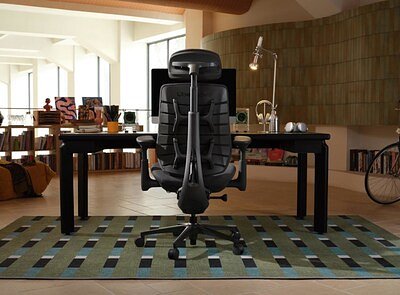
The Chair and the State: Why Inclusive Design Is a Matter of Structure
HONG KONG – June 16, 2026 – In the quiet ecosystem of the modern office—or, increasingly, the home office—the ergonomic chair has become the unsung hero of productivity and health. Yet, for a significant portion of the population, this foundational tool is a source of failure. Today, Hong Kong-based innovator LiberNovo launched its Maxis series, a line of chairs built not for the notional “average” user, but specifically for the Big & Tall demographic. While a product launch may seem trivial, it is a potent case study in the structural integrity of our daily systems and a quiet indictment of the ‘one-size-fits-most’ philosophy that has long dominated industrial design.
LiberNovo, a company that made waves with a record-breaking $7.7 million Kickstarter for its 'dynamic ergonomic' Omni chair in 2025, is explicitly targeting a market it claims has been served with afterthoughts. The Maxis isn't a scaled-up version of a standard model; it is, in the company’s words, “built from the ground up.” This distinction is not mere marketing jargon. It represents a fundamental shift in design thinking, moving from adaptation to intention. It’s an acknowledgment that true support cannot be achieved by simply enlarging a system; it must be re-engineered from its core principles.
The Anatomy of Exclusion: Why Standard Chairs Fail
The relationship between a citizen and the state is defined by systems of support. On a micro level, the relationship between a worker and their environment is no different. For individuals with larger or taller body frames, the standard office chair is a system that consistently fails. The points of failure are predictable and chronic. Seats are too shallow, leaving thighs unsupported and creating pressure points that restrict circulation. Backrests are too short, offering incomplete spinal support. Most critically, recline mechanisms, engineered for a lower weight tolerance, feel unstable and precarious, discouraging the very postural shifts they are meant to enable.
Simply scaling up a chair—making it wider or using a stronger gas lift—is a superficial fix that ignores the underlying physics. It’s like widening a bridge without reinforcing its foundational pillars. The load distribution, the center of gravity, and the dynamic stresses of movement are all different for a larger person. The result is a product that, while technically accommodating a user, fails to provide genuine ergonomic support, leading to chronic pain, fatigue, and diminished well-being. This is a failure of infrastructure, writ small. In an era where remote and hybrid work models place the onus of creating a safe and effective workspace on the individual, the lack of truly inclusive equipment becomes an issue of equity.
Engineered for Stability: A Ground-Up Solution
A forensic look at the Maxis series reveals a design process centered on addressing these specific structural flaws. The chair’s foundation is a die-cast aluminum alloy base, BIFMA-certified to support up to 181 kg (399 lbs). This certification is a crucial benchmark, indicating the frame has withstood rigorous industry testing for durability and safety under load.
The architecture of the seat itself is where the 'ground-up' approach becomes most apparent. A 52 cm deep seat platform ensures full thigh support for taller users, a critical element for maintaining proper posture and circulation over long hours. The use of multi-density foam is engineered to prevent ‘bottoming out’—the common phenomenon where foam compresses fully under weight, negating its supportive qualities. Instead, it provides firm support where needed and softer cushioning elsewhere.
Stability, especially during recline, is paramount. The Maxis features a five-stage recline control that ranges from an upright 105° to a deep 160°. According to LiberNovo, its dynamic support mechanism ensures the chair remains planted and stable through every stage. For a heavier user, this stability is not a luxury; it is the core requirement that builds trust in the equipment, allowing them to move and adjust their posture naturally without fear of the system failing beneath them. It’s a design that provides confidence, a key component of comfort that is often overlooked.
The Price of Support: Technology and the New Ergonomic Standard
This level of specialized engineering comes at a premium. The Maxis series launches with three tiers: the Manual model at €829, the Electric model with powered lumbar support and a 'spinal stretch' function at €1,079, and the top-tier Airflow model with active seat ventilation for €1,269. These prices, even with introductory savings, place the Maxis firmly in the high-end market, alongside established titans like Herman Miller's Aeron and Steelcase's Gesture.
The question of value is therefore central. Is a thousand-euro chair a worthwhile investment? From a purely structural perspective, the answer lies in the total cost of ownership. The price of a well-engineered chair must be weighed against the long-term costs of musculoskeletal issues, lost productivity, and the recurring expense of replacing inferior products that inevitably break down. For businesses, providing such equipment is an investment in the health and effectiveness of their workforce. For the individual, it is a critical piece of personal infrastructure.
The higher-tier models also signal a broader trend: the fusion of furniture with personal wellness technology. The Electric model’s powered lumbar support allows for micro-adjustments at the touch of a button. Its unique 'spinal stretch' feature, which gently decompresses the lumbar area, moves the chair from a passive object to an active tool for relief. The Airflow model’s integrated fan directly addresses the physical reality of heat and moisture buildup during marathon work or gaming sessions. These are not gimmicks; they are technological solutions to real physiological problems, further personalizing the relationship between the user and their environment.
A Market Responds to Unmet Needs
The arrival of the LiberNovo Maxis is significant not only for its design but for what it says about the market. The success of the company’s previous Omni line, which garnered two prestigious design awards in 2026, demonstrates a clear and unmet demand for innovation in a space that has at times felt stagnant. By focusing with such precision on the Big & Tall segment, LiberNovo is betting that specificity will triumph over generalization.
This launch challenges the entire industry to look beyond the 50th percentile. It underscores that true ergonomics is not about forcing the human body to conform to a single idealized standard, but about creating systems that are robust and flexible enough to support the full spectrum of human diversity. In the intricate web of systems that hold our modern world together, the humble chair plays a more significant role than we might imagine. Its integrity is a direct reflection of our commitment to building a world—and a workplace—that is stable, supportive, and designed for all.