
- $1 billion annual goal for freshwater conservation investments by 2030
- $2 trillion spent on conservation efforts with freshwater species declining by half
- 500+ ocean dead zones worldwide due to nutrient runoff
Experts view this initiative as a high-stakes test of whether data-driven, performance-based conservation can overcome systemic inefficiencies and deliver measurable environmental returns.
The Billion-Dollar Blueprint to Fix America’s Rivers
PORTLAND, Ore. – March 19, 2026 – A national nonprofit has announced a bold and potentially transformative goal: to enable $1 billion in verified, data-driven freshwater conservation investments every year by 2030. The Freshwater Trust (TFT) argues that this initiative is not about spending more money, but about fundamentally redefining how that money is put to work. The plan challenges a decades-long conservation model that, despite trillions in spending, has failed to halt accelerating environmental decline across the nation's waterways.
A Diagnosis for a 'Broken System'
For more than 50 years, since the dawn of the modern environmental movement, an estimated $2 trillion has been poured into conservation efforts. Yet, the data paints a grim picture of the return on that investment. Freshwater species have declined by half, pesticide use has tripled, and the number of ocean dead zones, often caused by nutrient runoff from inland rivers, has exploded from a few dozen to over 500 worldwide.
According to The Freshwater Trust, the problem isn't a lack of will but a flaw in the system. Conservation funding has historically been fragmented, allocated inefficiently to isolated projects with little to no accountability for their actual impact. This piecemeal approach has resulted in a system that is, in the words of the organization, “broken.”
“For too long, conservation has been treated as a series of isolated actions,” said Joe Whitworth, president and CEO of The Freshwater Trust, in a statement announcing the new goal. “Our 2030 goal is to scale what works, using data to direct every dollar toward the greatest possible environmental return.”
This initiative aims to cross a systemic threshold, arguing that coordinated, data-driven action can achieve a critical mass that succeeds where decades of scattered efforts have fallen short.
The Blueprint: Data, Not Just Dollars
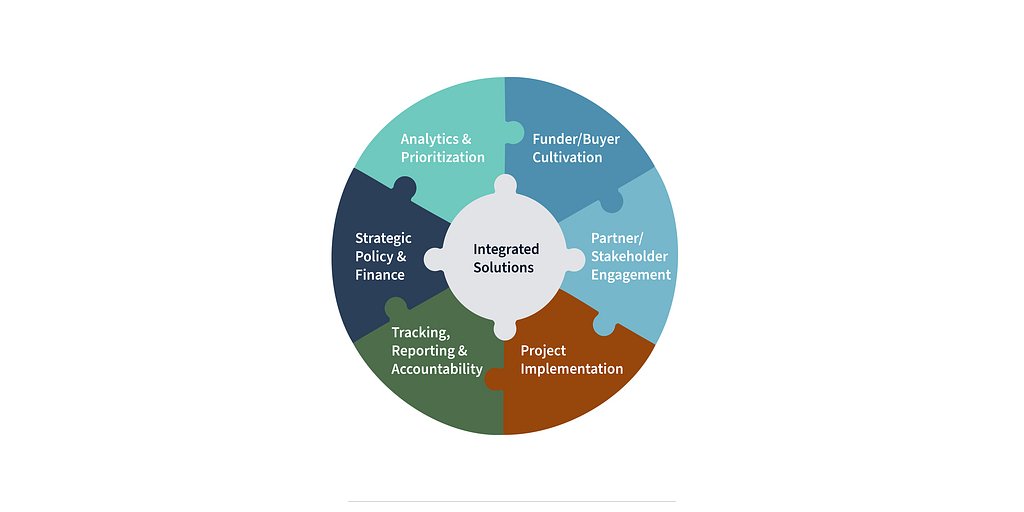
At the heart of TFT's ambitious plan is a pivot from traditional conservation funding to a model of quantified, performance-based investment. The organization is leveraging advanced data analytics and proprietary decision-support tools to bring a new level of precision and accountability to restoring rivers.
Two key technologies form the foundation of this approach: BasinScout® and the Watershed Outcomes Bank. BasinScout® is a suite of watershed analytics tools that can model entire river basins, allowing TFT and its partners to identify exactly which conservation actions will produce the greatest environmental benefit and where investment dollars will generate the highest return. It helps answer critical questions about which interventions—from planting streamside forests to upgrading irrigation equipment—are the most cost-effective for achieving a specific goal, such as reducing water temperature or filtering pollutants.
This analytical power is paired with the Watershed Outcomes Bank, an innovative financing model designed to overcome the fragmented funding landscape. The bank aggregates capital from diverse sources—including public agencies, private corporations, and philanthropic donors—and deploys it strategically when and where it is needed most. This model replaces the chaotic process of applying for dozens of separate grants with a unified, watershed-scale investment strategy focused on achieving measurable results.
From Theory to the Riverbank: Early Successes
While the billion-dollar goal is new, the methodology has been tested and refined in river basins across the American West, providing a blueprint for national scaling.
In Idaho’s Snake River Basin, TFT is implementing a conservation finance program that unites public and private funds to help farmers adopt more efficient irrigation methods. By streamlining paperwork and providing financial incentives, the program saw 23 high-efficiency projects implemented in its first year, preventing an estimated 8,000 pounds of phosphorus—a key driver of harmful algal blooms—from entering the river. “Working together with groups like TFT that share a common vision for sustainable, holistic solutions will ensure the Snake River remains a valuable resource for future generations,” commented Fred Noland, Environmental Affairs Director for project partner Idaho Power.
In California, the organization partnered with the Sacramento Area Sewer District on the Harvest Water initiative. This project pipes highly treated recycled water to farms and habitats, reducing the strain on depleted groundwater aquifers. The long-term goal is to deliver 50,000 acre-feet of water annually and help restore groundwater levels by up to 35 feet, building resilience against drought.
Further north, the “Sierra to Sea” initiative in the Eldorado National Forest uses the Watershed Outcomes Bank model to integrate restoration strategies like forest thinning and riparian repair. It consolidates funding from over 30 agencies into a single, high-impact strategy to increase water supply, lower wildfire risk, and improve water quality. “The Watershed Outcomes Bank approach helps us formalize partnerships, more efficiently leverage each other’s efforts, secure more funding, and ultimately, get a lot more work done,” said Michelle Wolfgang, Partnership Coordinator for the Eldorado National Forest.
A New Paradigm or a Risky Bet?
This push for “quantified conservation” is part of a broader, and sometimes controversial, trend toward market-based approaches and the “financialization” of nature. By framing ecological restoration as an investable asset with measurable returns, TFT is tapping into a growing appetite among impact investors and corporations for verifiable environmental, social, and governance (ESG) outcomes. The global market for green bonds and other sustainable debt has already surpassed $3 trillion, signaling a significant pool of capital seeking exactly the kind of transparent, results-oriented projects TFT champions.
However, this approach is not without its critics in the wider conservation community. Some scholars and advocates raise concerns about market-based strategies, arguing that they risk oversimplifying complex ecosystems into a series of quantifiable credits. A major review of market-based forest conservation programs, for example, found they had largely failed to deliver on their promises. Furthermore, data-driven models are only as good as the data they are fed, and challenges like data scarcity, algorithmic bias, and the difficulty of capturing all ecological values in a predictive model remain significant hurdles.
The Freshwater Trust’s initiative represents a high-stakes test of whether these challenges can be overcome. By focusing on water—a resource with relatively clear metrics for quantity and quality—and building a track record of tangible, localized successes, the organization is betting that it can prove the efficacy of its model. As the 2030 deadline approaches, the success or failure of this billion-dollar endeavor will be closely watched, potentially writing the next chapter for how we value and restore the nation’s most vital resource.