
- $20 billion: Top-tier companies earned nearly $20 billion in profit, 50% higher than the average and three times more than the bottom-ranked.
- $10 billion: The profit gap between the top and bottom quintiles of companies.
- 6x more likely: Leaders at high-performing organizations feel better positioned to meet future customer needs.
Experts conclude that a company's internal behaviors—measured by the 'POWER' dynamic—are a critical predictor of business growth, outperforming traditional factors like market strategy or technology.
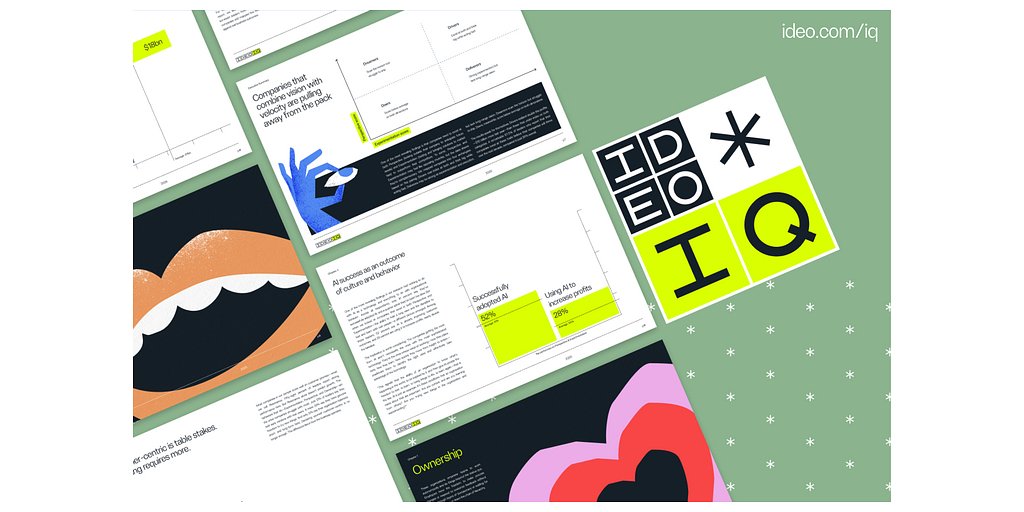
The Billion-Dollar Behavior: Report Links Culture to Massive Profit Gains
SAN FRANCISCO, CA – April 30, 2026 – By Frank Reed
For decades, business leaders have paid lip service to the importance of company culture. A groundbreaking new report from global design firm IDEO suggests they should have been paying with their budgets. The inaugural IDEO Innovation Quotient (IDEO IQ) report, released today, draws a direct, quantifiable line between a company's internal behaviors and its bottom line, revealing a performance gap measured in the tens of billions of dollars.
The study, which surveyed 266 innovation and product leaders across 100 of the world’s largest companies, found that organizations with the highest IDEO IQ scores are not just succeeding—they are dominating. These top-tier companies earned nearly $20 billion in profit last year, a figure 50% higher than the average company in the study and a staggering three times more than those ranked at the bottom. The profit chasm between the top and bottom quintiles alone was $10 billion.
These findings suggest that in today's volatile market, the most significant predictor of business growth isn't just market strategy or technological prowess, but the deeply ingrained behaviors that dictate how a company thinks, acts, and innovates from within.
The 'POWER' Dynamic: Quantifying the ROI of Culture
The IDEO IQ report moves the discussion of culture from abstract ideals to a measurable science by scoring companies on five core behaviors, which the firm calls the “POWER” dynamic:
- Perspective: The ability to anticipate future trends and disruptions.
- Ownership: The degree of autonomy and freedom teams have to act.
- Wavelength: The strength of cross-functional collaboration and diverse thinking.
- Experimentation: The speed and willingness to test new ideas and prototypes with real users.
- Resonance: The depth to which customer needs are centered in all decisions.
These cultural scores were then correlated with hard financial metrics, uncovering a powerful link. Companies in the top quintile didn't just earn more profit; they reported nearly three times higher revenue growth and almost double the customer growth of their peers. Leaders at these high-performing organizations were also six times more likely to feel better positioned than competitors to meet future customer needs.
“Many companies understand their customers, which is critical, but far fewer have built the behaviors to act on that understanding,” said Mike Peng, CEO of IDEO, in the report's announcement. “As more organizations rely on technology for answers, advantage comes from looking further ahead, drawing on human insight, anticipating what’s next, and exploring the edges of creativity. The companies that do this are the ones taking the lead.”
The Opportunity Gap: Where Most Companies Falter
While most leaders surveyed (58%) reported strong performance in being customer-centric (Resonance), the report reveals a critical “opportunity gap.” The three behaviors that drive the strongest outcomes—Experimentation, Ownership, and Perspective—are also the ones most companies struggle with the most.
The data paints a stark picture of corporate inertia. Only 21% of leaders strongly agree their organizations regularly test early versions of products with real users. Just 29% feel their teams have the freedom to try new things, and only 31% believe their company effectively balances short-term pressures with long-term strategic bets.
These challenges are particularly pronounced in the surveyed sectors of Healthcare, Media & Technology, and Consumer Goods. In healthcare, a highly regulated environment and concerns over patient safety create significant barriers to rapid Experimentation and team Ownership. For established consumer goods giants, the fear of cannibalizing flagship products and the pressure for quarterly returns often stifle the long-term Perspective needed for breakthrough innovation. Even in the tech sector, which prides itself on disruption, large companies can become victims of their own success, with bureaucracy and legacy systems slowing down decision-making and discouraging the very risk-taking that built them.
“It’s not that companies don’t know what they need to do,” noted Becca Carroll, IDEO’s Chief Strategy Officer. “The hard part is building it into the DNA of the organization, giving teams permission to test before a concept is perfect, and making space to look beyond the next quarter.”
The Human Prerequisite for AI Success
Nowhere is the impact of this behavioral gap more apparent than in the adoption of artificial intelligence. The report finds a significant disconnect between AI ambitions and reality, with only 41% of leaders stating they have successfully adopted AI to meet customer needs. A quarter of them admit their organizations have been too slow to adopt it altogether.
The IDEO IQ data argues that this is not a technology problem, but a human one. Companies that excel at both Perspective and Experimentation are dramatically more successful in leveraging AI. These behaviorally advanced organizations are more likely to report that AI is improving customer outcomes (52%) and, crucially, using it to support profit growth (28% compared to a 16% baseline).
This suggests that successful AI implementation is less about buying the right software and more about building the right culture. Organizations that already have a culture of rapid, low-stakes experimentation are better equipped to find valuable AI use cases. Likewise, companies with strong long-term perspective are better able to envision how AI will fundamentally reshape their industry and position themselves accordingly. Without these foundational behaviors, investments in AI are likely to yield disappointing results.
The report, which IDEO plans to publish annually, serves as a new benchmark for leadership. It reframes corporate culture not as a soft, feel-good initiative, but as a hard, strategic asset with a measurable, multi-billion-dollar impact on performance. In an era defined by unprecedented technological change, the ultimate competitive advantage may be the most human one of all: the way we work together.